TL;DR: Access control tools for agentic AI environments give autonomous agents their own identities, scoped permissions, and audited runtime enforcement. Opti is best for extending existing IAM policy to agents, Idira for privileged access control, SailPoint for agent governance, and Descope for MCP and agent authentication.
What Is Access Control in an Agentic AI Environment?
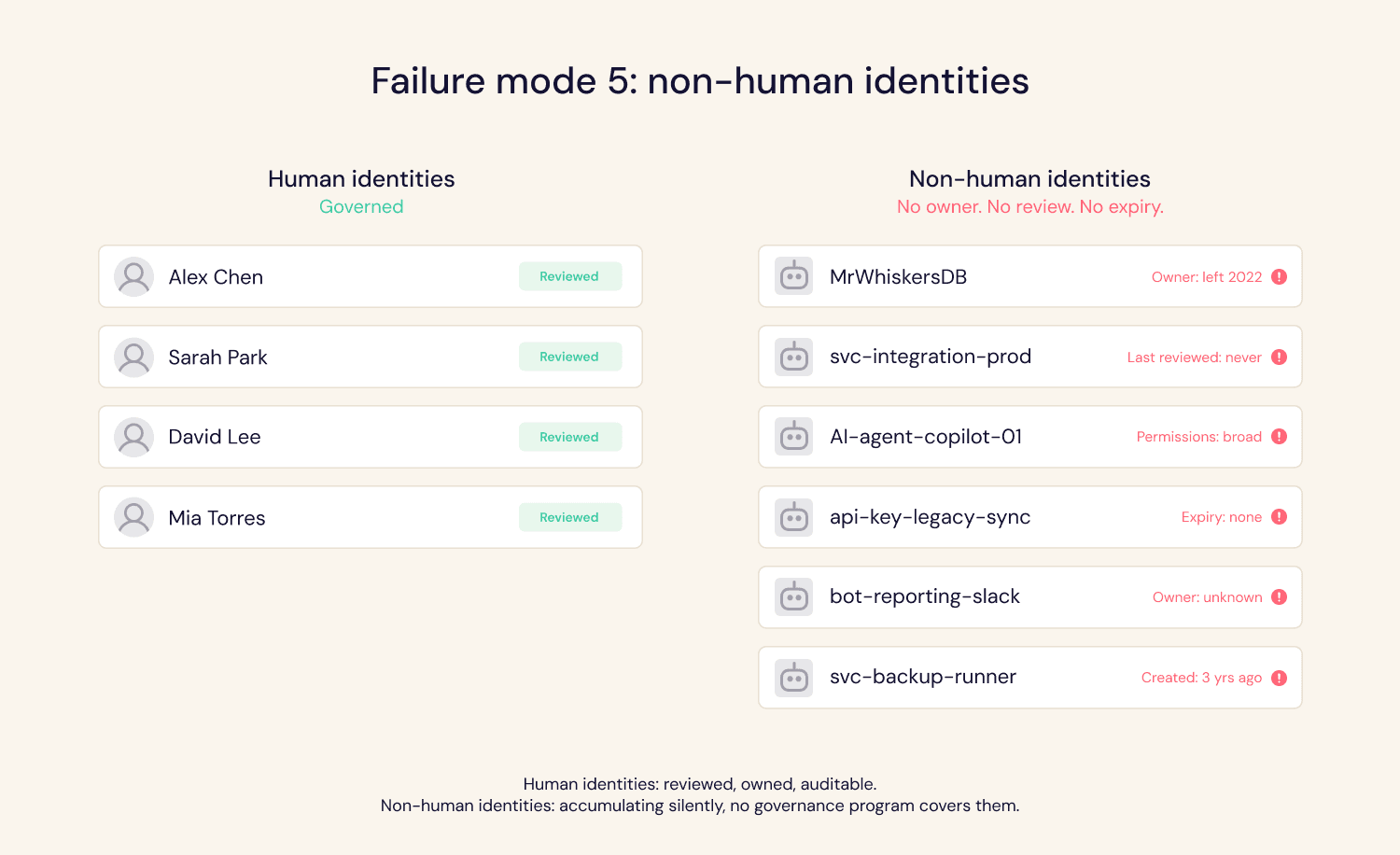
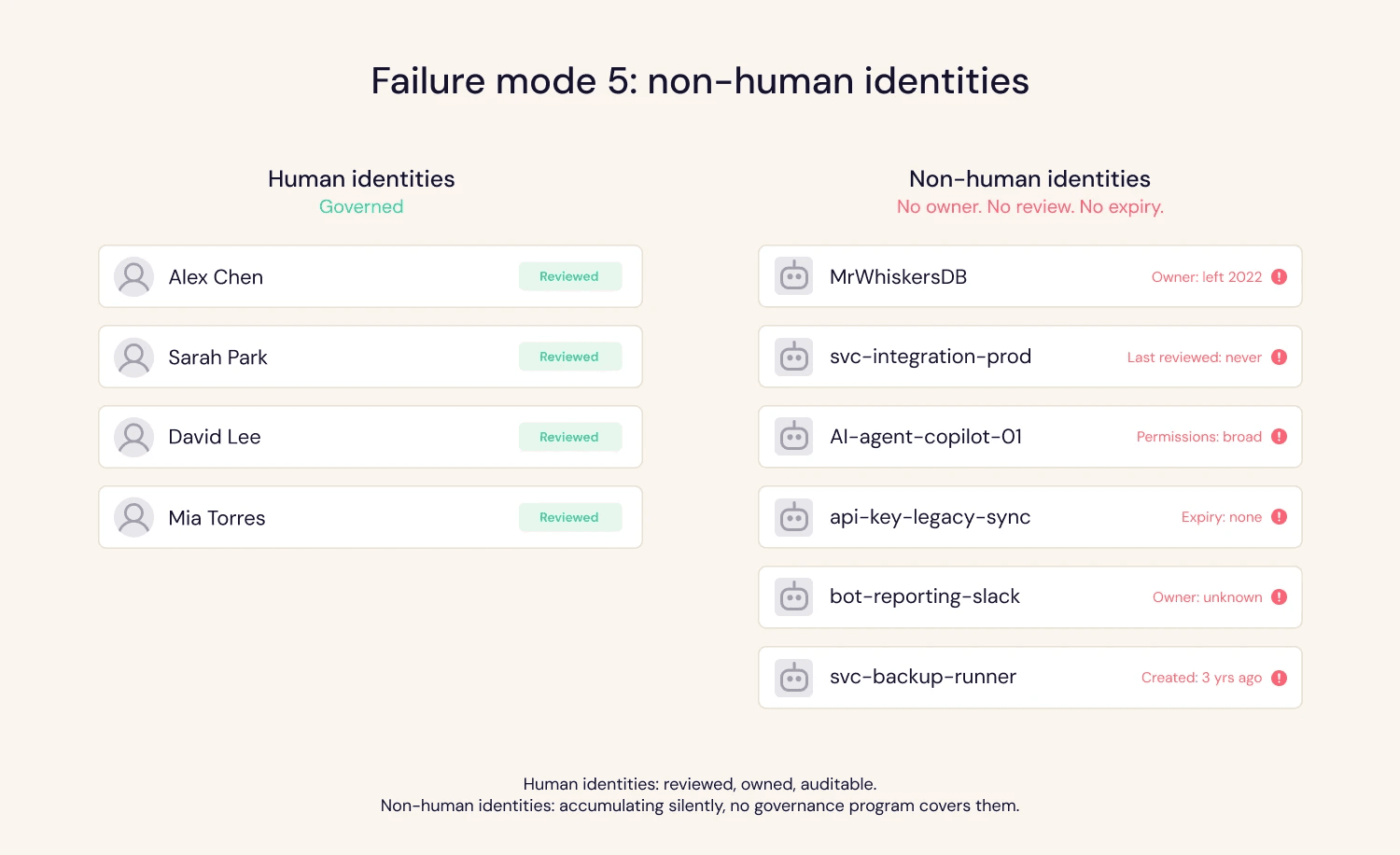
Access control tools for agentic AI environments enforce identity-aware permissions, just-in-time (JIT) credentials, and execution-time policy checks to govern how autonomous agents interact with models, tools, and data. Agentic AI access control is an extension of non-human identity (NHI) governance. AI agents are a subset of NHIs, alongside service accounts, workloads, applications, and other machine identities.
They therefore need the same identity governance and administration (IGA) lifecycle controls: controlled provisioning, defined ownership, access reviews, entitlement changes, and timely deprovisioning.
Agents also require controls that reflect their ability to act autonomously. These include restricting which tools, systems, and data an agent can access; limiting delegated permissions; controlling which actions it can perform; and monitoring its activity. An IGA-first approach provides the governance foundation for these controls.
Agentic AI Access Control Tools at a Glance
The table below summarizes the key differences between the tools covered in this guide, including what each one is built around and where its trade-offs sit. We explore each of them in more detail in the sections that follow.
Category | Tool | Best For | Key Strengths | Things to Consider |
Agentic identity security and governance platforms | Opti | Extending enterprise IAM policy to AI agents | Identity-tied access decisions, agent discovery, access reviews | Recent launch, limited public review coverage |
Agentic identity security and governance platforms | Idira Secure AI Agents | Privileged access control for autonomous agents | Agent registry, identity broker, kill switch, audit trail | Complex deployment and integration effort |
Agentic identity security and governance platforms | SailPoint Agent Identity Security | Governing agents alongside human identities | Agent aggregation, human ownership, access reviews | Implementation depth and specialist skills |
Agentic identity security and governance platforms | Saviynt Zuma | Discovering and governing agents and NHIs | Access mapping, runtime authorization, lifecycle governance | Connector gaps and interface performance |
Agent authentication and authorization platforms | Microsoft Entra Agent ID | Microsoft-centric agent identity and governance | Conditional Access, governance, network controls | Licensing tiers and configuration complexity |
Agent authentication and authorization platforms | Okta for AI Agents | Unified agent control plane plus builder tooling | Shadow agent discovery, scopes, Cross App Access | Cost scaling and admin console complexity |
Agent authentication and authorization platforms | Descope Agentic Identity Hub | Auth for MCP servers and agent-built products | Ephemeral scoped credentials, MCP auth, policies | Setup effort for advanced flows |
Agent authentication and authorization platforms | Permit.io | Action-time authorization inside agent workflows | Machine identities, permitted actions, approval flows | Managed cloud PDP feature limits |
Why Traditional Access Control Is Not Enough for AI Agents
Agents Make Nondeterministic Decisions
AI agents do not always follow predictable patterns. Their decisions can be influenced by dynamic inputs, complex models, and probabilistic reasoning. This nondeterminism means that traditional access control models, which assume a relatively static set of actions by authenticated users or services, fall short. AI agents may take actions outside the original intent of their programming, leading to unforeseen access requests or resource usage patterns that legacy systems cannot adequately monitor or restrict.
Because of this unpredictability, access control in agentic AI environments must go beyond static rules. Systems must be capable of evaluating requests in real time, accounting for context and intent, and adapting as agent behaviors shift. This requires a move toward policy engines that incorporate factors like agent provenance, current operational context, and even historical behavior, enabling fine-grained and responsive control that matches the complexity of AI-driven systems.
Related content: Read our guide to identity and access management.
Agent Permissions Can Propagate
In agentic AI systems, permissions are not always contained. AI agents may interact with other agents, delegate tasks, or initiate actions that trigger additional processes. This propagation of permissions can create complex chains of access, where an initial permission granted to one agent cascades through multiple entities and systems. Traditional access control models, which are designed for linear and isolated permission structures, are not equipped to track or manage these multi-step permission flows.
The risk is that an agent with broad permissions may inadvertently or intentionally delegate those permissions to less trusted agents, expanding the attack surface or violating security policies. To address this, agentic access control frameworks must implement delegation controls, track permission inheritance, and provide visibility into how permissions are propagated. This ensures that access does not spiral out of control and remains within defined boundaries, even as agents collaborate or interact.
Long-Lived Credentials Increase Exposure
Traditional access systems often rely on static, long-lived credentials such as API keys, tokens, or certificates. In an agentic AI environment, these persistent credentials can become a significant liability. If an agent’s credentials are compromised, malicious actors can exploit them for extended periods, accessing sensitive data or critical systems without detection. The autonomous nature of AI agents further amplifies this risk, as agents may operate at scale and at speed, magnifying the impact of any credential theft.
To mitigate this, agentic access control must shift towards short-lived, just-in-time credentials that are tightly scoped and automatically revoked after use. This limits the window of exposure in the event of a breach and ensures that agents only have access when absolutely necessary. Automated credential rotation and ephemeral access tokens can help enforce this, reducing the attack surface and making it harder for adversaries to maintain unauthorized access.
Agents Accumulate Toxic Permission Combinations
AI agents often connect to multiple applications, APIs, data stores, and infrastructure services. Over time, they can accumulate permissions across these systems in the same way that human users accumulate excessive access. This can create toxic combinations, such as an agent that can both retrieve sensitive data and modify production systems, bypassing the separation of duties that would normally limit risk.
The difference is speed and scale. An overprivileged human user may misuse conflicting permissions manually, while an agent can exercise them automatically across many systems in seconds. Access governance must therefore identify conflicting entitlements, enforce least privilege, and include agent permissions in regular access reviews. Organizations should evaluate the agent's combined access across systems rather than assessing each entitlement in isolation.
Inactive Agents Are Rarely Offboarded
Most organizations do not have a defined offboarding process for AI agents. An agent may be retired, replaced, or simply stop being used, while its API keys, service accounts, tokens, and application permissions remain active. These orphaned credentials create persistent access paths that are difficult to detect because the agent itself may no longer appear in normal operational workflows.
AI agents therefore need the same deprovisioning controls applied to other identities. When an agent is retired, its credentials should be revoked, its entitlements removed, and any delegated access terminated. Ownership and activity should also be reviewed regularly so inactive or abandoned agents can be identified before their permissions become unmanaged security exposure.
Core Capabilities of Agentic AI Access Control Tools
1. Unique Agent Identities
Agentic AI environments require each agent to have a distinct, verifiable identity. This is critical for accountability, traceability, and effective policy enforcement. Unlike human users, agents can be spun up or down dynamically, making identity management more complex. Assigning unique credentials, digital certificates, or cryptographic keys to each agent ensures that every action can be traced back to a specific entity, reducing the risk of impersonation or unauthorized activity.
Robust identity management also enables granular access control and auditing. When each agent has a unique identity, security teams can track which agents access which resources, when, and for what purpose. This supports:
Forensic analysis
Regulatory compliance
Rapid response to security incidents
2. Fine-Grained Authorization
Fine-grained authorization allows organizations to specify precisely what each agent can do, rather than relying on broad, role-based access. In agentic AI environments, this is essential because agents may perform highly specialized tasks or require access to only a subset of resources. Fine-grained policies can define access at the level of:
Individual files
APIs
Functions
This ensures that agents receive only the permissions necessary for their tasks. It reduces the risk of over-privileged agents, a common cause of security breaches. By tightly scoping permissions, organizations can minimize the damage if an agent is compromised or behaves unexpectedly. Fine-grained authorization also supports dynamic policy adjustments, enabling real-time changes to agent privileges as their roles or operational requirements evolve.
3. Context-Aware Policy Decisions
Context-aware access control evaluates not just who or what is making a request, but also the surrounding circumstances. In agentic AI environments, this might include factors such as:
The agent’s current task
The sensitivity of the requested resource
Time of access
Recent behavior patterns
By incorporating context, access control systems can make smarter, risk-based decisions that better align with organizational security goals. For example, an agent requesting sensitive data during a routine operation might be allowed, but the same request outside of normal hours or from an unusual network location could trigger additional scrutiny or require extra approvals. Context-aware policies enable organizations to adapt to evolving threats and operational conditions, providing a more resilient and responsive security posture.
4. Delegation Controls
Delegation controls manage how agents can pass on permissions or tasks to other agents or systems. Without proper controls, delegated permissions can quickly spiral, leading to privilege escalation and loss of oversight. Agentic access control tools must explicitly define:
Which permissions can be delegated
To whom
Under what conditions
This prevents unauthorized agents from acquiring access through indirect means. Effective delegation controls also include mechanisms for revoking delegated permissions and tracking the entire delegation chain. This visibility is crucial for auditing and forensics, especially in complex environments with many interacting agents.
5. Just-in-Time and Short-Lived Credentials
Just-in-time (JIT) and short-lived credentials are essential in minimizing risk in agentic AI environments. JIT credentials are issued only when an agent needs to perform a specified action and are revoked immediately after use. This approach reduces the attack surface, as credentials are not left lingering and available for exploitation by attackers or rogue agents.
Short-lived credentials also support the principle of least privilege, ensuring that agents have only the access they need, only when they need it. Based on real-time context, automated systems can:
Issue credentials
Rotate credentials
Expire credentials
This reduces the risk of credential theft or misuse.
6. High-Impact Action Approval Workflows
Approval workflows provide an additional control for agent actions that exceed defined risk thresholds. Routine, low-risk operations can be handled automatically when they satisfy policy, while actions such as changing production configurations, accessing highly sensitive data, transferring funds, or granting privileges can trigger an approval requirement. Triggers can incorporate:
Resource sensitivity
Requested privilege
Transaction value
Unusual behavior
Deviations from the agent’s normal task
This approach preserves automation without giving agents unrestricted authority over consequential actions. Access control tools should enforce approval before execution, route requests to the appropriate approver based on policy, and record the request, decision, and resulting action for audit purposes. Policies can also reject prohibited actions automatically, reserving approval workflows for cases where additional authorization is appropriate.
7. Monitoring and Audit Trails
Continuous monitoring and detailed audit trails are foundational to securing agentic AI environments. Monitoring tracks agent activities in real time, flagging suspicious or anomalous behavior for immediate investigation. Providing a comprehensive history that supports incident response and compliance reporting, audit trails record every:
Access request
Policy decision
Action taken by agents
Effective monitoring and auditing enable organizations to quickly detect and respond to security incidents. They also provide the data needed to analyze trends, identify vulnerabilities, and refine access control policies over time. In environments where agents can act autonomously and at scale, maintaining visibility through robust monitoring and auditing is essential for maintaining trust and control.
8. Separation of Duties and Toxic Combination Detection
Agent permissions must be evaluated across systems, not only within individual applications. An agent may have reasonable permissions in isolation but gain excessive control when those permissions are combined. Separation of duties (SoD) controls detect toxic combinations such as access to both initiate and approve transactions, modify production systems and disable monitoring, or retrieve sensitive data and send it externally.
Agentic access control tools should continuously evaluate effective permissions against SoD policies and flag conflicts as access changes. High-risk combinations can be:
Blocked automatically
Routed for approval
Remediated by removing unnecessary entitlements
This prevents privilege accumulation from creating unintended end-to-end capabilities.
9. Usage Telemetry and Permission Right-Sizing
Agent permissions should reflect actual usage rather than remain static after provisioning. Usage telemetry provides data such as:
When an entitlement was last used
How frequently an agent accesses a resource
Which permissions are consistently unused
These signals help security teams distinguish required access from permissions that were granted but are no longer necessary. Access control tools can use this telemetry to recommend or automate permission right-sizing over time. Rarely used or dormant entitlements can be reviewed, reduced, or removed, while frequently used permissions can be validated against the agent’s assigned purpose.
10. Continuous Access Reviews
Periodic certification alone is poorly suited to agents whose permissions and behavior can change rapidly. Continuous access reviews evaluate agent access as entitlements, usage patterns, and risk signals change:
Peer-group analytics can compare an agent with others performing similar functions
Anomaly detection can identify unusual permissions or access patterns that warrant investigation
These controls allow organizations to focus reviews on meaningful deviations instead of repeatedly certifying every entitlement manually. An agent with access outside its peer group, an unusual privilege increase, or previously unused access becoming active can trigger an immediate review. This makes access governance responsive to changes between scheduled certification cycles.
Related content: Read our article about user access review software.
11. Compliance and Audit Readiness
Agentic AI access control must also support regulatory and audit requirements. Frameworks and regulations such as SOX, SOC 2, ISO 27001, HIPAA, PCI DSS, NYDFS cybersecurity requirements, NIS2, and GDPR impose requirements related to:
Access governance
Least privilege
Accountability
Monitoring
Protection of sensitive data
As AI agents gain access to regulated systems, those controls must extend to agent identities and permissions. Auditors are increasingly asking organizations how AI agents are identified, authorized, reviewed, monitored, and deprovisioned. Access control tools should provide evidence of agent ownership, approvals, access reviews, policy decisions, SoD checks, permission changes, and revocation.
Notable Agentic AI Access Control Tools
How we selected these tools: We shortlisted access control tools for agentic AI environments based on their ability to assign unique agent identities, enforce fine-grained and context-aware authorization, control delegation, issue short-lived credentials, support human-in-the-loop approvals, and maintain monitoring and audit trails.
Agentic Identity Security and Governance Platforms
1. Opti

Best for: Extending enterprise IAM policy and governance to AI agents
Strengths: Identity-tied access decisions, agent discovery, access reviews
Things to consider: Recently launched platform with limited public review coverage
Opti is an AI-native identity security platform whose AI Agent Security suite applies identity controls to AI agents and their integrations. It extends existing IAM policies to agents so that every access decision, tool invocation, and workflow is tied to a verified identity and a risk context rather than to a shared or anonymous credential.
The suite spans agent discovery, permission visibility, least-privilege enforcement, and behavioral risk detection across connected AI platforms. Alongside this, the platform continuously consolidates identity, access, and entitlement data and aligns it with policies, roles, and usage insights, so access reviews can be produced on demand rather than assembled manually.
Key features include:
Identity-driven agent control: Extends existing IAM policies to AI agents, binding each access decision, tool invocation, and workflow to a verified identity and its associated risk context.
Granular agent access visibility: Shows exactly what each AI agent can read, write, or manage across connected applications, which supports precise scoping rather than blanket permissions.
Least-privilege enforcement: Applies least-privilege policies to agent permissions and supports continuous compliance monitoring against those policies.
Real-time risk detection: Continuously analyzes agent behavior, flags over-privileged capabilities, and surfaces anomalies before they escalate.
Agent supply chain security: Discovers hidden agents, validates toolchain integrations, and enforces runtime guardrails so unregistered components and prompts do not go unchecked.
AI activity monitoring and response: Tracks user and AI agent actions, prioritizes risks by severity, and surfaces anomalous behavior for investigation and automated response.
Continuous access reviews: Aggregates identity, access, and entitlement data and maps it to policies, roles, and usage so access reviews and least-privilege evidence can be produced on demand.
Limitations (based on publicly available sources):
Limited independent review coverage: The platform was launched publicly in late 2025, so there is little verified third-party customer feedback available for comparison against longer-established vendors.
Human review remains in the loop: Remediation is delivered as validated recommendations that security teams verify and approve, so access corrections are not fully hands-off.
Coverage depends on connected systems: Visibility is built by ingesting identity and access data from connected applications and directories, so environments outside those integrations need to be onboarded before agents there are covered.
Book a demo to see how Opti governs AI agent access
Source: Opti
2. Idira Secure AI Agents

Best for: Privileged access control for autonomous AI agents at scale
Strengths: Agent registry, identity broker, kill switch, full audit trail
Things to consider: Complex deployment architecture and integration effort
Idira Secure AI Agents is the agentic identity component of Idira, the Palo Alto Networks identity security platform built on CyberArk technology. It treats AI agents as a distinct identity class that blends human-style reasoning with machine scale, and applies privilege controls to that class rather than relying on controls designed for people or static workloads.
The tool scans SaaS, cloud, and developer environments to identify active agents, then onboards them into a central registry enriched with ownership, purpose, status, and permission context. Access to resources is brokered dynamically and granted only for the duration of a specific task, with permissions revoked automatically once the task completes.
Key features include:
Agent registry: Discovers agents across SaaS, cloud, and developer environments and onboards them into a centralized repository, giving teams a record of what is running and where.
Agent context enrichment: Attaches ownership, purpose description, status, and permission data to each agent so teams can see who owns an agent, what it does, and what it can reach.
Agent identity broker: Acts as a dynamic enforcement point that applies access policies, extends least privilege and just-in-time access to agents, and automatically revokes permissions when a job ends.
Agent kill switch: Uses the same broker to deny access in real time when an agent deviates from its intended mission.
Agent lifecycle management: Handles onboarding through decommissioning, tracks which permissions are actually in use, and automates ownership workflows.
Agent audit and access reviews: Logs agent actions and communications, and produces access reviews that show which resources each agent can reach and which permissions are being used.
Prisma AIRS integration: A planned native integration exposes agent identity security through the Prisma AIRS interface and enforces identity controls via the AI Gateway.
Limitations (as reported by users on G2, covering the wider CyberArk privileged access platform):
Complex architecture: Users describe the underlying architecture as complex to design and operate, with administration and maintenance requiring experienced staff.
Setup and integration effort: Initial setup and integrations are reported to take significant time and technical expertise, and some deployments require vendor professional services.
Reporting constraints: Several reviewers note that reporting is not fully mature and that custom reports are difficult to produce without vendor involvement.
Upgrade friction: Upgrades are described as involved, with multiple components that must be updated in a specific order, and some users report upgrades causing disruption.
Interface inconsistency: Reviewers mention that some administrative functions still route back to older interfaces, which makes the admin experience uneven.

Source: Idira
3. SailPoint Agent Identity Security

Best for: Governing AI agents alongside human and machine identities
Strengths: Agent aggregation, ownership assignment, access review and revocation
Things to consider: Implementation depth and specialist skills required
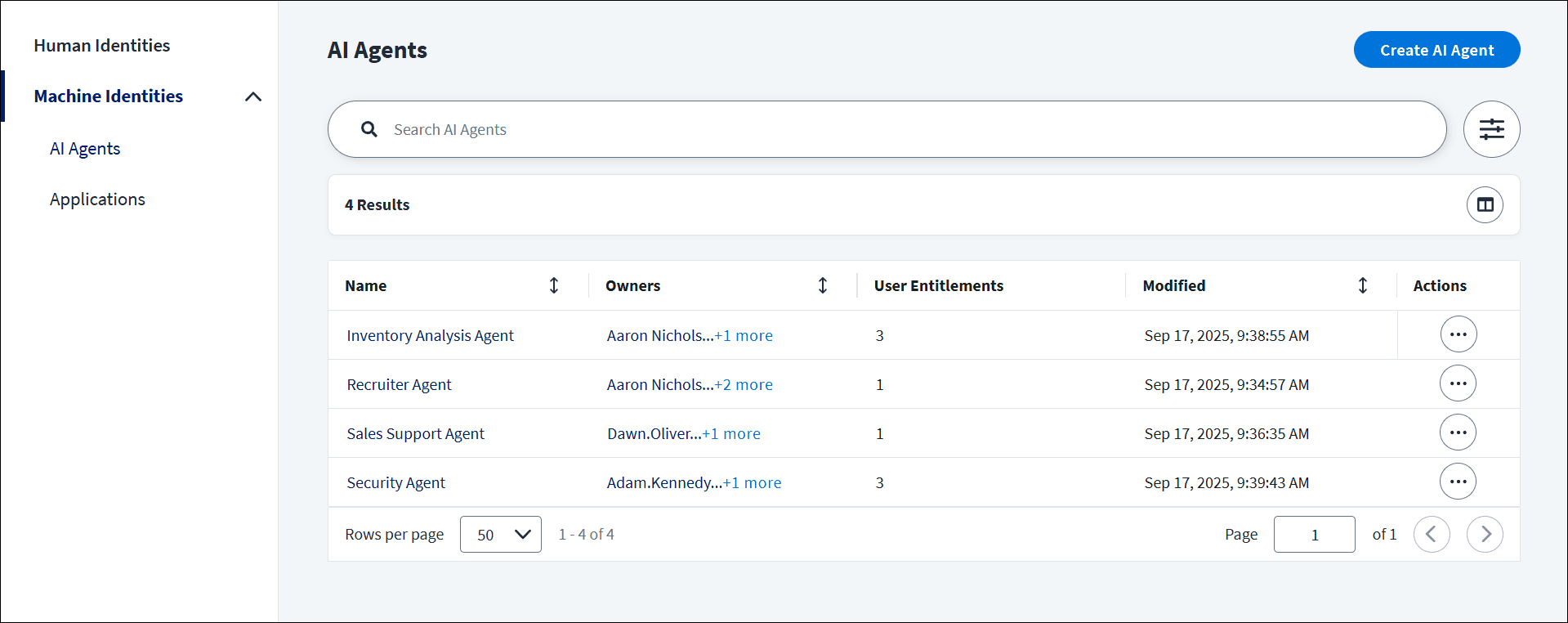
SailPoint Agent Identity Security extends the company's identity governance platform to AI agents, bringing agents, the users behind them, and the tools they access into a single governed view. Agents are aggregated from cloud platforms and agent builders and registered with a unique identity enriched with business and access context.
Governance then follows the same model SailPoint applies to people. Each agent is assigned one or more named human owners, ownership is updated automatically as roles change, and agent access is reviewed periodically so excessive permissions can be revoked. The product also governs the service accounts agents rely on and surfaces access that human identities gain indirectly through an agent.
Key features include:
Multi-platform agent aggregation: Connects directly to AWS, Azure, Google Cloud Platform, Salesforce, Microsoft Copilot Studio, and other platforms to onboard AI agents automatically.
Unique agent identities: Registers each agent with a distinct identity enriched with business and access context, so governance can begin as soon as the agent appears.
Human ownership assignment: Designates one or multiple human owners per agent, with built-in succession planning and automated updates that keep ownership aligned as roles shift.
Agent access reviews and revocation: Supports regular review of agent access against business need and policy, with revocation of inappropriate or excessive permissions.
Indirect access detection: Flags when human identities gain new entitlements or data access through an agent, covering both direct and indirect access paths.
Shadow AI visibility: Surfaces unmonitored AI tool usage and supports remediation by guiding users toward approved alternatives.
Service account governance: Governs the service accounts an agent uses to reach systems such as HR and ITSM platforms, from creation through retirement.
MCP server: Provides a standardized bridge that translates third-party agent requests into SailPoint API calls, keeping those interactions auditable.
Limitations (as reported by users on G2, covering the wider SailPoint identity platform):
Implementation complexity: Reviewers describe deployment as time-consuming and dependent on specialized technical expertise, with some rollouts taking several months.
Support responsiveness: A recurring theme is slow support response times and reluctance to move issues onto calls, which lengthens resolution.
Cost: Users note high licensing costs, compounded by implementation, consulting, and ongoing maintenance expenses.
Customization debt: Heavy customization is reported to create maintenance burden, since custom code can break during upgrades.
Reporting and interface gaps: Several reviewers describe reporting as limited compared with newer SaaS tools, and note that certification screens can load slowly at scale.
Source: SailPoint
4. Saviynt Zuma

Best for: Discovering and governing AI agents and non-human identities
Strengths: Access path mapping, runtime authorization, lifecycle governance
Things to consider: Connector coverage gaps and interface performance reports
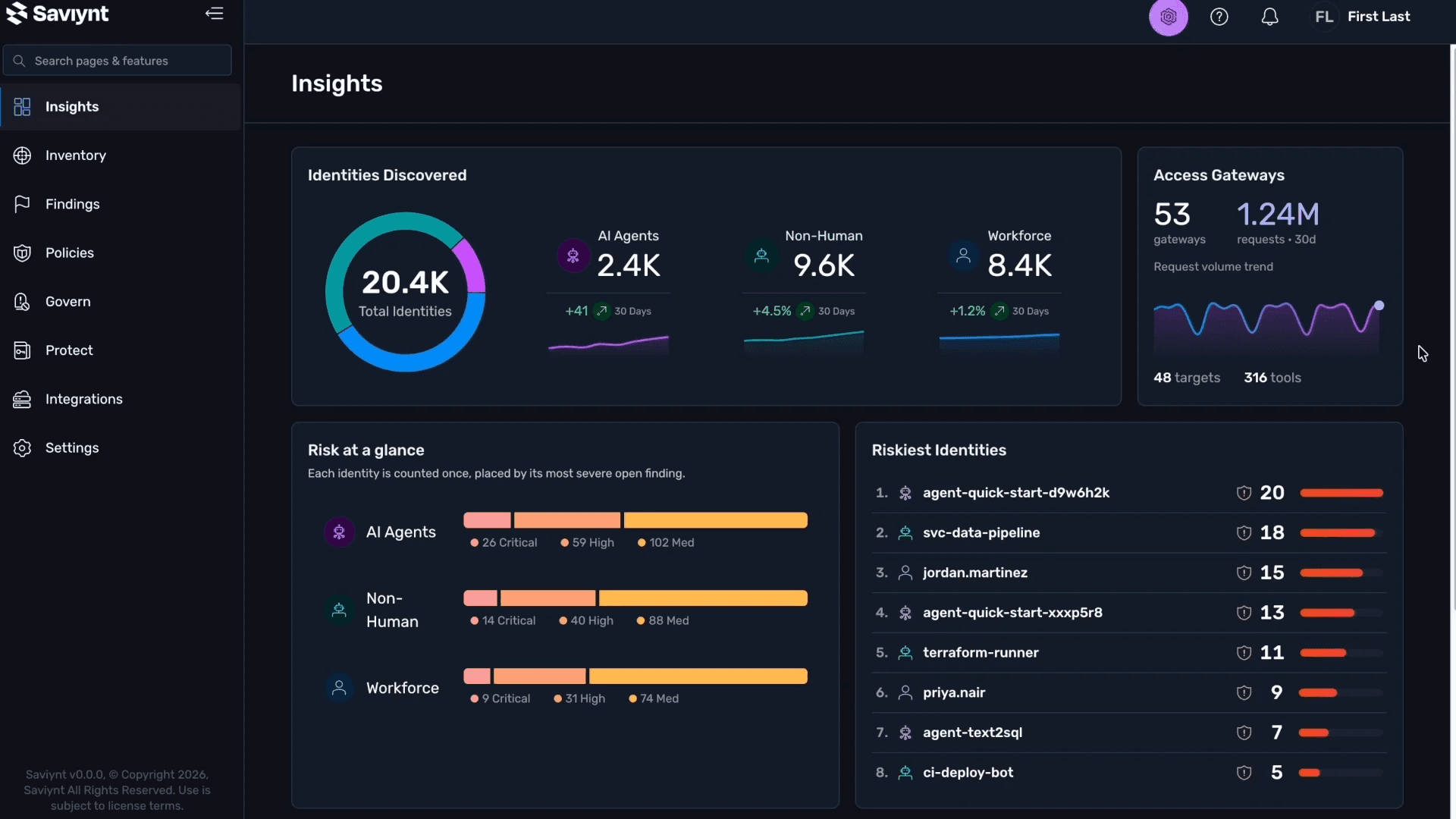
Saviynt Zuma is an enterprise AI identity security platform for AI agents and non-human identities. It is organized into three parts: Zuma Insights for discovery and posture, Zuma Access for runtime control, and Zuma Governance for ownership and lifecycle management.
Discovery covers agents, tools, MCP servers, and non-human identities across the environment, with risk insights prioritized by business impact. An access map traces the exact path an agent takes to reach applications, data, and tools. Runtime controls then govern what an agent can touch as it works, while lifecycle controls keep ownership current and retire orphaned or inactive agents.
Key features include:
Agent and NHI discovery: Automatically finds every AI agent, tool, MCP server, and non-human identity across the ecosystem, including unsanctioned ones, so nothing operates unseen.
Access path mapping: Traces the route any agent or NHI takes to reach critical applications, data, and tools, which supports shutting down high-risk paths and reducing blast radius.
Intent-aware runtime authorization: Evaluates agent actions as they happen and considers the purpose behind a request, so agents can only take actions that align with approved objectives and policies.
Risk insights prioritization: Continuously identifies and ranks security and governance risks by business impact so remediation work can be sequenced.
Timeline and activity record: Maintains an authoritative record of every agent and NHI action and change, with a summary of each change for investigation and audit readiness.
Ownership and lifecycle governance: Governs agents and NHIs from registration through change and retirement, maintains continuous ownership, and offboards orphaned or inactive agents.
Shadow AI remediation: Uncovers unsanctioned AI, establishes identity-driven control over it, and remediates the associated risks natively.
Limitations (as reported by users on G2, covering the wider Saviynt identity platform):
Learning curve: Reviewers describe the interface as complex for new users and note that advanced configuration demands significant technical expertise.
Connector coverage: Some users report that out-of-the-box connectors do not cover all roles and licenses for their applications, pushing work onto REST API connectors.
Custom integration support: Support for custom integrations is described as limited, particularly where additional plugins are involved.
Interface performance: Several reviewers mention inconsistency in the interface and slow page loading in parts of the product.
Feature and customization gaps: Users note limited customization options and some missing capabilities in specific modules, along with dashboards that are not configured out of the box.
Source: Saviynt
Agent Authentication and Authorization Platforms
5. Microsoft Entra Agent ID

Best for: Microsoft-centric agent identity, governance, and access policy
Strengths: Conditional Access, identity governance, network controls for agents
Things to consider: Licensing tiers and configuration complexity
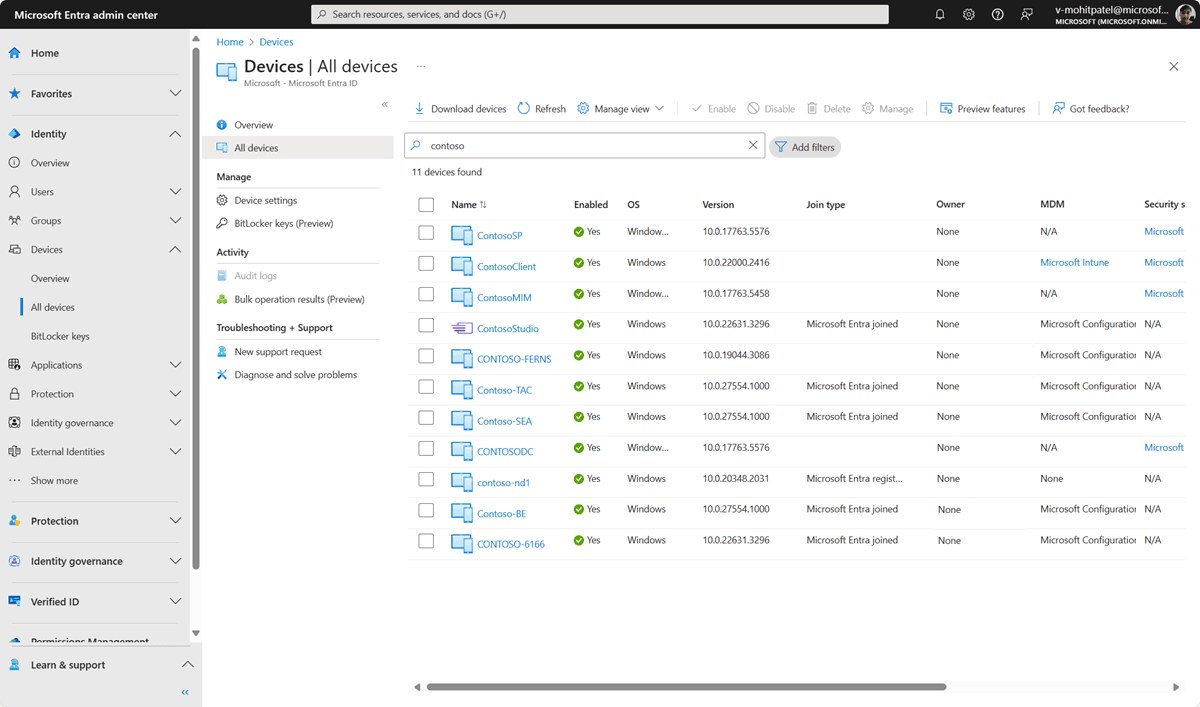
Microsoft Entra Agent ID extends Microsoft Entra identity and access management to AI agents, giving each agent an enterprise identity that can be managed, governed, and protected using the same controls applied to employees. Agent identities are assigned at scale so that authentication, policy enforcement, and integration with existing organizational policies work from the point an agent is created.
Access to resources is then governed through familiar Entra capabilities: Conditional Access for real-time policy decisions, identity governance for lifecycle and sponsorship, Identity Protection for risk detection, and network controls for agent traffic. Agent ID capabilities are delivered through Microsoft Agent 365 and Microsoft 365 E7 plans rather than sold on their own.
Key features include:
Agent identity provisioning at scale: Assigns identities to agents in bulk and manages them, including blueprints, tasks, and logs, from a unified registry in the admin center.
Conditional Access for agents: Enforces real-time policies on agent access to resources, can block risky agents, and supports granular access control policies based on configured security attributes.
Identity governance for agents: Automates governance from deployment through expiration, keeps sponsors assigned and maintained, and enforces access assignments that are intentional, auditable, and time bound.
Risk detection and remediation: Detects and flags unusual or unauthorized agent activity, traces agents with compromised tokens, and supports remediation of compromised agents.
Network controls for agent traffic: Logs agent network activity for audit and threat detection, applies web categorization to APIs and MCP servers, restricts file uploads and downloads, and blocks malicious destinations.
Lifecycle guardrails: Applies IT-defined guardrails to both agents and the people who create and manage them, which helps control agent sprawl.
Limitations (as reported by users on G2, covering the wider Microsoft Entra ID platform):
Licensing complexity and cost: Users frequently report that advanced capabilities sit behind higher-tier licenses and that the licensing matrix is difficult to interpret when planning a deployment.
Configuration complexity: Conditional Access and governance policies are described as useful but hard to configure correctly, with misconfigurations a noted risk in large environments.
Fragmented administration: Reviewers mention that settings are spread across multiple portals, so completing a single task can require moving between interfaces.
Troubleshooting visibility: Error messages and logs are reported to offer limited transparency, which lengthens diagnosis of access failures and policy blocks.
Non-Microsoft integration effort: Several users note that connecting legacy or non-Microsoft systems takes more configuration work than Microsoft-native services.
Source: Microsoft
6. Okta for AI Agents

Best for: A unified agent control plane plus identity tooling for builders
Strengths: Shadow agent discovery, scope enforcement, Cross App Access protocol
Things to consider: Cost scaling and admin console complexity
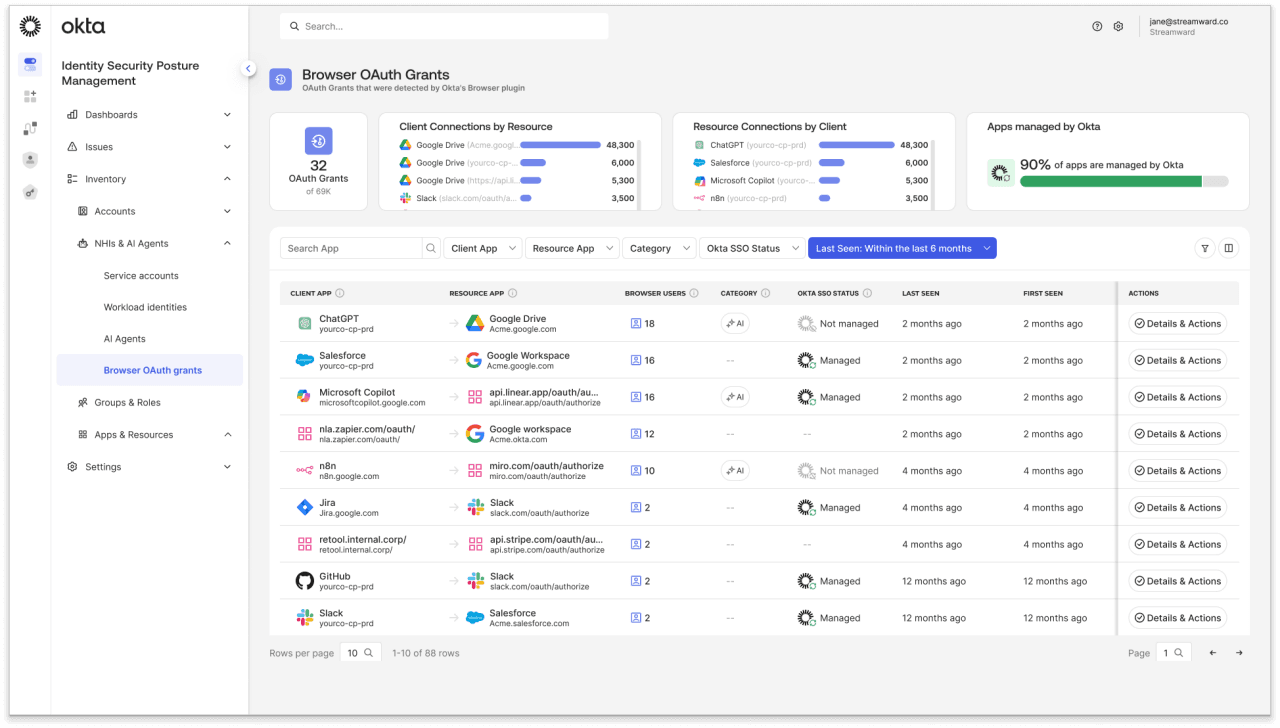
Okta approaches agent access control from two directions. For security and IT teams, Okta for AI Agents acts as a control plane over agents already running in the environment. For developers, Auth0 provides identity primitives that can be built into agents from the start.
On the management side, the platform automatically exposes unmanaged agents, registers them in the directory with a mandatory human owner, constrains their scopes, and monitors activity so access can be revoked when an agent behaves suspiciously. On the build side, Auth0 for AI Agents handles delegated user context, token management for third-party connections, human approval gates, and permission-aware data retrieval.
Cross App Access, an OAuth extension Okta has published as an open protocol, moves decisions about agent-to-application connections from individual apps to the identity provider, replacing ad-hoc consent prompts and unmanaged integrations with policy-based decisions.
Key features include:
Shadow agent discovery: Automatically surfaces unmanaged agents running across the stack to close visibility gaps.
Mandatory human ownership: Registers agents in the directory with a required human owner, which establishes accountability for each agent.
Least-privilege scope enforcement: Applies strict scopes to agent access so agents cannot reach beyond their assigned function.
Runtime monitoring and revocation: Monitors agent activity, detects threats in real time, validates permissions, and revokes access when an agent acts suspiciously.
Delegated user context: Lets agents verify who they are acting on behalf of and pass verified user context downstream for accountability.
Token handling for third-party tools: Automates management of access and refresh tokens when agents connect to external services, reducing credential sprawl.
Human-in-the-loop approvals: Pauses long-running agent workflows automatically so a person can approve high-stakes actions before execution.
Cross App Access protocol: Shifts agent-to-app and app-to-app connection decisions to the identity provider, giving admins visibility and control over those connections.
Permission-aware retrieval: Enforces granular permissions in RAG pipelines so agents retrieve only data they are authorized to see.
Limitations (as reported by users on G2, covering the wider Okta identity platform):
Cost scaling: Reviewers describe pricing as high and lacking transparency, with capabilities such as adaptive MFA, privileged access, and workflows sold as separate add-ons.
Admin console complexity: The administrative interface is described as cluttered and harder to navigate than the end-user dashboard, with a steep learning curve for new administrators.
Custom integration effort: While prebuilt integrations are straightforward, custom or legacy application integrations are reported to require notable development effort.
Troubleshooting difficulty: Users report that diagnosing authentication and policy issues means working through multiple settings and logs, with limited native visibility.
Governance depth: One reviewer notes that governance capabilities can feel light compared with dedicated identity governance products when handling complex, multi-condition certifications.
Source: Okta
7. Descope Agentic Identity Hub

Best for: Auth for MCP servers and products that expose APIs to agents
Strengths: Ephemeral scoped credentials, MCP auth, per-tool policy control
Things to consider: Setup effort for advanced flows and documentation gaps
Descope Agentic Identity Hub is a dedicated identity provider for AI agents and MCP servers. Rather than reusing human credentials or static API keys, it issues each agent its own identity along with short-lived, scoped credentials, and it integrates natively with OAuth and MCP so teams can add controls without rebuilding an existing identity stack.
The hub covers four areas: agent identity management, MCP server authentication, credential management for downstream connections, and policy enforcement. Every agent action is logged against both the agent identity and the delegating user, and those logs can be viewed in the Descope dashboard or streamed to a SIEM.
Key features include:
Dedicated agentic identities: Gives each AI agent its own identity with attributes such as associated user, tenant, tool-level scopes, and OAuth client ID, and supports filtering, grouping, and tagging of agents.
MCP server authorization: Exposes internal and external MCP servers to clients using OAuth 2.1 and PKCE, with dynamic client registration, client ID metadata documents, and agent risk assessment flows.
Per-agent and per-tool policies: Defines authorization controls for access to MCP servers, tools, and enterprise resources, with policies that take context from the user, tenant, MCP server, agent, JWT claims, and downstream service.
Ephemeral scoped credentials: Issues short-lived, scoped tokens tied to the minimum permissions in policy, which expire automatically so agents hold no standing access.
Credential management for downstream services: Stores and refreshes credentials agents use to reach third-party or internal services, with 50-plus prebuilt templates alongside standard OAuth and API key options.
Consent and delegation: Uses OAuth-based consent so a user authorizes an agent, which then receives scoped credentials linked back to that user without ever handling the user's primary credentials.
Step-up authentication: Adds an additional verification gate before an agent can proceed with sensitive operations.
Audit logging and revocation: Logs every agent identity, delegating user, and the tools, scopes, and MCP servers reached, and supports instant revocation for rogue or shadow agents.
Bring Your Own Auth: Layers agentic identity on top of an existing identity provider through OIDC or SAML federation, or against a homegrown system via a generic HTTP connector.
Limitations (as reported by users on G2, covering the wider Descope platform):
Setup complexity: Reviewers report that configuring advanced flows and SSO takes meaningful time and effort, with a learning curve before administrators are comfortable.
Documentation gaps: Several users note that documentation covers standard setups well but is thinner on advanced features, customizations, and edge cases.
Dashboard and logging usability: Some reviewers describe dashboards and audit logging as non-intuitive to work with, and note that billing and plan details are not fully self-service in the console.
SDK maturity varies: One reviewer working in .NET reports that SDK is less production-ready than the equivalents for other languages.
Pricing at scale: Users mention that pricing can feel steep for startups as user volumes grow.
8. Permit.io

Best for: Action-time authorization inside AI agent and MCP workflows
Strengths: Machine identities, permitted actions, approval flows, chain tracking
Things to consider: Managed cloud service does not cover all policy models
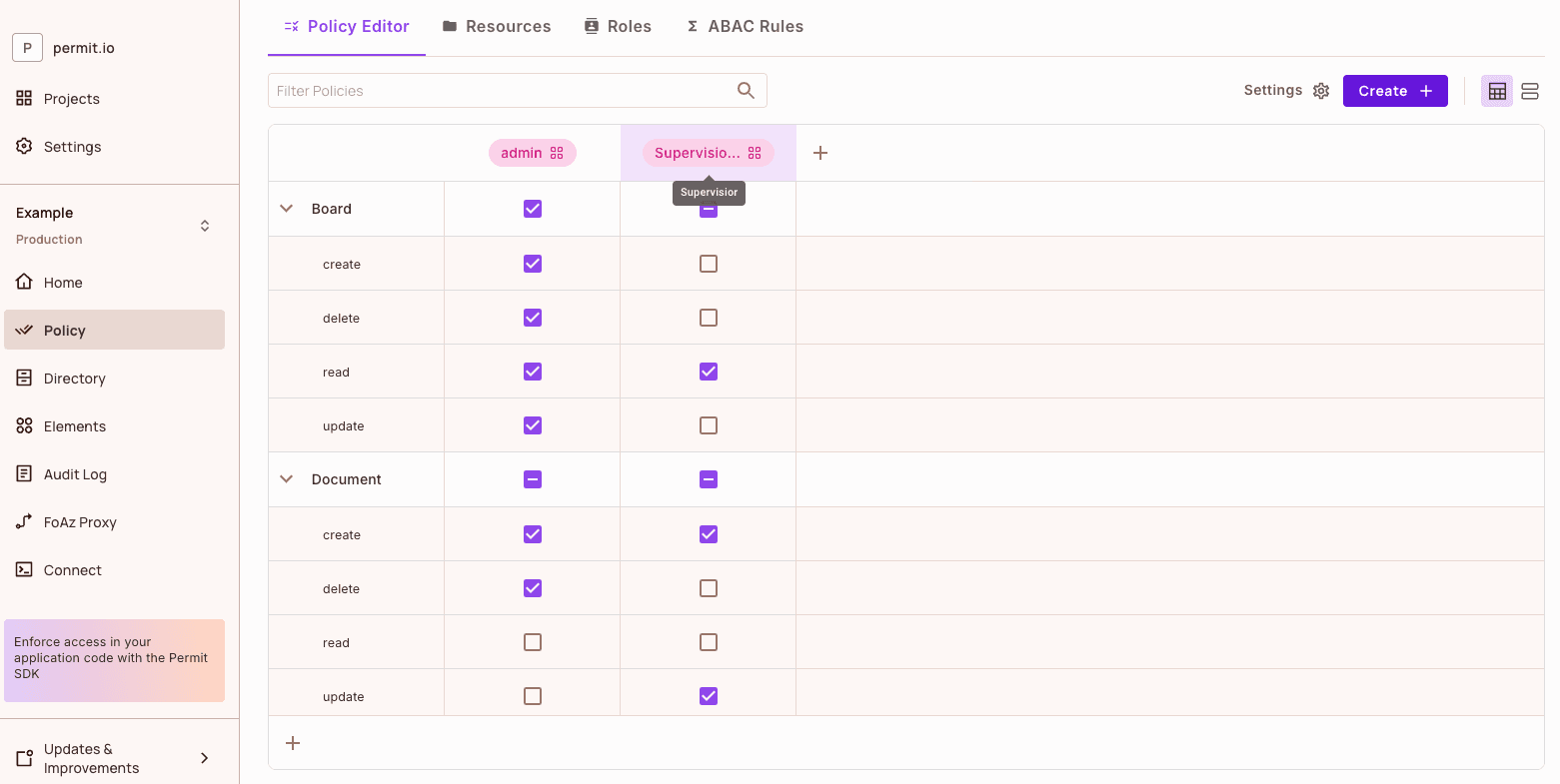
Permit.io is a fine-grained authorization service that applies policy checks to AI applications and agents at the point of action rather than only at login. Its AI Access Control offering is structured as a Four-Perimeter Framework covering prompts, retrieval, external actions, and responses, with integrations for common agent frameworks.
For agentic environments, the external access perimeter is the most directly relevant. Agents are assigned machine identities, permitted actions are defined explicitly, and sensitive operations can be routed to a person for approval. Permit.io also propagates identity context across agent-to-agent interactions, so a policy can evaluate the full chain of on-behalf-of requests rather than a single call in isolation.
Key features include:
Machine identities for agents: Assigns machine identities to AI agents so their access to external tools and resources can be tracked and managed individually.
Permitted action definitions: Specifies which API calls, transactions, and operations an agent is authorized to perform, limiting it to pre-approved functions.
Human approval workflows: Requires user approval for critical actions such as purchases, bookings, or account changes, with approval and access request APIs plus embeddable no-code interfaces.
On-behalf-of access tracking: Creates traceable, auditable policies for actions taken on behalf of human or AI users, with visibility into the decision-making chain.
Request chain lineage: Propagates identity context across AI-to-AI interactions so policies evaluate the entire request chain and each action remains attributable to its origin.
MCP server-level authorization: Adds authorization rules at the MCP server layer, checking who is making a request and what action they want before a model executes it.
RAG data filtering: Applies attribute-based and relationship-based controls to retrieval, with pre-query and post-query filtering so agents only reach permitted vector database entries.
Prompt and response enforcement: Authorizes prompts in real time against attribute-based policies, and applies output filtering and role-based output controls to generated responses.
Framework integrations: Provides components for LangChain, LangFlow, PydanticAI, and MCP, including a JWT validation component and a permission check node for visual agent workflows.
Limitations (based on publicly available sources):
Managed cloud service feature limits: Vendor documentation states that attribute-based access control and policy-as-code with custom OPA bundles are not supported on the managed Cloud PDP, so those models require the self-hosted container PDP.
Self-hosted component operations: The documentation recommends a self-hosted Edge PDP for attribute-based policies, custom data sources, and read-your-own-writes consistency, which adds container deployment and scaling work.
Memory sizing scales with policy data: Sizing guidance estimates memory based on the number of policy objects, so large user, resource instance, and tenant counts translate into substantial memory requirements per decision point.
Rate limiting on the managed service: The Cloud PDP applies per-IP rate limits and returns HTTP 429 responses when exceeded, which can affect large deployments sharing a public IP.
Deployment options tied to tier: Custom cloud PDP deployments covering specific regions, cloud providers, or TLS configurations are available to enterprise tier customers only.
Source: Permit.io
Conclusion
Agentic AI access control extends identity governance into systems where software can make decisions and act autonomously. Effective controls give every agent a distinct identity, restrict permissions to the minimum required, use short-lived credentials, evaluate requests in context, and apply approval gates to high-impact actions. Continuous monitoring, access reviews, separation of duties, and timely deprovisioning are also essential to prevent privilege accumulation and orphaned access as agent populations grow.