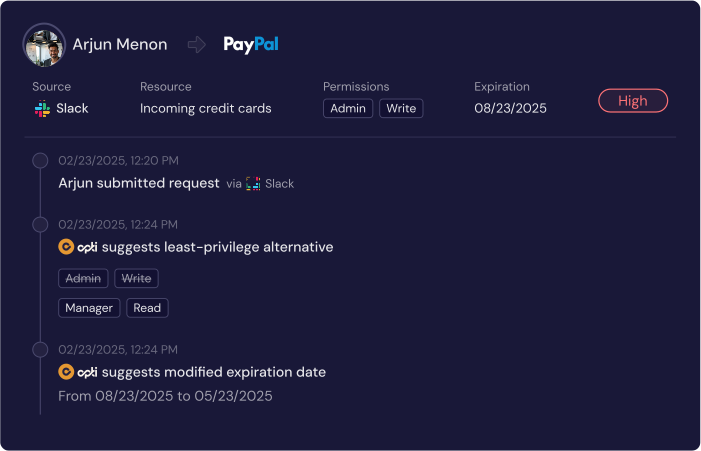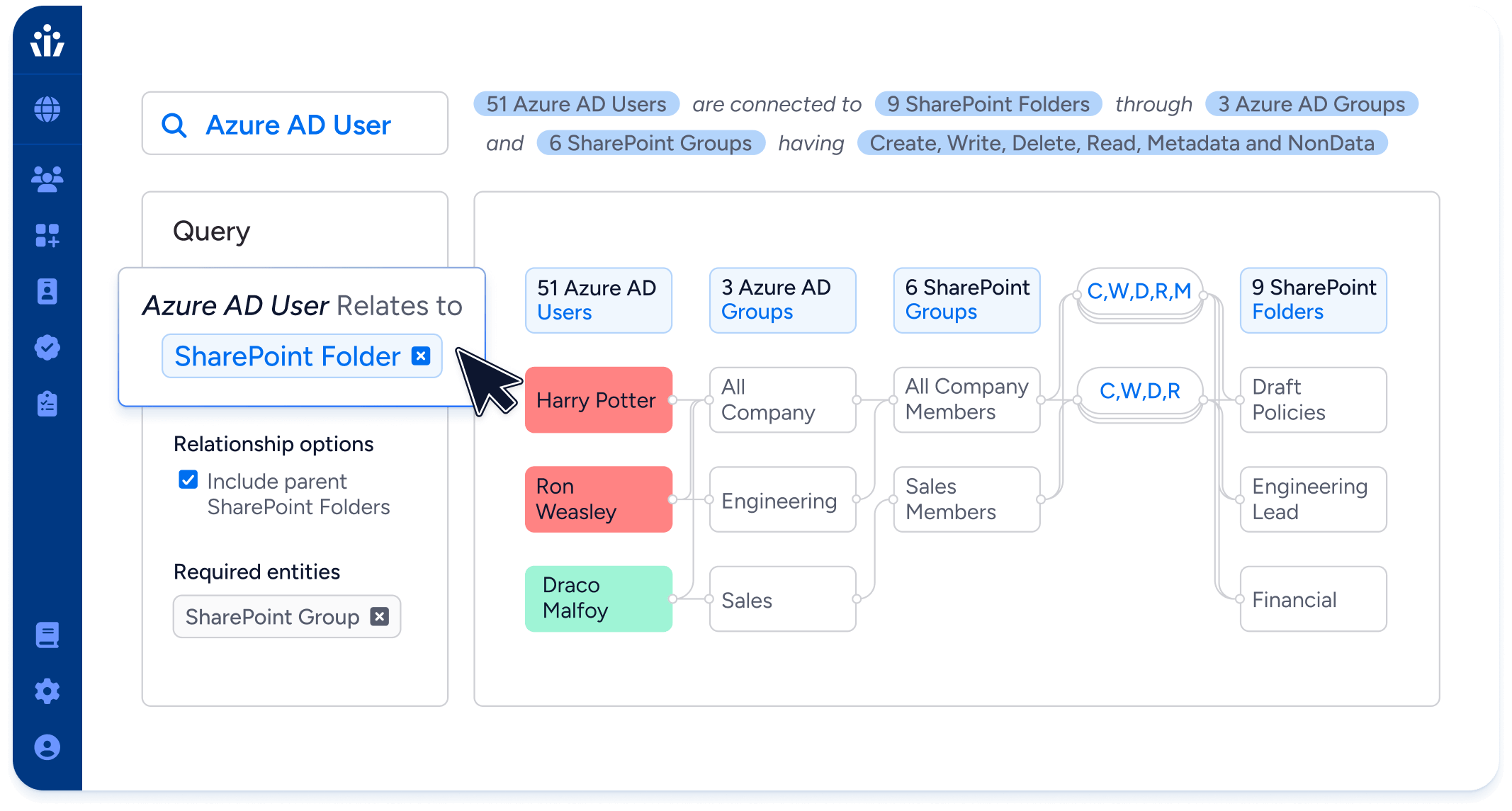

TL;DR: An identity security platform manages and secures access for human, non-human, and AI identities across cloud and on-premises systems. Best for AI-native access intelligence: Opti; enterprise governance: SailPoint; privileged access: Idira; runtime identity protection: Silverfort.
What Is an Identity Security Platform?
An Identity Security Platform (ISP) is a centralized cloud-native control plane that manages, secures, and governs digital identities and their access to enterprise resources. This includes human users, non-human identities (NHI) such as service accounts and API keys, and agentic identities used by autonomous AI agents. It provides a unified view of who or what an identity is, what resources it can access, and how that access is being used.
Core capabilities of these platforms include:
Authentication and MFA controls: Verify identity and apply stronger authentication based on factors such as risk, device, location, and resource sensitivity.
Identity governance and administration: Manage identity lifecycles, access requests, certifications, segregation of duties, and joiner-mover-leaver processes.
Privileged access management: Control high-risk accounts and sessions through credential vaulting, monitoring, approval workflows, and temporary elevation.
Least-privilege enforcement: Reduce permissions to the minimum required by comparing granted access with actual usage and business need.
Just-in-time access: Grant temporary elevated permissions for a task or time window and automatically revoke them afterward.
Entitlement and permission management: Map direct and inherited access across systems to identify excessive, unused, or toxic permission combinations.
Non-human identity security: Discover and govern service accounts, workload identities, API keys, certificates, automation identities, and AI agents.
Identity threat detection and response: Detect suspicious authentication, credential misuse, privilege escalation, and lateral movement, then trigger response actions.
Continuous identity posture monitoring: Continuously assess identities, roles, permissions, and access paths for drift, policy violations, and emerging risk.
AI-driven identity risk analysis: Use peer analysis, anomaly detection, and contextual risk scoring to identify and prioritize unusual or high-impact access.
This is part of a series of articles about identity and access management
Identity Security Platforms at a Glance
The table below summarizes the key differences between the platforms covered in this article. We look at each of them in more detail in the sections that follow.
Category | Solution | Best For | Key Strengths | Things to Consider |
Identity security and governance | Opti | Teams adding AI-driven intelligence to identity governance | Access graph and plain-English policies with one-click fixes | Newer vendor with limited independent review coverage |
Identity security and governance | SailPoint Human Fabric | Large enterprises standardizing identity governance | Identity Graph, certifications, zero standing privilege | Slow support responses and high total cost |
Identity security and governance | Saviynt | Converging IGA, app access governance, and PAM | Single platform with AI and NHI posture management | Customization depends on the vendor; limited log retrieval |
Identity security and governance | Veza | Mapping effective permissions across many systems | Access Graph with 500+ prebuilt risk queries | Strong on visibility, lighter on enforcement actions |
Workforce identity | Okta Workforce Identity | Cloud-first workforce access and single sign-on | SSO, adaptive MFA, governance, 8,000+ integrations | Per-user costs climb; reporting and export are limited |
Workforce identity | Microsoft Entra ID | Microsoft 365 and Azure-centric identity estates | Conditional Access, Identity Protection, PIM | Advanced controls require higher-tier licences |
Workforce identity | Ping Identity Platform | Workforce, customer, and partner identity on one platform | No-code orchestration and flexible deployment models | Premium pricing and lengthy, complex implementation |
Workforce identity | IBM Verify | Extending modern authentication to legacy estates | Modular IAM suite with Application Gateway for legacy apps | Complex configuration and app onboarding |
Privileged access | Idira by Palo Alto Networks | Enterprises with heavy privileged access risk | Modern PAM across human, machine, and agentic identities | Expensive, with complex installs and upgrades |
Privileged access | BeyondTrust Pathfinder | Mapping and reducing paths to privilege | Unified vaulting, session control, and cloud entitlements | Dated console and inconsistent documentation |
Privileged access | Delinea Platform | Extending PAM into continuous authorization | Iris AI with zero standing privilege enforcement | Higher price point and integration complexity |
Identity threat detection | CrowdStrike Falcon Next-Gen Identity Security | Tying identity threats to endpoint telemetry | Real-time ITDR with autonomous response actions | Noisy defaults and questions about cost value |
Identity threat detection | Silverfort | Protecting legacy and unmanaged resources | Inline enforcement at every authentication, agentless | Small public review base; some implementation friction |
Identity threat detection | SentinelOne Singularity Identity | Defending Active Directory against credential attacks | Deception techniques plus unified endpoint and identity | First-line support and reporting need improvement |
Why Do Organizations Need Identity Security Platforms?
Growing Identity-Based Attack Surface
Attackers increasingly target identity mechanisms such as:
Credentials
Authentication tokens
API keys
Browser sessions
Stolen credentials can allow an attacker to authenticate as a legitimate user instead of exploiting a software vulnerability. This activity can be difficult to distinguish from normal access. The attack surface also grows as organizations add remote users, contractors, cloud services, and external applications. Each new identity and authentication path creates another potential entry point.
Identity security platforms monitor these relationships and detect indicators such as unusual logins, privilege changes, abnormal resource access, and attempts to use dormant accounts.
Related content: Read our article about IAM security
Excessive Permissions and Privilege Creep
Users often receive additional permissions when they:
Change roles
Join projects
Temporarily need access to a system
These permissions are not always removed afterward. Over time, users can accumulate privileges that exceed what they need for their current responsibilities. The same problem affects service accounts and workloads, which are often assigned broad permissions to avoid operational failures.
Identity security platforms analyze granted and used permissions to identify unnecessary access. Teams can then remove unused privileges, reduce standing administrative access, and apply least-privilege policies based on actual usage.
Multi-Cloud and SaaS Complexity
Organizations commonly use multiple cloud providers alongside:
SaaS applications
Identity providers
On-premises systems
Each platform defines users, groups, roles, policies, and permissions differently. As a result, determining what an identity can actually access may require analyzing several systems at once.
Identity security platforms collect and correlate identity and entitlement data across these environments. This provides a more complete view of effective permissions, including access inherited through groups and roles. Security teams can use this information to find risky access paths, inconsistent policies, and accounts that retain access across systems after their role changes.
Increasing Use of Non-Human Identities
Modern environments contain NHIsi:
Service accounts
Workload identities
API keys
Certificates
Access tokens
Bots
Identities used by automation and AI agents
These non-human identities can outnumber employees and often operate without direct human interaction. They may also receive powerful permissions because applications need reliable access to infrastructure and data. Non-human identities create additional risks when credentials are long-lived, shared, embedded in code, or left active after an application is retired.
Identity security platforms help discover these identities, identify their owners and dependencies, and analyze their privileges. They can also help teams find unused credentials, excessive permissions, and abnormal machine-to-machine access.
Compliance and Governance Requirements
Identity security platforms help organizations enforce access controls and produce evidence for regulatory and audit requirements. They centralize identity, entitlement, activity, and remediation data so teams can demonstrate who has access, why that access exists, whether it is appropriate, and how violations are corrected.
For SOX, identity security platforms support controls over access to financial systems by identifying excessive privileges, enforcing segregation of duties, reviewing privileged access, and maintaining evidence of access changes and remediation.
For SOC 2, they support logical access controls by monitoring authentication, permissions, privileged roles, and access reviews across systems that process customer data.
For ISO 27001, they help implement identity and access management controls by maintaining visibility into accounts and entitlements, enforcing least privilege, reviewing access rights, and removing unnecessary permissions.
For HIPAA, identity security platforms support access control requirements for systems containing protected health information by identifying unauthorized or excessive access and monitoring privileged activity.
For PCI-DSS, they help restrict access to cardholder data environments based on business need, monitor privileged accounts, enforce least privilege, and provide evidence for periodic access reviews.
For NYDFS, they support identity governance and privileged access controls by helping organizations inventory identities, detect risky permissions, review access, and remediate inappropriate privileges within systems covered by cybersecurity requirements.
For NIS2, identity security platforms support access control and risk-management requirements by improving visibility into human and non-human identities, detecting risky access paths, and reducing excessive or unmanaged privileges.
For GDPR, they help limit access to personal data through least-privilege controls, identify unnecessary access, monitor identity activity, and provide evidence that access rights are reviewed and revoked when no longer required.
Related content: Read our article about IAM best practices
How Does an Identity Security Platform Work?
1. Continuous Identity Discovery
Identity security platforms continuously collect identity data from identity providers, cloud platforms, SaaS applications, directories, and infrastructure. They discover human users, service accounts, workload identities, API credentials, and agentic identities, including identities that may not appear in a central directory.
The platform correlates these identities with their roles, groups, credentials, resources, and activity. This creates an inventory that shows which identities exist, who owns them, where they operate, and what access they have across the environment.
2. Entitlement and Risk Analysis
The platform analyzes direct and inherited permissions to determine an identity’s effective access. It can compare granted permissions with actual usage to identify excessive privileges, dormant access, privilege creep, toxic permission combinations, and unused credentials.
Risk analysis also considers factors such as identity type, resource sensitivity, authentication methods, activity, and potential privilege-escalation paths. This helps teams prioritize exposures based on their security impact rather than treating every entitlement equally.
3. Policy Enforcement
Identity security platforms evaluate identities and permissions against organizational policies. Policies can define requirements for least privilege, segregation of duties, privileged access, credential lifetime, authentication, and access to sensitive resources.
When the platform detects a violation, it can generate an alert, initiate an approval workflow, or trigger an enforcement action. Applying policies consistently across cloud, SaaS, and on-premises environments reduces gaps caused by different native access-control models.
4. Closed-Loop Remediation
Closed-loop remediation connects risk detection directly to corrective action. Instead of stopping at an alert, the platform can remove unused permissions, revoke credentials, disable dormant accounts, adjust roles, or route higher-risk changes through an approval workflow.
The platform then verifies that the change was applied and reassesses the identity to confirm that the identified risk has been reduced. This feedback loop provides a record from discovery through remediation and helps prevent unresolved identity risks from remaining in alert queues.
What Security Risks Can Identity Security Platforms Detect?
Dormant and Orphaned Accounts
Dormant accounts have not been used for an extended period, while orphaned accounts no longer have a valid owner. Both can remain active with access to sensitive resources after employees leave, applications are retired, or responsibilities change.
How identity security platforms help:
These platforms detect these accounts by comparing ownership, lifecycle, login, and access data. Teams can then disable or remove unnecessary accounts before attackers use them as unmonitored access points.
Excessive Privileges
An identity has excessive privileges when it can perform more actions or access more resources than its role requires. This increases the potential impact of credential theft, account compromise, or accidental misuse.
How identity security platforms help:
They compare granted permissions with actual usage and defined access policies. They can identify unused administrative rights, unnecessary resource access, and permissions that should be reduced to enforce least privilege.
Toxic Permission Combinations
Toxic permission combinations occur when individually acceptable permissions create excessive power when combined. For example, an identity might be able to create a resource, modify its access policy, and approve its own changes. These combinations can violate segregation of duties (SoD) controls and create paths to sensitive data or administrative privileges.
The risk is especially significant in agentic environments. An AI agent can accumulate permissions across applications, cloud services, and data systems, creating the same SoD violations as an overprivileged human user. Unlike human access, however, an agent can exercise those permissions at machine speed and without a traditional review cycle.
How identity security platforms help:
Identity security platforms analyze effective permissions across systems to identify and remediate these combinations.
Misconfigured Roles and Policies
Cloud roles, access policies, groups, and application permissions can be configured too broadly or contain unintended access rules. Wildcard permissions, incorrect inheritance, or overly broad group membership can expose sensitive resources.
How identity security platforms help:
They evaluate these configurations against security policies and least-privilege requirements. They can highlight which identities are affected and show how a particular role or policy creates risky access.
Compromised Credentials
Passwords, API keys, tokens, certificates, and other credentials can be stolen, leaked, or exposed in repositories and configuration files. Attackers can use valid credentials to access systems without triggering controls designed to detect software exploits.
How identity security platforms help:
They can correlate credential exposure with identity privileges and authentication activity. This helps teams prioritize compromised credentials based on the resources and permissions available to the affected identity.
Suspicious Login and Access Behavior
Unexpected authentication or resource access can indicate that an identity has been compromised. Examples include logins from unusual locations, access from unfamiliar devices, abnormal login times, repeated authentication failures, or sudden access to sensitive resources.
How identity security platforms help:
They analyze authentication and activity data to identify deviations from expected behavior. Combining behavioral signals with identity context helps distinguish potentially malicious activity from routine access.
Privilege Escalation
Privilege escalation occurs when an attacker or compromised identity obtains permissions beyond its intended level. This may involve assigning a privileged role, modifying an access policy, impersonating another identity, or exploiting permission relationships.
How identity security platforms help:
They can monitor privilege changes and analyze paths that allow identities to gain higher levels of access. Detecting these paths before exploitation can help teams remove dangerous permission relationships.
Lateral Movement
After gaining initial access, attackers may use credentials and permissions to move between accounts, applications, workloads, and cloud resources. Each new identity or system can provide additional privileges or access to more sensitive data.
How identity security platforms help:
These platforms map relationships between identities and resources to expose potential lateral movement paths. They can also detect unusual sequences of authentication, impersonation, role assumption, and resource access associated with active movement.
Overprivileged Service Accounts and Machine Identities
Service accounts, workloads, applications, automation tools, and AI agents often require permissions to operate without human interaction. These identities may receive broad privileges that remain unchanged even when their actual requirements are limited.
How identity security platforms help:
They inventory machine identities and compare their permissions with observed activity. They can identify unused privileges, unnecessary administrative access, stale credentials, and machine identities with unclear ownership, helping teams reduce the impact of a compromised workload or credential.
Key Capabilities of an Identity Security Platform
Authentication and MFA Controls
Authentication controls verify that an identity is legitimate before granting access. Identity security platforms can integrate with:
Single sign-on
Identity providers
Passwordless authentication
Multi-factor authentication (MFA) systems
MFA adds another verification factor beyond a password, reducing the value of stolen credentials. Platforms may also support adaptive authentication, which applies stronger verification when factors such as device, location, resource sensitivity, or login behavior indicate higher risk.
Identity Governance and Administration
Identity governance and administration (IGA) manages identity and access throughout the lifecycle. It covers:
Joiner, mover, and leaver (JML) processes
Access requests
Access reviews and certifications
Segregation of duties (SoD) enforcement
Entitlement analysis
HRIS platforms commonly serve as the source of truth for employment and role changes that trigger these lifecycle events. Effective IGA also incorporates usage telemetry rather than relying only on assigned roles and permissions. By comparing granted access with actual activity, identity security platforms can identify unused entitlements, privilege creep, and access that no longer matches an identity’s responsibilities. This supports more accurate reviews and timely deprovisioning.
Privileged Access Management
Privileged access management (PAM) controls how administrative and other high-risk access is granted and used. Capabilities can include:
Credential vaulting
Session monitoring
Privileged account discovery
Approval workflows
Credential rotation
Temporary elevation
IGA and PAM are complementary subdisciplines of identity and access management (IAM). IGA governs who should have privileged access and whether that access remains appropriate, while PAM controls how privileged access is exercised. Used together, they provide governance over privileged entitlements and operational controls over privileged sessions and credentials.
Least-Privilege Enforcement
Least privilege limits identities to the minimum permissions required to perform their tasks. This reduces the potential impact of:
Compromised accounts
Malicious insiders
Configuration errors
Identity security platforms analyze granted permissions and actual usage to find privileges that are unnecessary or rarely used. They can recommend or automate permission reductions while preserving the access required for normal operations.
Just-in-Time Access
Just-in-time (JIT) access provides elevated permissions only when an identity needs them and removes those permissions after a defined period. This reduces standing privileges that attackers could exploit at any time.
A platform can require users to:
Request privileged access
Provide a reason
Obtain approval before elevation
Access can then be granted for a specific resource and duration, with activity recorded for investigation and auditing.
Entitlement and Permission Management
Entitlements define the actions identities can perform across applications, cloud services, databases, and infrastructure. Understanding effective access can be difficult because permissions may come from:
Direct assignments
Groups
Roles
Policies
Inherited relationships
Identity security platforms collect and normalize entitlement data to show how access is granted. They can identify unused permissions, overly broad roles, toxic permission combinations, and indirect access paths that are difficult to find through manual reviews.
Non-Human Identity Security
Non-human identity (NHI) security covers:
Service accounts
Workload identities
API keys
Certificates
Automation identities
AI agents
These identities can hold sensitive permissions and operate without direct human interaction, making ownership, access scope, and lifecycle management important security controls. NHIs require the same core lifecycle controls as human identities: complete inventory, clearly assigned ownership, scoped permissions, periodic access reviews, and deprovisioning when they are no longer needed. Identity security platforms can also use activity and dependency data to identify excessive permissions, stale credentials, and unused identities.
Identity Threat Detection and Response
Identity threat detection and response (ITDR) focuses on identifying attacks that use or target identity systems. It can detect the use of legitimate permissions for:
Suspicious authentication
Credential misuse
Privilege escalation
Account takeover
Attempts to move between resources
Identity security platforms correlate authentication events with permissions, identity context, and resource activity to improve detection accuracy. Response actions can include disabling an account, revoking a session, removing privileges, rotating credentials, or sending findings to security operations tools for investigation.
Continuous Identity Posture Monitoring
Identity environments change constantly as accounts, roles, applications, workloads, and permissions are created or modified. Periodic reviews can leave risky configurations undetected between assessment cycles. Continuous identity posture monitoring evaluates identities and access relationships as these changes occur. It can detect:
Excessive permissions
Dormant accounts
Policy violations
Risky privilege paths
Other security gaps
This allows teams to address identity risks before they are exploited.
AI-Driven Identity Risk Analysis
AI-driven identity risk analysis helps identify access risks that static rules may miss, using:
Identity data
Entitlements
Activity data
Peer-group analytics can compare identities with similar roles or responsibilities to detect outlier access, such as a user or AI agent holding permissions that its peers do not require. Identity security platforms can also apply anomaly detection to usage patterns to identify unusual authentication, privilege, and resource-access behavior. Automated classification can identify high-risk entitlements based on privilege level, resource sensitivity, and potential impact.
Notable Identity Security Platforms
How we selected these platforms: We shortlisted identity security platforms based on their coverage of identity discovery, entitlement and permission analysis, access governance and certification, authentication and MFA, privileged access controls, non-human and AI agent identity security, and identity threat detection and response.
Identity Security and Governance Platforms
1. Opti

Best for: Adding AI-native intelligence to existing identity governance
Strengths: Access graph covering human, non-human, and agentic identities
Things to consider: Newer vendor with limited independent review coverage
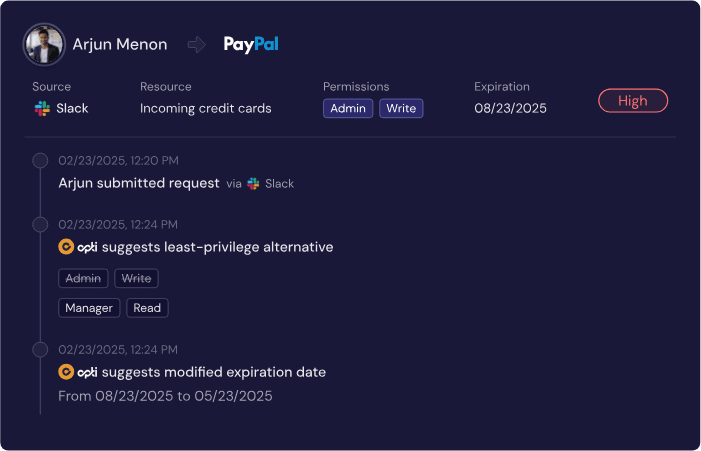
Opti is an AI-native identity and access management platform that ingests, normalizes, and analyzes identities across an organization's applications. It builds a living access graph of identities, entitlements, and usage, covering human, non-human, and agentic identities.
The platform pairs that graph with an identity workflow engine that turns findings into action. Specialized entitlement models analyze context to find risky access and excessive privileges, then generate automated policies and remediation plans. Opti works alongside an existing IGA deployment or in place of one, and integrates with identity providers and business applications.
Key features include:
Contextual access graph: Unifies identities, roles, entitlements, and usage patterns into a single view, showing entitlements alongside business context rather than account-level access alone.
Natural language access queries: Answers questions such as who holds admin access to a given application without requiring SQL or filter construction, returning results directly in the interface.
Graph as a control plane: Allows real-time changes to entitlements and permissions to be made directly from the interactive access graph rather than through a separate console.
Plain-English policies: Lets teams write policies in ordinary language, such as restricting production system access to engineers, and continuously scans the environment for violations.
One-click remediation: Produces a defined remediation path for over-privileged access and orphaned accounts and executes it from within the platform, with human approval where required.
Least privilege and just-in-time access: Analyzes privileges dynamically against actual usage, revokes stale entitlements, and issues on-demand permissions instead of standing access.
Lifecycle automation: Recommends least-privilege access at onboarding based on role, team, and peer behavior, then recalibrates entitlements as users change teams or responsibilities.
AI agent security: Tracks user and AI agent activity, shows what each agent can read, write, or manage across connected applications, and enforces least-privilege policies on agent access.
Continuous compliance: Aggregates identity, access, and entitlement data and maps it to roles, policies, and usage so access reviews can be produced on demand.
Integration coverage: Offers over 250 integrations spanning identity providers, IGA tools, and business applications, and supports homegrown applications through its AI engine.
Limitations (based on publicly available sources):
Limited independent review coverage: Opti does not yet have a verified customer review profile on the major software review platforms, so third-party validation is harder to find than for established vendors.
Early-stage vendor: The company emerged from stealth in late 2025 with seed funding and operates with a small team, which buyers with long procurement cycles may want to factor in.
Layered rather than foundational: The platform is designed to sit on top of existing identity providers and governance tooling, so organizations still need those underlying systems in place.
Source: Opti
2. SailPoint Human Fabric

Best for: Large enterprises standardizing identity governance at scale
Strengths: Identity Graph, automated certifications, zero standing privilege
Things to consider: Slow support responses and high total cost of ownership
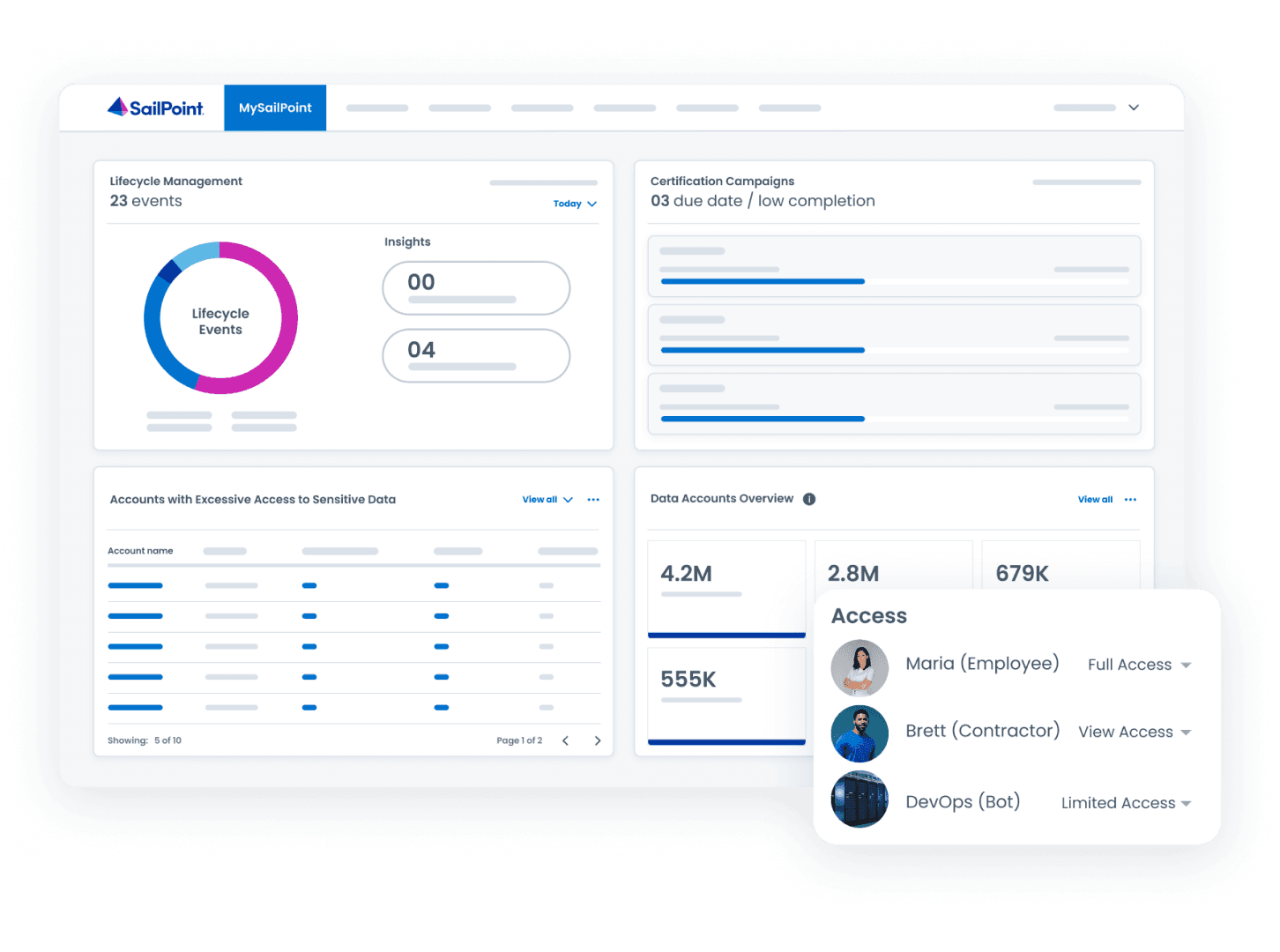
SailPoint Human Fabric is the current name for what was previously Identity Security Cloud. It organizes identity governance around three functional pillars: Discover, Govern, and Protect. The platform is built on the SailPoint Atlas foundation and delivered as SaaS.
Discover builds a risk-aware view of identities, access paths, and entitlements using the Identity Graph. Govern replaces manual certification campaigns with automated lifecycle orchestration and policy analysis. Protect pushes controls into runtime, enforcing zero standing privilege with just-in-time access and isolating accounts when anomalous behavior or policy drift is detected.
Key features include:
Identity Graph: Maps every identity, access path, and entitlement across the environment and applies AI-driven intelligence to surface risk before it turns into an incident.
Access Modeling and Identity Outliers: Recommends roles by comparing an identity against its peer group and flags accounts whose access diverges from that of similar users.
Automated certifications: Runs access review campaigns with policy enforcement and full visibility into user entitlements, replacing periodic manual review cycles.
Zero standing privilege enforcement: Grants elevated access just in time rather than leaving privileges permanently assigned, and revokes it once the task window closes.
Accelerated Application Management: Uses AI-assisted application onboarding to bring apps under governance faster and provide visibility across the enterprise application estate.
Advanced capability modules: Adds Non-Employee Risk Management, Data Access Security, Cloud Infrastructure Entitlement Management, Access Risk Management, and Password Management.
Agentic Fabric: Extends governance to agentic identities alongside the human identity controls in Human Fabric, covering both under one platform.
Compliance management: Automatically enforces access policies and maintains audit-ready records of entitlements, approvals, and access changes.
Limitations (as reported by users on G2):
Support responsiveness: Users report delays in getting issues resolved, with some cases ending up routed to professional services, and difficulty communicating across time zones.
Total cost: Beyond licensing, users cite the cost of implementation, specialist consulting, and ongoing maintenance, and note that custom code and rules sit behind higher-tier pricing.
Learning curve: Administrators without a programming background report needing extended ramp-up time, and the breadth of configuration options can be difficult to navigate initially.
Role-based access control gaps: Users note that advancements in the RBAC module have been limited, particularly in the enterprise version compared with the cloud product.
Configuration depth: Some reviewers report that deeper configuration still has to be done through APIs rather than the web interface.
Source: SailPoint
3. Saviynt

Best for: Converging governance, application access, and privileged access
Strengths: One platform spanning IGA, PAM, and AI identity posture
Things to consider: Customization requests routed back to the vendor
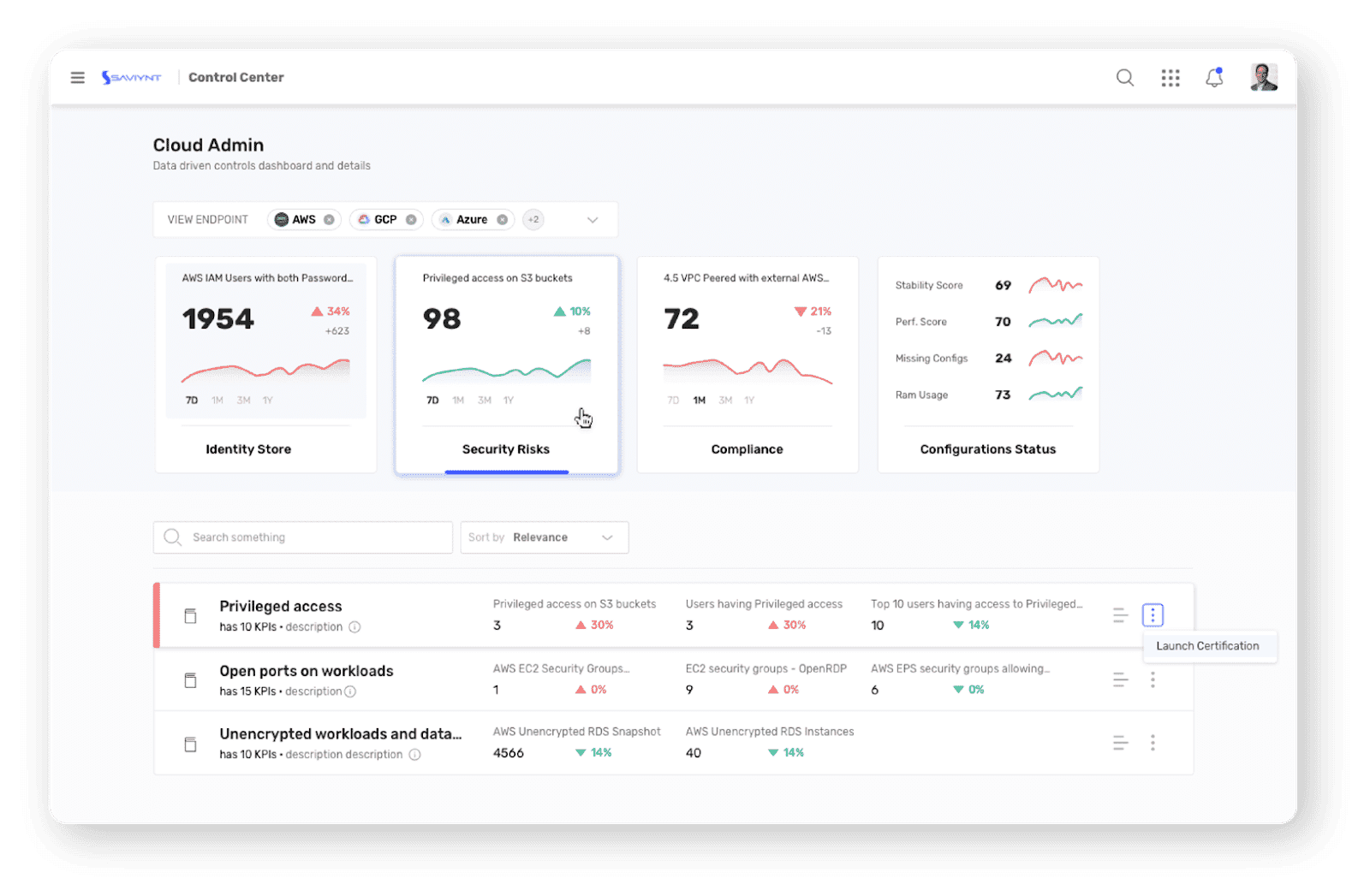
Saviynt provides identity governance and administration, application access governance, and privileged access management on a single cloud platform. It covers internal workforce, external workforce, privileged users, non-human identities, and AI agents.
The platform's more recent focus is Zuma, its AI identity security layer. Zuma registers and manages AI agent identities including their privileges and risk profile, discovers shadow AI agents running without governance, and evaluates intent and context for each request at runtime to keep agents operating within their intended scope.
Key features include:
Identity governance and administration: Handles access requests, approvals, provisioning, certification, and deprovisioning across applications and infrastructure from a single control point.
Application access governance: Applies fine-grained controls inside business applications, including cross-application separation of duties analysis for ERP and similar systems.
Privileged access management: Extends the platform to privileged accounts so privileged and standard access are governed under the same policies rather than in separate tools.
AI agent registration and management: Records AI agent identities along with their access privileges and risk profile, addressing the question of which system owns agent identity records.
Shadow AI discovery: Finds ungoverned AI agents operating across the enterprise and supports remediation of the access they have accumulated.
Runtime intent evaluation: Assesses the intent and context behind each agent request at the moment it is made to confirm the agent stays within its designed scope.
Identity security posture management: Inventories AI agents and non-human identities with risk context, offered at no cost as a standalone posture capability.
Intelligent recommendations and just-in-time access: Suggests access decisions during reviews and provisions elevated permissions on demand rather than as standing entitlements.
Integrations and MCP server: Connects to AWS, SAP, ServiceNow, CrowdStrike, Wiz, and Zscaler among others, and exposes an MCP server for agent-driven interaction.
Limitations (as reported by users on PeerSpot):
Customization dependency: Users report that changes cannot always be made in-house and have to be routed back to the vendor for modification.
Scalability at volume: Some reviewers question how the platform performs as the number of managed identities grows substantially.
Log retrieval limits: Users note a restriction on pulling historical logs, described as a maximum number of entries within a limited time window.
Server monitoring gaps: Reviewers report the absence of built-in alerting for high server load conditions.
Migration effort: Migrating the tool is described as difficult, and troubleshooting issues is reported to be time-consuming.
Source: Saviynt
4. Veza

Best for: Mapping effective permissions across cloud, SaaS, and on-premises
Strengths: Access Graph resolving permissions down to resource actions
Things to consider: Stronger on visibility than on direct enforcement
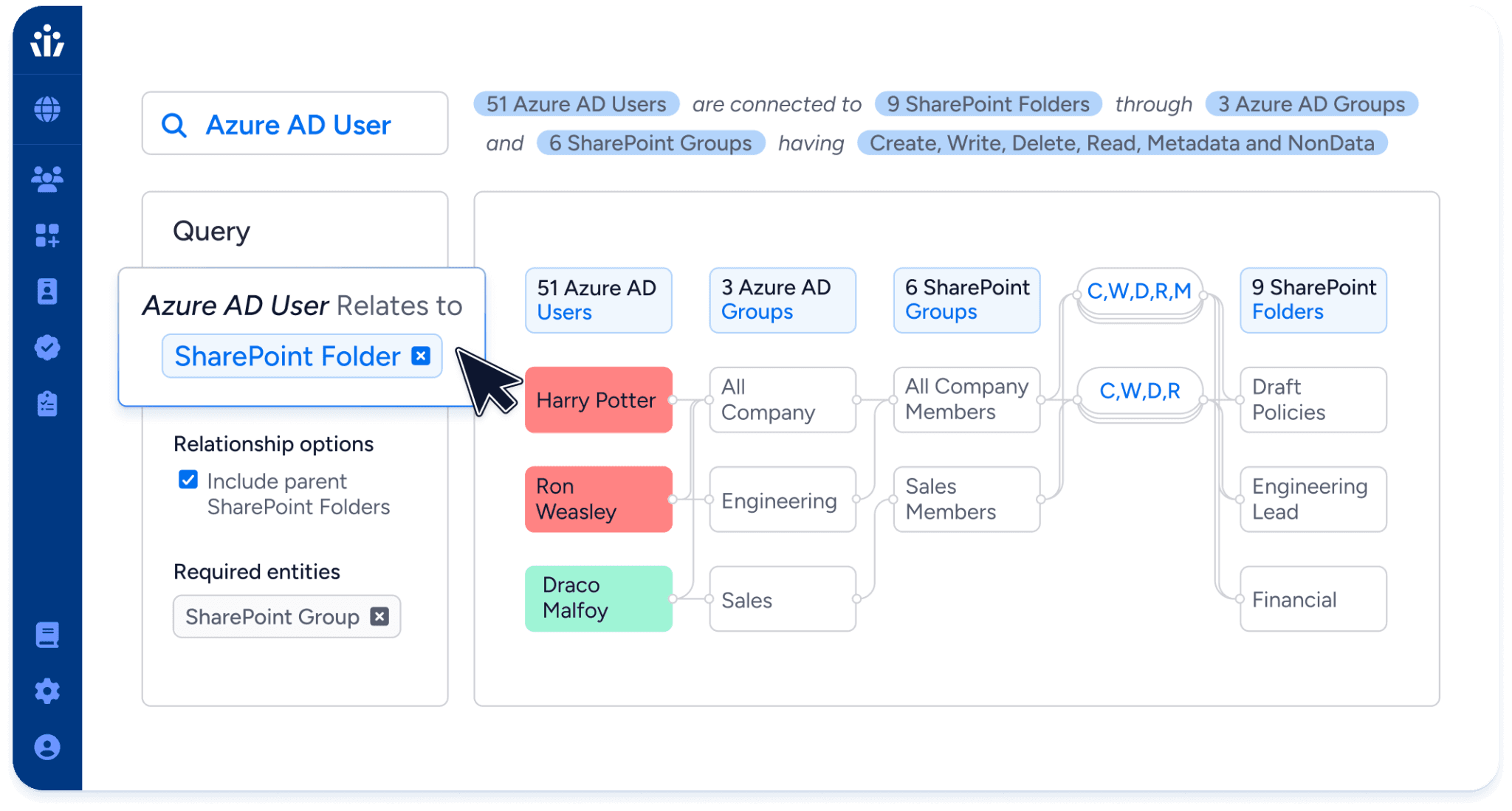
Veza builds its platform around the Access Graph, which traverses users, groups, roles, and policies to connect identities to their effective permissions on individual resources. Those permissions are expressed in plain create, read, update, and delete terms rather than in each system's native syntax. Veza is now part of ServiceNow following an acquisition that closed in March 2026.
The platform layers identity security posture management, governance, and non-human identity security on top of that graph. It monitors both who can access a resource and who has actually accessed it, which lets teams right-size roles and remove dormant entities based on observed usage.
Key features include:
Access Graph: Resolves inherited and indirect permissions across identity systems, cloud providers, data systems, and on-premises applications into a single effective-permissions view.
Prebuilt risk queries: Ships with over 500 queries covering privileged users, dormant permissions, policy violations, and misconfigurations, and can open remediation tickets from findings.
Access certifications: Builds review campaigns that prioritize risky access first and give reviewers the context needed to approve or reject each decision.
Lifecycle management with dry run: Grants and revokes access as users join, move, or leave, and can simulate changes in advance to catch access mistakes and policy violations.
Access AuthZ: Automates provisioning at the point of enforcement for both human and machine identities, and detects toxic combinations and separation-of-duties conflicts across platforms.
Non-human identity security: Inventories service accounts, keys, and secrets, assigns ownership, and detects expired credentials and over-permissioned accounts alongside human identities.
AI agent visibility: Shows what data and applications AI agents can reach, maps them to human owners, and maintains audit trails for AI security posture management.
Access Hub: Gives managers and employees a central place to view, request, and govern access outside the security team's console.
Integration model: Provides more than 300 agentless, read-only integrations plus an Open Authorization API for custom applications and a REST API for automation.
Limitations (as reported by users on PeerSpot):
Cost and fit: Reviewers describe the platform as expensive and not well suited to smaller projects, where the investment is harder to justify.
Setup complexity: Users report that implementation is complex and requires integration work across multiple systems before value is realized.
Enforcement scope: One reviewer notes that the platform delivers visibility and insights but wanted stronger built-in enforcement capabilities.
Connector coverage: As a relatively new vendor, users report that some applications lack out-of-the-box connectors and require engineering work to support.
Support escalation: Some users report needing to escalate through their account team to get responses, particularly on integration questions.
Source: Veza
Workforce Identity Platforms
5. Okta Workforce Identity

Best for: Cloud-first workforce, contractor, and partner access
Strengths: SSO, adaptive MFA, governance, and a large integration network
Things to consider: Per-user pricing rises as the organization grows
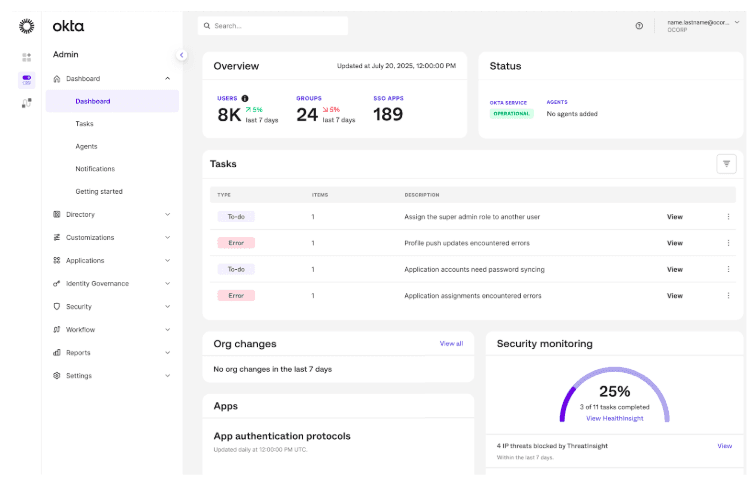
Okta Workforce Identity secures access for employees, contractors, and partners across cloud and on-premises applications. It combines single sign-on, adaptive multi-factor authentication, lifecycle management, and identity governance into one layer, with Universal Directory acting as the central store for users, groups, and devices.
The platform has extended beyond access management into posture and threat detection. Identity Security Posture Management identifies vulnerabilities and prioritizes remediation of identity sprawl, while Identity Threat Protection with Okta AI continuously monitors risk signals and orchestrates responses across apps, infrastructure, and connected security tools.
Key features include:
Single sign-on and Universal Directory: Connects the workforce to applications from any location or device, with one directory holding users, groups, and device records.
Adaptive MFA and FastPass: Applies risk-aware authentication policies and supports device-bound, phishing-resistant passwordless authentication alongside third-party FIDO2 authenticators.
Identity Threat Protection with Okta AI: Continuously analyzes risk signals to detect threats in real time and orchestrates policy responses across connected applications and security tools.
Identity Security Posture Management: Surfaces identity vulnerabilities, prioritizes them by risk, and simplifies remediation across a sprawling identity estate.
Identity Governance: Runs automated access reviews and certifications so permissions stay aligned to current roles, supporting audit requirements such as SOC 2 and HIPAA.
Lifecycle Management: Syncs with the HR system to provision application access for new hires and revoke it on termination without manual intervention.
Privileged Access and Advanced Server Access: Enforces least standing privilege on critical accounts and applies centralized identity controls to server infrastructure.
Access Gateway and API Access Management: Secures on-premises applications without source code changes and brings APIs under identity control.
Workflows and the Okta Integration Network: Provides no-code identity automation and access to more than 8,000 prebuilt integrations.
Limitations (as reported by users on PeerSpot):
Pricing at scale: Users describe the per-user subscription model as expensive as headcount grows, with additional charges for API features and tokens.
Reporting and export: Reviewers report limited built-in reporting and export functionality compared with what they expect from the platform.
Initial setup: Less experienced administrators report difficulty during setup, particularly when integrating with Active Directory or configuring specific policies.
Directory integration: Some users report compatibility issues with certain directory integrations and on-premises systems.
Service disruptions: Users mention occasional outages affecting access, though most note these were resolved quickly.
Support responsiveness: Reviewers based outside North America report that support quality and response times do not always match the platform itself.
Source: Okta
6. Microsoft Entra ID

Best for: Organizations centered on Microsoft 365 and Azure
Strengths: Conditional Access, Identity Protection, privileged identity management
Things to consider: Advanced capabilities sit behind higher-tier licences
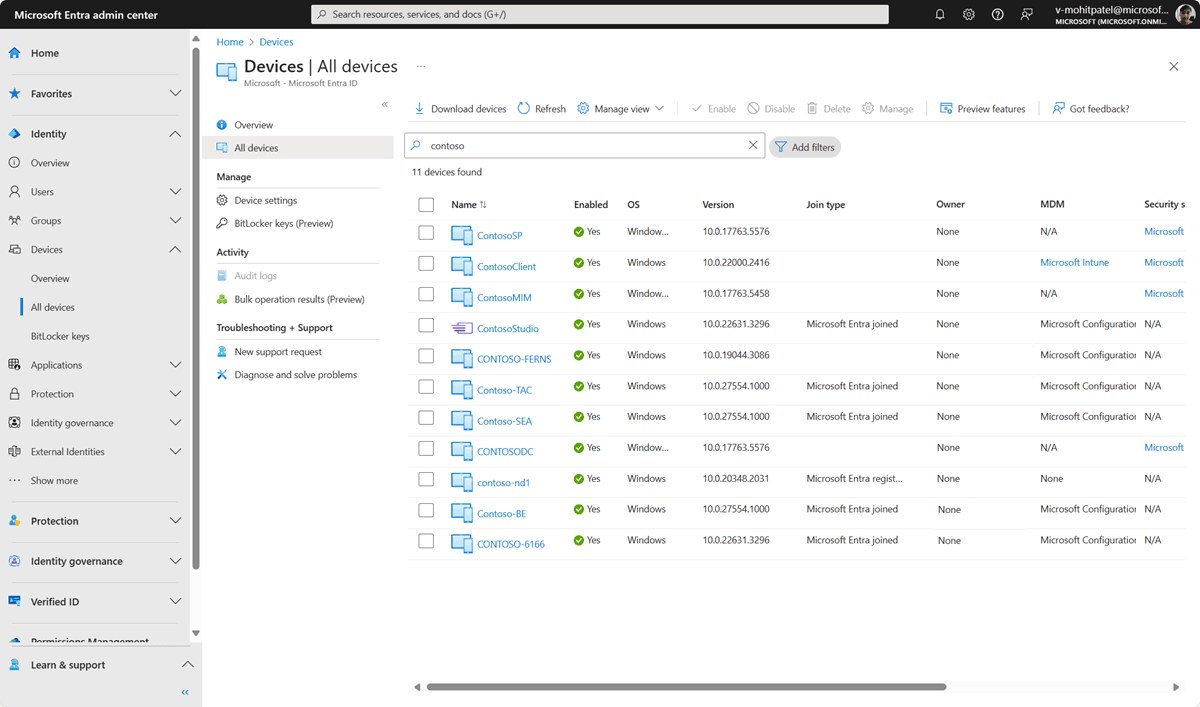
Microsoft Entra ID is a cloud identity and access management service that authenticates users and secures access to applications and resources across cloud and on-premises environments. It covers legacy applications through to SaaS applications, AI assistants, data, and devices from a single directory.
Access decisions run through Conditional Access, which applies adaptive policies based on signals such as device state, location, and risk. Identity Protection uses machine learning to detect and block identity takeover attempts, and Privileged Identity Management issues just-in-time elevation for sensitive roles instead of leaving administrative rights permanently assigned.
Key features include:
Conditional Access: Evaluates each access attempt against adaptive policies and can require additional verification, restrict access, or block it based on assessed risk.
Multi-factor and passwordless authentication: Supports phishing-resistant authentication methods alongside single sign-on and self-service portals for account and access management.
Identity Protection: Applies machine learning detections and risk-based access policies to block account takeover, and can remediate risky sign-ins without administrator involvement.
Privileged Identity Management: Grants just-in-time elevation for sensitive resources so administrative privileges are held only for the duration they are needed.
Entitlement management and access reviews: Packages access for request and approval and runs periodic reviews to confirm permissions remain appropriate.
Password protection: Blocks weak and commonly used passwords across the environment, which helps organizations still relying on password authentication.
Security Copilot in Microsoft Entra: Handles natural language prompts to investigate risky users, authentication anomalies, access changes, and policy gaps.
Hybrid identity management: Manages identities and application access centrally whether the applications sit in the cloud or on-premises, with event logging and usage reporting.
Verifiable credentials: Issues and verifies credentials as part of the P1 feature set.
Limitations (as reported by users on PeerSpot):
Licensing complexity: Users describe the licensing structure as complex, with advanced capabilities requiring premium tiers and price increases noted in recent years.
Interface navigation: Reviewers report that the administrative interface bundles too much into single views and would benefit from clearer separation of features.
Third-party integration: Integration with non-Microsoft applications is cited as an area needing improvement compared with integration inside the Microsoft ecosystem.
Documentation currency: Users report that documentation does not always keep pace with the frequency of product updates.
Support escalation: Standard support tiers sometimes require escalation to reach engineers with the relevant expertise, causing delays on complex issues.
Service availability: One reviewer describes an extended outage affecting external identity platform services.
Source: Microsoft
7. Ping Identity Platform

Best for: Workforce, customer, and partner identity on one platform
Strengths: No-code orchestration with flexible deployment options
Things to consider: Premium pricing and a long, complex implementation
The Ping Identity Platform covers workforce, customer, business-to-business, and agentic identities from a single product set. It groups capabilities into identification, identity management, access, governance, threat protection, and orchestration, so verification, authentication, and governance run through the same policy layer.
Deployment flexibility is a defining characteristic. The platform runs as multi-tenant SaaS, dedicated-tenant SaaS, or self-managed software, with a FedRAMP High option for public sector use. Helix, the platform's AI engine, sits underneath, and an AI-first headless model exposes identity services through APIs, MCP, CLI, and AI assistants alongside the guided interface.
Key features include:
Identity verification: Issues verifiable credentials, confirms real-world identity, and supports privacy-preserving biometric authentication as part of the onboarding and step-up process.
Lifecycle management and directory: Automates onboarding and offboarding, holds user profile data, and manages relationships between identities across the ecosystem.
Single sign-on and adaptive authentication: Provides SSO with granular access controls for employees, customers, and partners, backed by MFA and passwordless options.
Just-in-time privileged access: Issues elevated permissions on demand as part of the access layer rather than through a separate privileged access product.
Governance controls: Handles access requests, segregation of duties, and access reviews, and applies both preventative and detective policy enforcement.
Threat protection: Combines threat detection, AI-driven fraud prevention, and real-time risk analysis to assess each interaction.
No-code orchestration: Uses a drag-and-drop interface to build, test, and deploy identity workflows covering registration, authentication, and risk assessment.
Ping Gateway: Applies API security controls including throttling and authentication enforcement in front of services.
Agentic and AI identity controls: Provides purpose-built controls for securing agent and AI identities alongside human ones.
Limitations (as reported by users on PeerSpot):
Implementation effort: Users describe implementation as very complex and note that a complete build takes a long time to finish.
Premium pricing: Reviewers report premium pricing that they consider better suited to larger organizations, though some find it cheaper than certain competitors.
Administrative learning curve: Users cite a steep learning curve for administrators and describe the management console as complicated to work with.
Legacy system support: Reviewers report limited support for older systems, which can complicate integration with legacy infrastructure.
Troubleshooting difficulty: Diagnosing issues is reported to require extensive technical expertise, and one user rated the support experience for a component of the platform poorly.
Offline authentication: Users report potential difficulties in offline authentication scenarios.
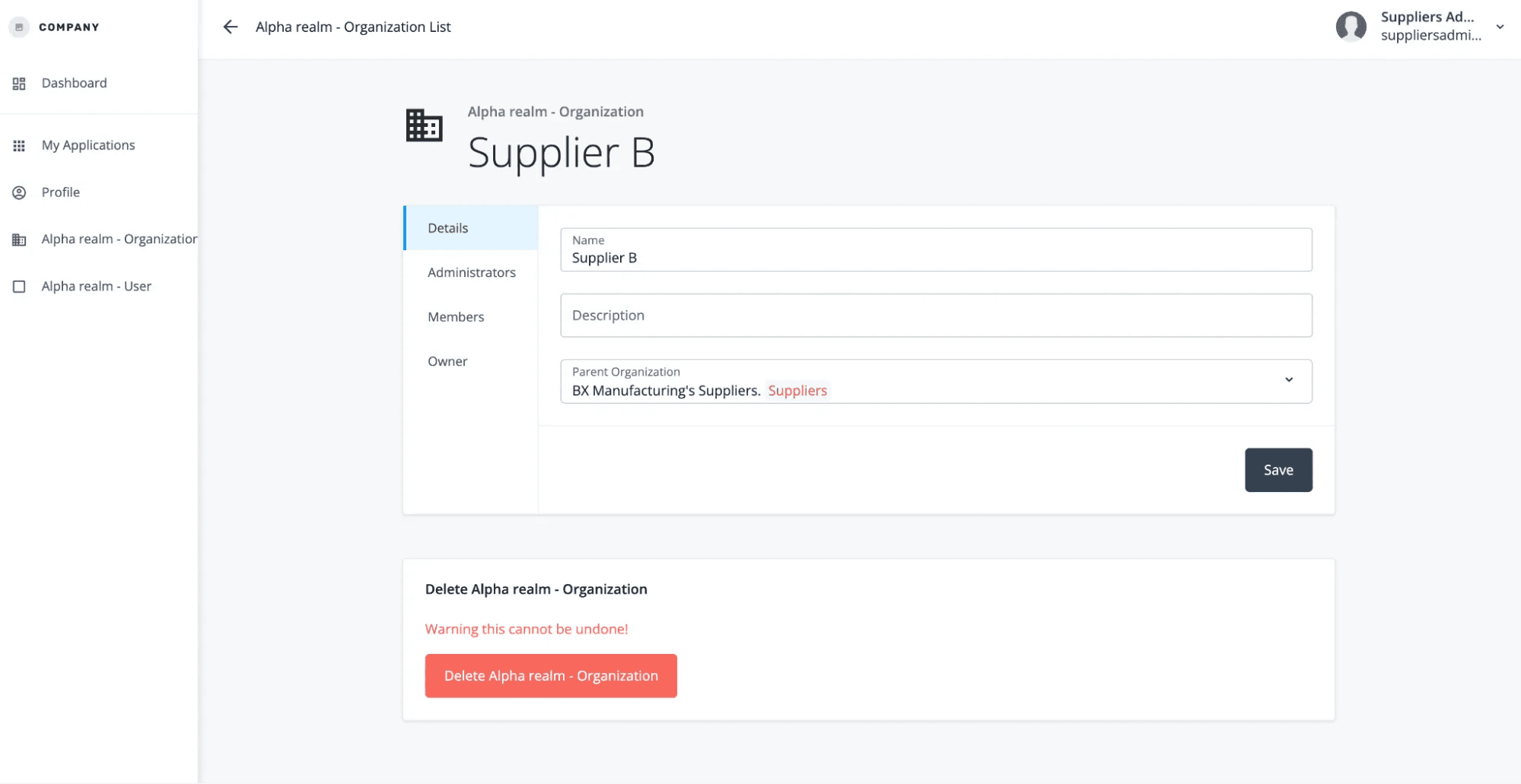
Source: Ping Identity
8. IBM Verify

Best for: Extending modern authentication across hybrid and legacy estates
Strengths: Modular IAM suite with a gateway for legacy applications
Things to consider: Complex configuration and application onboarding
IBM Verify is a unified, identity-first platform covering both human and non-human identities across web, mobile, and hybrid enterprise environments. It provides authentication, adaptive risk evaluation, lifecycle governance, delegation, consent, and continuous audit as one set of services rather than separate products.
The platform is delivered as a family of components that organizations can adopt selectively. These include Workforce Identity, customer identity and access management, Identity Protection, Identity Governance, Privileged Identity, Verify Directory, Verify Trust, and Application Gateway, along with a FedRAMP-certified option for government use.
Key features include:
IBM Application Gateway: Extends modern authentication to legacy applications without requiring source code changes, which brings older systems under current access policy.
Verify Identity Governance: Provisions access, audits and reports on user activity, and applies lifecycle, compliance, and analytics capabilities on-premises and in the cloud.
Verify Privileged Identity: Discovers, controls, and protects privileged accounts across endpoints and hybrid multi-cloud environments.
Verify Identity Protection: Uses AI to detect identity-based risks and threats across the IT landscape rather than only at the authentication point.
Adaptive multi-factor authentication: Delivers passwordless and AI-driven authentication across workforce and customer use cases, built for zero trust deployments.
Verify Trust: Applies real-time behavioral and biometric risk signals to authentication decisions so verification strength matches assessed risk.
Verify Directory: Provides a scalable, containerized directory for consolidating enterprise identity records under a single authoritative source.
Identity orchestration: Builds authentication and access flows through no-code, drag-and-drop visual design that integrates existing identity tools.
Agentic AI identity management: Assigns unique agent identities, governs delegation, and enforces access in real time to prevent privilege sprawl and broken audit trails.
Consent management and identity analytics: Captures granular privacy requirements with self-service support and identifies access risks across users, entitlements, and applications.
Limitations (as reported by users on PeerSpot):
Note: the review profile covers IBM Security Verify Access, the access management component of the IBM Verify family, rather than the full platform.
Configuration complexity: Users report that configuration is complex and that usability could be simplified for administrators managing day-to-day operations.
Application onboarding: Reviewers describe the process of onboarding new applications as complex and time-consuming.
Standards support maturity: One user reports that single sign-on configuration for OIDC and OAuth is not as mature as other areas of the product.
Documentation clarity: Users cite documentation as an area needing improvement for better clarity during implementation.
Cost for smaller organizations: Reviewers note that small and medium-sized businesses may not be able to afford the solution.
Reporting and automation: Users report a need for more comprehensive reporting tools and improved automated deployment and update processes.
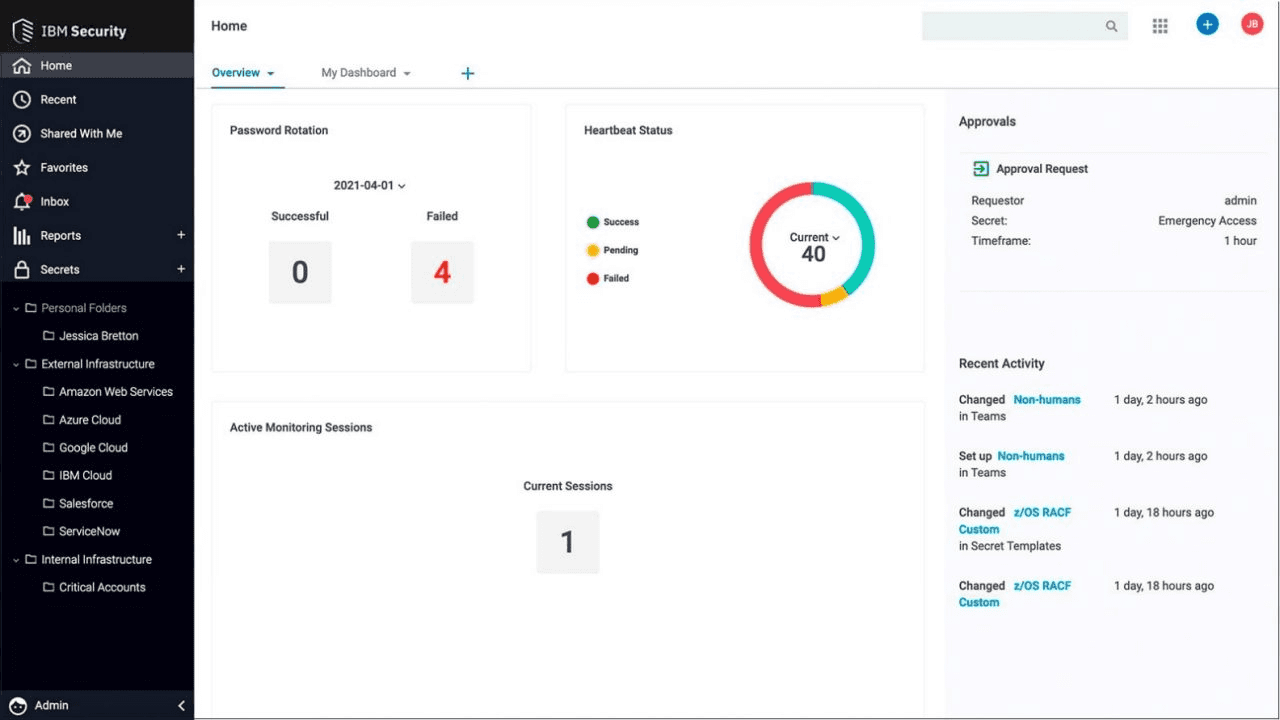
Source: IBM
Privileged Access Management Platforms
9. Idira by Palo Alto Networks

Best for: Enterprises with concentrated privileged access risk
Strengths: Modern PAM spanning human, machine, and agentic identities
Things to consider: Expensive, with complex installation and upgrades
Idira is the identity security platform Palo Alto Networks built on CyberArk following its acquisition, which closed in February 2026. Existing CyberArk customers continue using the platform as before under the new name and design, with cross-platform capabilities across the wider Palo Alto Networks portfolio arriving over time.
The platform's premise is that privilege is no longer limited to administrators. Idira extends privileged-grade controls to every identity through a unified control plane that discovers risk, applies privilege dynamically, and governs the full lifecycle from first access through to final session. It organizes capabilities into human, machine, and agentic identity security.
Key features include:
Modern privileged access management: Provides continuous discovery with AI-driven analytics and dynamic privileged access that removes always-on standing privileges.
Session isolation and monitoring: Embeds threat detection directly into privileged workflows and grants access for defined time windows rather than indefinitely.
Machine identity security: Secures secrets through to workloads in one solution, with governance and reporting across all vaults, and remediation for unmanaged secrets.
Secrets Hub and Certificate Manager: Centralizes secrets across multiple vaults and manages certificates, integrating with CI/CD pipelines so developers retain native tool access.
Secure AI Agents: Scans SaaS, cloud, and developer environments to identify active agents, enriches them with ownership and permission context, and grants task-duration access with audit records.
Endpoint Privilege Manager: Enforces least privilege on endpoints and servers and controls application execution to reduce the attack surface.
Identity governance: Unifies visibility and automates access decisions across human and machine identities throughout their lifecycle.
Workforce Password Management and Vendor Privileged Access: Covers workforce credential storage and controlled third-party access to internal systems.
Integration ecosystem: Offers over 300 out-of-the-box integrations and more than 200 alliance partners.
Limitations (as reported by users on PeerSpot):
Cost: Users consistently describe the platform as expensive, with pricing that varies by region and can be difficult for smaller organizations to absorb.
Installation and upgrades: Reviewers report that installation and upgrade processes are complex and would benefit from simplification.
Management console: Users describe the interface as needing to be more intuitive, particularly in complex environments.
Connector coverage: Some systems lack plugin connectors, which requires additional work to bring them under management.
Reporting: Multiple reviewers identify the reporting section as an area with significant room for improvement.
Capacity at scale: One user reports capacity constraints when managing very high volumes of non-personal accounts.
Documentation: Reviewers note that documentation needs improvement more than the product itself does.
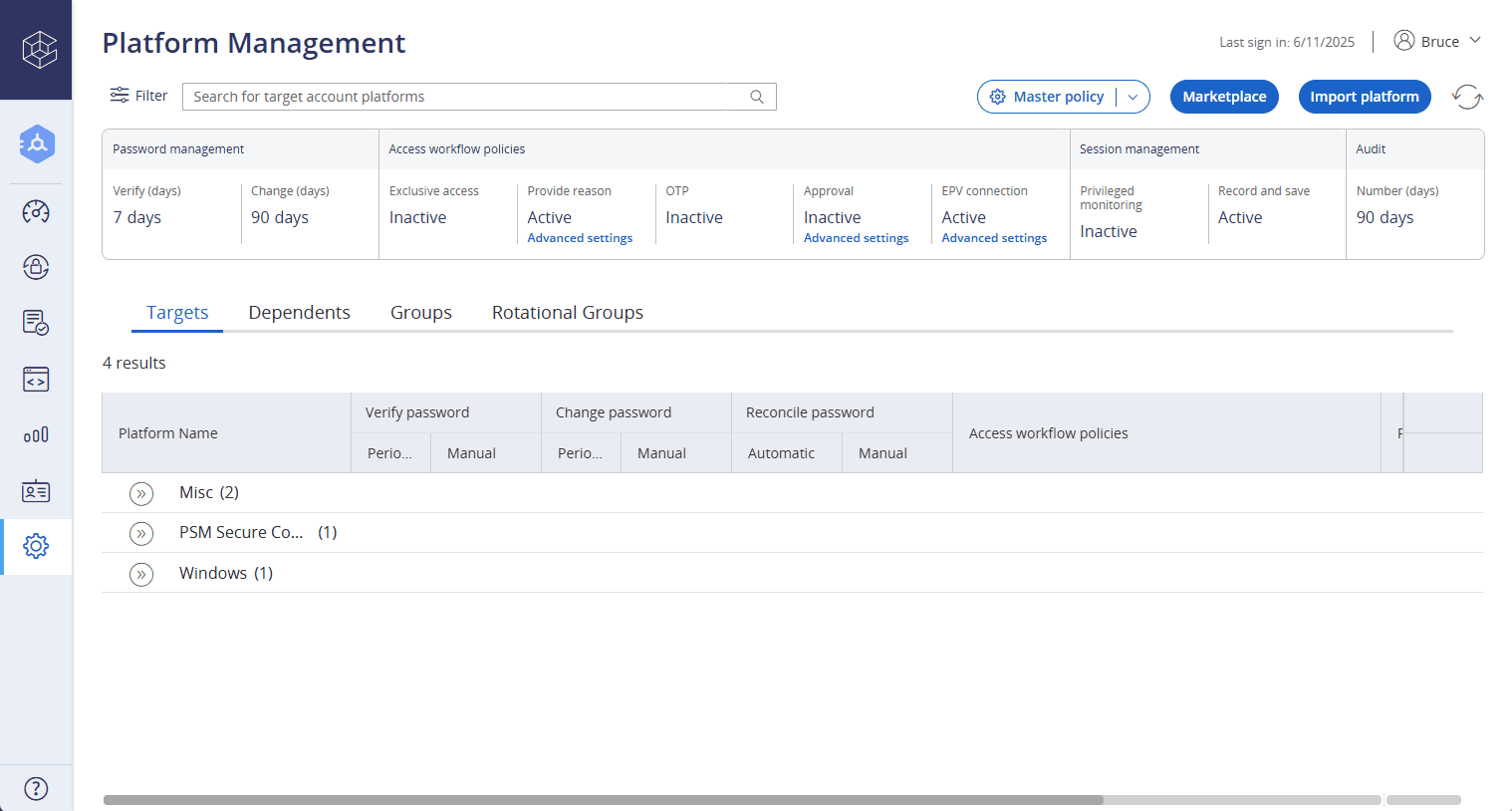
Source: Idira (Palo Alto Networks)
10. BeyondTrust Pathfinder

Best for: Mapping and reducing identity paths to privilege
Strengths: Unified vaulting, session control, and cloud entitlement management
Things to consider: Dated console design and inconsistent documentation
BeyondTrust Pathfinder brings visibility, management, and governance of identities, entitlements, and access into one AI-driven console. Its organizing concept is Paths to Privilege, which visually maps how identities can reach elevated access so teams can see and reduce exposure rather than manage each product separately.
The platform combines several previously separate BeyondTrust products under one console, covering endpoints, servers, clouds, identity providers, SaaS applications, and databases. It supports just-in-time access, zero standing privilege, and least privilege enforcement, and applies those same controls to agentic AI and automation deployments.
Key features include:
Identity Security Insights: Correlates data from BeyondTrust and third-party solutions into a unified view of identities, accounts, elevated access, and paths to privilege, with risk ratings attached.
Anomaly and credential detection: Detects anomalous activity and compromised credentials in real time, including for shadow identities and non-human identities such as AI agents.
Password Safe: Discovers, vaults, and manages privileged passwords, workforce passwords, secrets, cloud admin accounts, DevOps secrets, and SSH keys with just-in-time access controls.
Session monitoring: Records privileged sessions on video with the ability to pause or terminate suspicious activity, backed by a fully searchable audit trail.
Privileged Remote Access: Provisions rule-based access for employees, contractors, and vendors without VPN setup or manual IT intervention, enforcing least privilege on each connection.
Entitle: Automates cloud permissions management with just-in-time access, self-service requests, permission bundling, and more than 100 integrations.
Endpoint Privilege Management: Applies least privilege on endpoints with application control, allow-lists, and prebuilt policy templates, and replaces sudo-based control in Linux environments.
Active Directory Bridge: Extends Active Directory authentication and policy to Unix and Linux systems so identities are not managed in separate silos.
Limitations (as reported by users on PeerSpot):
User interface: Reviewers describe the interface as complex and dated, which makes administration tasks harder than they need to be.
Documentation: Users report that documentation is inconsistent and would benefit from standardization.
Integration challenges: Integrations with databases, SAP products, and secure remote access components are cited as creating manual work.
Deployment prerequisites: Reviewers note that deployment is complicated by the need to set up an external database, and that database instance onboarding should be simplified.
Error handling: Error notifications are reported to lack the detail needed to guide resolution.
Password management constraints: Users report restricted scheduling options and character limits in password management.
Appliance control: Some reviewers report limited control over appliances and update timing, and slow access provisioning.
11. Delinea Platform

Best for: Extending privileged access into continuous authorization
Strengths: Iris AI with zero standing privilege across every identity type
Things to consider: Higher price point and integration complexity
The Delinea Platform positions itself as an identity security control plane that extends privileged access management into continuous authorization across human, machine, and AI identities. Its argument is that most identity security tools evaluate access only at the point it is granted, rather than at each moment it is used.
Iris AI, the intelligence engine built into the platform, addresses that by continuously discovering every identity, analyzing its risk, and authorizing each access decision in real time from a single control plane. The platform organizes this into three stages: visibility through discovery and inventory, posture through analysis and remediation, and control through automation and protection.
Key features include:
Continuous discovery and inventory: Finds every human, machine, and AI identity and maps access, relationships, and risk from initial deployment onward.
Identity posture and threat analysis: Continuously analyzes identities and their interactions, prioritizing risk so teams address the most consequential gaps first.
Zero standing privilege enforcement: Applies just-in-time access, vaults every secret, controls each session, and keeps all actions auditable.
Secret Server and DevOps Secrets Vault: Handles credential vaulting, rotation, and secrets management for both administrative accounts and development pipelines.
Privilege Control for Cloud Entitlements and Servers: Applies consistent authorization policy across on-premises, multi-cloud, and ephemeral infrastructure.
Fastpath access governance: Provides access control, provisioning, review, and change tracking, along with segregation of duties and GRC capabilities.
AI agent governance: Discovers AI agents and applies just-in-time, least-privilege access to them, keeping agent activity visible, controlled, and auditable.
Developer access controls: Grants just-in-time privileges at the moment of execution so development workflows do not depend on standing access.
Privileged Remote Access and Connection Manager: Manages controlled remote sessions and connection handling for administrative users.
Limitations (as reported by users on PeerSpot):
Pricing: Reviewers describe pricing as competitive but on the higher side relative to comparable solutions.
Integration complexity: Users report difficulty integrating with platforms such as ServiceNow and with non-standard applications, and want more flexible API integrations.
Product bugs: Some users report bugs or limitations in components such as the remote access engine and directory synchronization, particularly in newer versions.
Interface and documentation: Reviewers identify the user interface and documentation as areas needing improvement.
Feature gaps: Users request containerization support, improved Linux support, better reporting, subfolder creation in personal folders, and more session recording control.
Setup effort: Reviewers describe the setup process as needing to be streamlined.
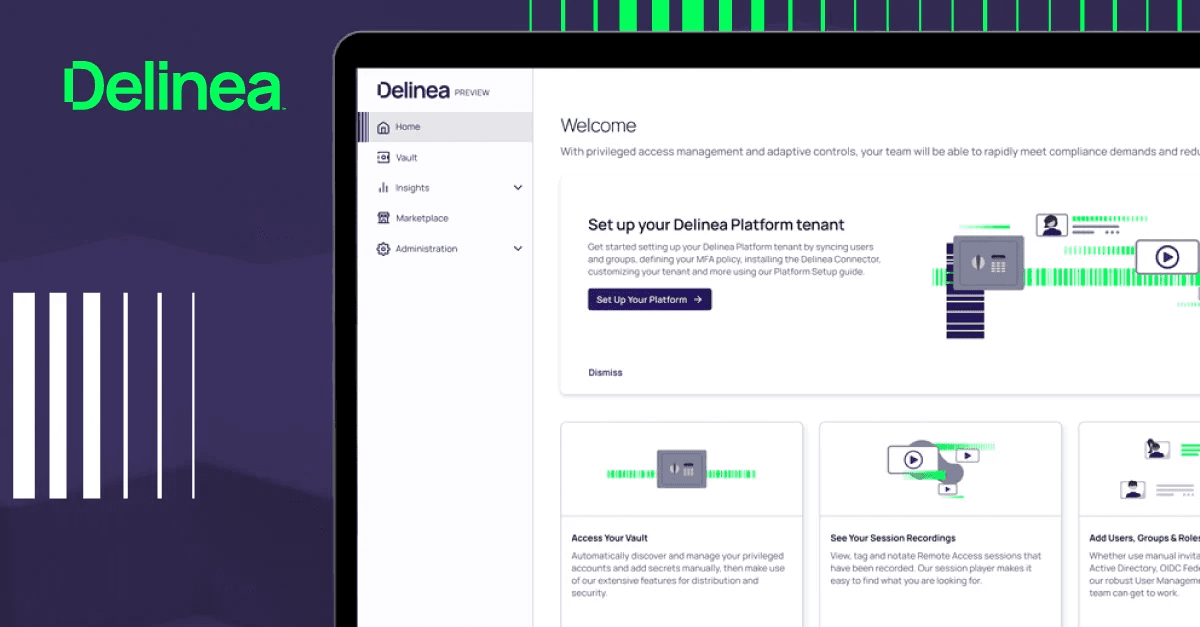
Source: Delinea Platform
Identity Threat Detection and Response Platforms
12. CrowdStrike Falcon Next-Gen Identity Security

Best for: Connecting identity threats to endpoint and cloud telemetry
Strengths: Real-time ITDR with autonomous response on one agent
Things to consider: Noisy default detections and cost value questions
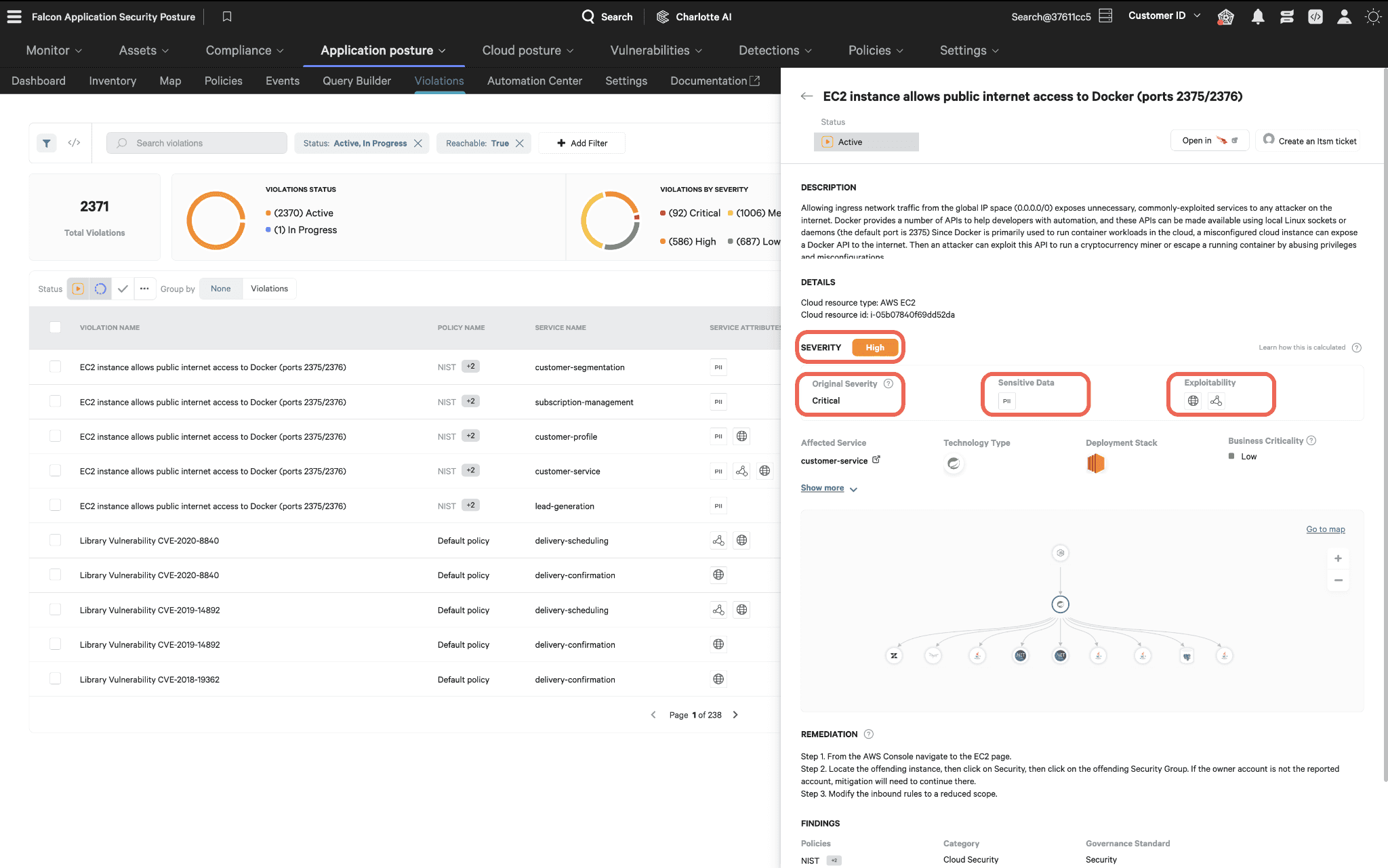
CrowdStrike Falcon Next-Gen Identity Security provides identity threat detection and response across the identity attack path, covering on-premises Active Directory and cloud identity providers including Entra ID and Okta. It runs on the same agent and console as the rest of the Falcon platform.
That shared foundation is the platform's main structural argument. Correlating identity, endpoint, and data protection telemetry in one place lets it detect threats and stop lateral movement without stitching separate tools together. CrowdStrike has also extended the product into privileged access and non-human identity coverage, and acquired SGNL to add access orchestration.
Key features include:
Unified identity threat detection and response: Covers the identity attack path from on-premises to cloud and from identity through to endpoint within a single detection pipeline.
Autonomous response actions: Detects in real time and responds automatically, including enforcing MFA challenges or triggering password resets without analyst involvement.
Charlotte AI agentic triage: Analyzes user behavior in context, uncovers anomalies, and prioritizes identity alerts, with agentic workflows handling risk mitigation steps.
Lateral movement prevention: Blocks attackers from spreading across identities, endpoints, and environments once initial access has been gained.
Falcon Privileged Access: Applies just-in-time access to privileged roles and enforces zero standing privileges on the same platform that handles detection.
Context-aware MFA extension: Applies consistent multi-factor requirements across hybrid environments, including resources that would not normally support them.
Hybrid identity coverage: Secures Active Directory alongside cloud identity providers with visibility, detection, and integrated response across both.
Non-human identity security: Discovers, governs, and protects service accounts, API keys, cloud workloads, and AI agents.
Managed identity protection: Provides 24/7 monitoring, detection, and response staffed by CrowdStrike analysts applying threat intelligence and proactive hunting.
Limitations (as reported by users on Gartner Peer Insights):
Cost value: Users raise cost concerns and express uncertainty about whether they are realizing the full value of the investment, including in a critical review focused on that question.
Alert noise: Reviewers report that false positives make the product noisy in its default configuration and that tuning is required.
Data export: Users describe exporting some data sets from the dashboard as clunky.
Note: This product carries a high average rating with very few low-star reviews, so the points above are drawn from the critical feedback within otherwise favorable reviews.
Source: CrowdStrike
13. Silverfort

Best for: Protecting legacy systems and resources other tools cannot cover
Strengths: Inline enforcement at every authentication, agentless and proxyless
Things to consider: Small public review base and some implementation friction
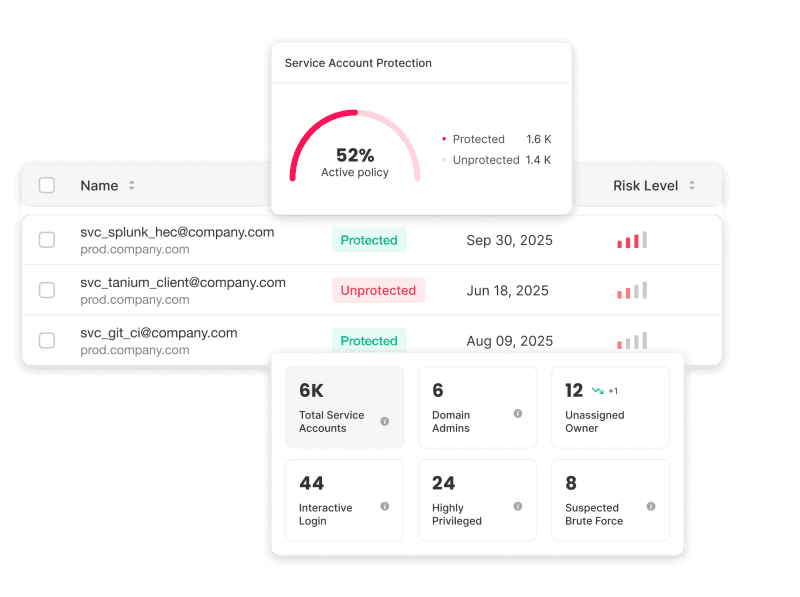
Silverfort takes a different architectural approach from most identity security platforms. Rather than sitting alongside the identity infrastructure, it operates from within it. Runtime Access Protection technology has the IAM infrastructure forward each access request to Silverfort, which analyzes risk, triggers security controls if needed, and returns a verdict before access is granted or denied.
Because enforcement happens at the authentication layer rather than through agents or proxies, the platform can extend controls to resources that typically fall outside coverage. That includes legacy applications, command-line tools, file systems, IT infrastructure, and machine-to-machine access, across on-premises, OT, hybrid, cloud, and multi-cloud environments.
Key features include:
Runtime Access Protection: Integrates with the existing IAM infrastructure so every authentication is evaluated inline and in real time, without application changes or user workflow modifications.
Universal MFA: Extends multi-factor authentication to resources that could not previously be protected, including legacy applications, command-line tools, and file systems.
Authentication Firewall: Denies access based on policy at the authentication layer rather than only alerting after the fact.
Non-human identity security: Discovers, monitors, and protects service accounts and machine identities, including legacy Active Directory service accounts and on-premises identities.
Privileged access security: Provides privileged access controls without requiring vault deployment, described as a vaultless approach to PAM.
Identity Graph: Discovers every identity and maps the relationships between them across environments.
Access Intelligence: Provides context on access rights so teams can act on entitlement data rather than only viewing it.
Identity security posture management and ITDR: Finds identity weaknesses across environments and detects and responds to identity threats as they occur.
AI agent security: Discovers, monitors, and protects AI agents, enforcing identity controls at the moment an agent acts.
Limitations (as reported by users on G2):
Implementation experience: One reviewer reports that the proof of concept and implementation did not go smoothly, with issues traced to a software bug that required an update.
Detection context: A user notes wanting more detail on why certain authentications are flagged, so behavior can be addressed through user education or configuration changes.
Administrative permissions: An earlier review reports a limitation in defining granular permissions per administrative user within the console.
Note: Silverfort holds a high average rating across a relatively small number of public reviews with no low-star entries, so these points come from critical comments within positive reviews.
Source: Silverfort
14. SentinelOne Singularity Identity

Best for: Defending Active Directory against credential-based attacks
Strengths: Deception techniques combined with endpoint and identity correlation
Things to consider: First-line support and reporting need improvement
SentinelOne Singularity Identity focuses on credential-based attacks, working from the premise that attackers increasingly log in with valid credentials rather than exploiting software vulnerabilities. It detects and contains identity threats, blocks lateral movement, and strengthens identity posture across hybrid environments.
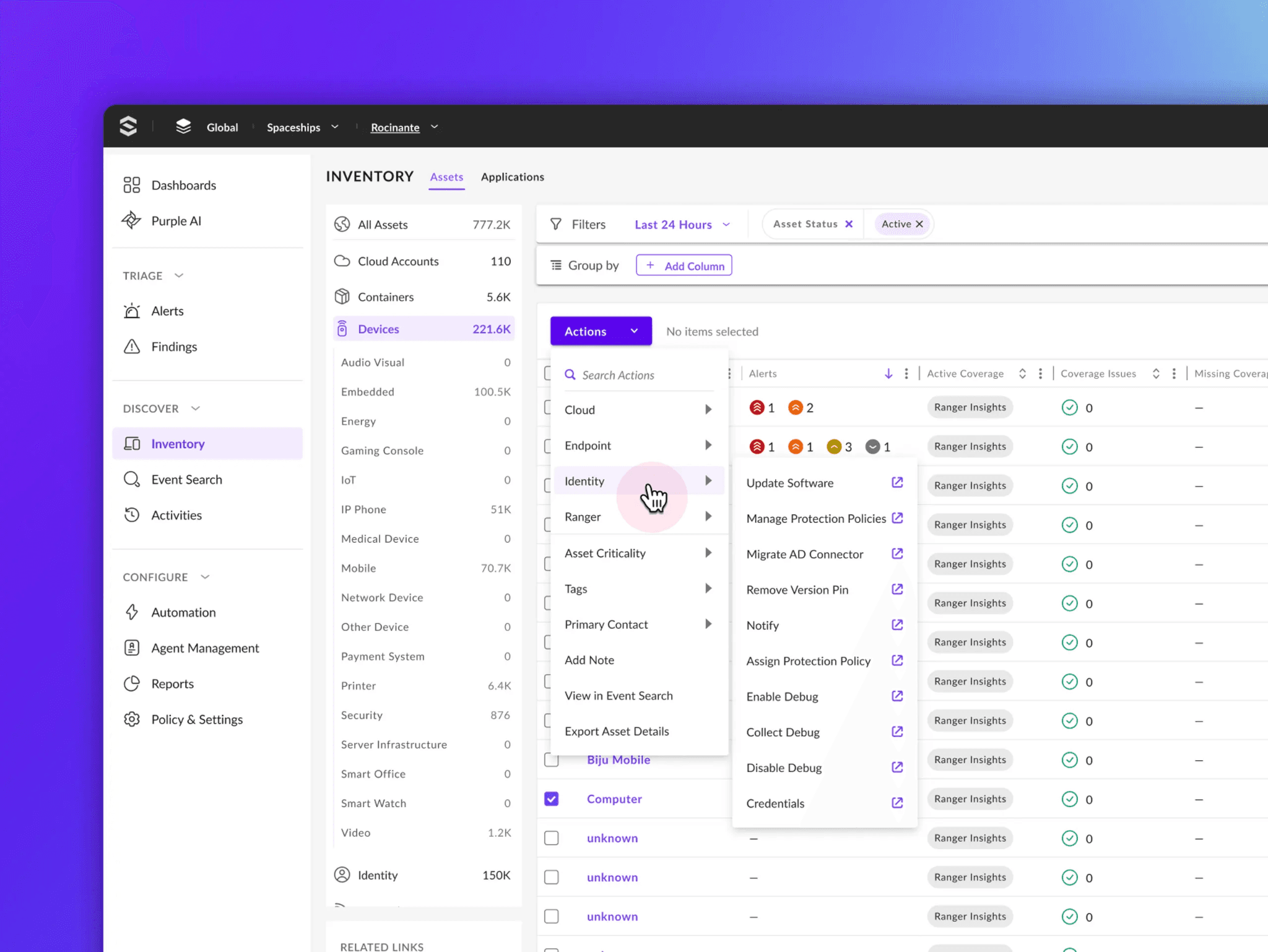
The platform runs on the same agent, console, and data foundation as SentinelOne's endpoint products. Identity and endpoint telemetry share that foundation, allowing correlated detection and containment without separate integrations, and letting analysts isolate both users and devices without switching consoles.
Key features include:
Identity threat detection and response: Detects and remediates credential theft and privilege escalation attempts, blocking lateral movement across endpoints and domains before escalation.
Automated remediation workflows: Disables compromised identities and enforces password changes automatically once a threat is confirmed.
Identity deception: Deploys decoys and decoy credentials to lure intruders and expose reconnaissance activity at an early stage.
Compromised credential protection: Surfaces stolen or exposed credentials found on the dark web so accounts can be secured before they are used.
Policy-based conditional access: Enforces adaptive controls including session blocking and MFA reauthentication based on assessed risk.
Identity security posture management: Continuously monitors and assesses Active Directory and cloud identity providers including Entra ID, Okta, Ping, SecureAuth, and Duo, prioritizing misconfigurations.
Unified endpoint and identity view: Correlates identity and endpoint alerts into high-fidelity detections and allows user and device isolation from one console.
Autonomous Security Intelligence: Powers detection and automated workflows across identity and endpoint to reduce alert noise and act at machine speed.
Limitations (as reported by users on PeerSpot):
Support responsiveness: Users report that first-level support could improve and that faster response times are needed, though higher-tier support is rated well.
Reporting clarity: Reviewers cite a need for clearer reporting tools and improved user-friendliness in the interface.
API integration: Users report that API integration with third-party applications could be better.
Agent management: Reviewers request the ability to deploy updates simultaneously across endpoints and note that agent update handling and endpoint management need improvement.
Server performance: Some users report a need for more efficient server performance.
Affordability: Pricing is described as premium, and while many consider it competitive, transparency around annual increases is raised as a concern.
Detection scope: One reviewer suggests adding network detection and response capability to broaden coverage.
Source: SentinelOne
Identity Security Platform: Metrics and KPIs
Identity security metrics help teams measure coverage, governance effectiveness, identity risk, and remediation performance. The following KPIs provide a practical view of whether identity exposure is decreasing over time:
Continuous posture coverage: Percentage of human and non-human identities (NHI) continuously monitored for identity and access risks.
Mean time to detect excessive access: Average time between the creation of risky access and its detection.
Mean time to remediate excessive access: Average time between detecting unnecessary privileges and completing remediation.
Overprivileged identity rate: Percentage of identities with permissions exceeding their role requirements or observed usage.
SoD violation count: Number of active segregation of duties (SoD) conflicts across identities and systems.
Access review completion rate: Percentage of required access reviews and certifications completed within the defined period.
Unused entitlement rate: Percentage of entitlements that have not been used for 90 or more days.
Unmanaged NHI count: Number of non-human identities without a known owner or established lifecycle controls.
Standing privileged access rate: Percentage of privileged access that remains permanently assigned rather than provided through just-in-time elevation.
Deprovisioning time: Average time required to revoke access after an employee leaves, changes roles, or an NHI is retired.
Conclusion
Identity security platforms help organizations manage growing identity risk by bringing human, non-human, and agentic identities under consistent security and governance controls. An effective platform should provide continuous identity discovery, effective-permission visibility, lifecycle governance, least-privilege and just-in-time access, privileged access controls, and identity threat detection. Organizations should evaluate coverage across cloud, SaaS, and on-premises environments, integration requirements, remediation capabilities, scalability, and support for emerging machine and AI identities when selecting an approach.