
TL;DR: IAM solutions authenticate users and govern access to enterprise resources. Best for AI-driven governance: Opti; cloud-first workforce access: Okta; Microsoft-centric stacks: Microsoft Entra ID; privileged access: Idira.
What Are Identity and Access Management (IAM) Solutions?
Identity and access management (IAM) solutions provide the frameworks, policies, and tools needed to ensure the right individuals and devices access the right resources at the right times. They secure digital environments using Multi-Factor Authentication (MFA), Single Sign-On (SSO), and Role-Based Access Control (RBAC).
IAM solutions help businesses protect sensitive data, maintain compliance, and prevent security breaches by managing digital identities and user privileges efficiently. By centralizing identity management, organizations can enforce security policies, reduce risks of unauthorized access, and simplify user experiences across multiple systems and applications.
Identity and Access Management Solutions at a Glance
The table below summarizes the key differences between the solutions covered in this article. We explore each of them in more detail in the sections that follow.
Category | Solution | Best For | Key Strengths | Things to Consider |
IGA | Opti | Teams adding AI-native intelligence to identity governance | Access graph spanning human, non-human and agentic identities | Newer vendor with limited independent review coverage |
IGA | SailPoint Identity Security Cloud | Large enterprises standardizing human identity governance | AI access modeling, certifications and lifecycle automation | High licensing cost and slow support response times |
IGA | Saviynt Identity Governance and Administration | Enterprises converging IGA, PAM and app access governance | Single cloud platform with AI-assisted reviews and onboarding | Steep learning curve and complex administration |
Workforce IAM | Okta Workforce Identity | Cloud-first workforce access and single sign-on | SSO, adaptive MFA, governance and a large integration network | Frequent re-authentication prompts and complex policy setup |
Workforce IAM | Microsoft Entra ID | Microsoft 365 and Azure-centric workforce identity | Conditional Access, MFA and deep Microsoft integration | Advanced features require higher-tier licenses |
Workforce IAM | Ping Identity Platform | Enterprises needing federation and flexible deployment | No-code orchestration with standards-based access controls | Console experience and documentation gaps slow admin work |
CIAM | Auth0 | Developer teams adding customer authentication to apps | Universal Login, passwordless MFA and 30+ SDKs | Costs rise as monthly active users grow |
CIAM | SAP Customer Identity and Access Management | Consumer brands tying identity to consent and profile data | Consent management with passwordless login at high volume | Value depends on running the wider SAP ecosystem |
CIAM | Transmit Security | Fusing customer identity with fraud and identity verification | Orchestration with fraud detection and document verification | Integration and maintenance require specialist knowledge |
PAM | Idira by Palo Alto Networks (formerly CyberArk) | Large enterprises with critical privileged access risk | Zero standing privileges with session isolation and vaulting | Complex setup and inflexible, premium licensing |
PAM | BeyondTrust Pathfinder | Organizations mapping and reducing paths to privilege | Unified PAM, CIEM and ITDR with privilege path mapping | Complex initial setup and premium pricing |
PAM | Delinea Platform | Extending PAM into continuous authorization decisions | Credential vaulting with just-in-time authorization | Complex deployment and mixed support experiences |
CIEM | Tenable Cloud Security | Right-sizing cloud entitlements alongside cloud posture | CIEM engine with attack path context across major clouds | Support response times and occasional product bugs |
CIEM | CrowdStrike Falcon Cloud Security | Teams tying cloud entitlements to threat detection | CIEM inside a CNAPP with adversary intelligence context | Premium pricing and a steep initial learning curve |
CIEM | Sonrai Security | One-click least privilege across cloud permissions | Blocks unused permissions with chat-based JIT approvals | Focused on cloud permissions rather than broader IAM |
Core Components of an IAM Solution
1. Single Sign-On (SSO)
Single Sign-On (SSO) enables users to access multiple applications with a single set of credentials. By authenticating once, users gain access to various connected systems without repeatedly entering their username and password. This simplifies the login process, reduces password fatigue, and minimizes helpdesk requests related to forgotten credentials. SSO also improves productivity by allowing seamless transitions between applications.
How it improves security:
SSO contributes to enhanced security by centralizing authentication, making it easier to enforce strong password policies and monitor access. However, it also introduces risks if the single credential is compromised. Therefore, SSO is often paired with additional security controls, such as Multi-Factor Authentication, to balance user convenience with robust protection against unauthorized access.
2. Multi-Factor Authentication (MFA)
Multi-Factor Authentication (MFA) adds an extra layer of security by requiring users to provide two or more verification factors to access resources. These factors typically include something the user knows (password), something the user has (a smartphone or hardware token), and something the user is (biometric verification). MFA reduces the risk of compromised credentials leading to unauthorized access.
How it improves security:
Implementing MFA helps organizations protect sensitive systems, especially in remote or cloud-based environments where traditional perimeter defenses are less effective. While MFA can add a step to the login process, advances like push notifications and biometric authentication have made it more user-friendly, encouraging broader adoption without significantly impacting productivity.
3. Identity Lifecycle Management
Identity Lifecycle Management covers the creation, maintenance, and removal of digital identities throughout their existence in an organization. This process begins with onboarding new users, assigning appropriate access based on their role, and continues with updating permissions as responsibilities change. When users leave, their access must be promptly revoked to prevent lingering security risks.
How it improves security:
Effective identity lifecycle management ensures that only authorized users retain access to critical resources at any time. Automation tools can help synchronize identity changes across systems, reducing manual errors and improving compliance. A well-managed lifecycle process also simplifies onboarding and offboarding, supporting both operational efficiency and security.
4. Role-Based and Attribute-Based Access Control
Role-Based Access Control (RBAC) assigns permissions to users based on their job roles, ensuring consistent access rights for similar positions. This approach simplifies permission management, making it easier to enforce least privilege and audit access. Attribute-Based Access Control (ABAC) adds flexibility by considering user attributes, such as department, location, or time of access, to make dynamic authorization decisions.
How it improves security:
Combining RBAC and ABAC allows organizations to implement granular and adaptive access policies. This ensures users receive appropriate access while reducing the risk of excessive permissions. Together, these models support compliance requirements and support secure, scalable access management as organizations grow or adopt more complex environments.
5. Privileged Access Management
Privileged Access Management (PAM) focuses on controlling and monitoring accounts with elevated permissions, such as administrators or superusers. These accounts have access to critical systems and sensitive data, making them high-value targets for attackers. PAM solutions enforce strict controls, such as session monitoring, just-in-time access, and credential vaulting, to reduce the risk of misuse or compromise.
How it improves security:
By isolating and auditing privileged activities, organizations can detect suspicious behavior and respond quickly to potential threats. PAM is essential for meeting compliance standards and minimizing the attack surface associated with privileged accounts. It ensures that elevated access is granted only when necessary and is closely monitored throughout its use.
6. Identity Governance and Administration
Identity Governance and Administration (IGA) encompasses the policies, processes, and tools used to manage digital identities and access rights. IGA solutions automate provisioning, deprovisioning, and auditing of user access, ensuring compliance with internal and regulatory requirements. They provide visibility into who has access to what, enabling organizations to enforce separation of duties and prevent toxic permission combinations.
How it improves security:
IGA supports access certification, allowing periodic reviews and approvals of user privileges. This ongoing governance reduces the risk of privilege creep and helps maintain a secure, compliant environment. By centralizing identity management, IGA simplifies audit processes and supports rapid response to security incidents or regulatory inquiries.
7. User Access Reviews
User Access Reviews are periodic evaluations of user permissions to ensure they align with current roles and responsibilities. These reviews help identify excessive or outdated access rights, reducing the risk of insider threats and accidental data exposure. Organizations often schedule access reviews to meet compliance requirements and maintain the principle of least privilege.
How it improves security:
Automating user access reviews simplifies the process, providing stakeholders with actionable insights and audit trails. Involving managers and application owners in the review process increases accountability and accuracy. Regular reviews not only strengthen security posture but also support regulatory compliance and reduce operational risks.
Key Features of Identity Access Management Solutions
Automated Joiner, Mover, and Leaver Workflows
Automated Joiner, Mover, and Leaver (JML) workflows simplify the management of user identities as employees join, change roles, or leave an organization. These workflows automatically assign, modify, or revoke access based on HRIS or directory updates, ensuring timely and accurate permission changes. Automation reduces manual intervention, minimizes errors, and accelerates onboarding and offboarding processes.
Centralized Identity Visibility
Centralized identity visibility provides organizations with a unified view of all digital identities and their access rights across systems and applications. This centralization enables security teams to quickly detect anomalies, such as unauthorized access or privilege escalation, and respond to incidents more effectively. It also simplifies compliance reporting by consolidating identity data in a single interface.
Automated Access Provisioning
Automated access provisioning enables organizations to grant or revoke user permissions based on predefined policies and triggers. When a new employee joins or changes roles, access is automatically provisioned according to their responsibilities, reducing delays and manual errors. Automation ensures consistency and enforces least privilege, lowering the risk of unauthorized access.
Policy-Based Access Controls
Policy-based access controls use defined rules and conditions to determine user permissions dynamically. These policies can incorporate context such as user role, location, device, or time of access, enabling adaptive security measures. Policy-based controls ensure consistent enforcement of access rules across applications and environments, supporting least privilege and zero trust principles.
Self-Service Access Requests
Self-service access requests empower users to request access to resources through an automated portal, reducing reliance on IT or security teams. Users can search for applications or systems, submit requests, and track approval status, improving transparency and satisfaction. Automated routing and notifications accelerate the approval process and ensure timely access.
Approval Workflows
Approval workflows automate the process of granting or denying access based on predefined authorization chains. When a user requests access, the workflow routes the request to appropriate managers or application owners for review and decision. This structured process ensures that access is only granted after proper oversight and justification.
Periodic and Event-Driven Access Reviews
Periodic and event-driven access reviews ensure that user permissions remain appropriate over time. Periodic reviews are scheduled at regular intervals, while event-driven reviews are triggered by changes such as role transitions or department transfers. These reviews help organizations detect and remediate excessive or outdated access rights.
Segregation of Duties Controls
Segregation of Duties (SoD) controls prevent a single user from receiving combinations of permissions that could enable fraud, errors, or unauthorized activities. IAM solutions define incompatible roles and access rights, then evaluate requests and existing assignments against these rules. For example, the same user should not be able to both create a vendor and approve payments to that vendor.
Compliance Reporting and Audit Support
Compliance reporting and audit support help organizations demonstrate that access controls are operating as intended and meet regulatory requirements. IAM solutions collect audit logs for identity lifecycle events, access requests, approvals, provisioning actions, authentication events, and access reviews. Centralized reporting simplifies the production of evidence for internal audits and regulations such as SOX, HIPAA, GDPR, PCI DSS, and ISO 27001.
NHI Governance
Non-human identity (NHI) governance provides centralized management of service accounts, API keys, machine identities, workloads, and AI agents that require access to organizational resources. IAM solutions maintain an inventory of these identities, track where they are used, and apply scoped permissions based on the principle of least privilege. This reduces the risk of long-lived credentials and excessive access that can be exploited by attackers.
AI Identity Governance
AI capabilities in identity governance help organizations analyze identity data at scale and identify risks that are difficult to detect with rule-based approaches alone. Machine learning can compare users against peer groups to identify unusual access patterns, automatically classify high-risk entitlements, and assign risk scores to users, roles, and permissions. These insights help security teams focus reviews on the accounts and access rights that present the greatest potential risk.
Types of Identity Access Management Solutions
Identity Governance and Administration
Identity Governance and Administration (IGA) solutions focus on governing user access throughout the identity lifecycle. They automate provisioning, deprovisioning, access reviews, and policy enforcement while providing visibility into who has access to which resources. IGA platforms help organizations maintain consistent access controls across business applications, directories, and cloud services.
These solutions also support compliance by:
Enforcing segregation of duties
Maintaining audit trails
Enabling access certifications
By continuously evaluating user permissions and access policies, IGA reduces privilege creep and helps ensure that access remains aligned with business and regulatory requirements.
Workforce Identity and Access Management
Workforce Identity and Access Management (Workforce IAM) manages identities and access for employees, contractors, and other internal users. It provides authentication, authorization, and lifecycle management to ensure users receive the appropriate access based on their roles and responsibilities. Workforce IAM typically integrates with HR systems, directories, and enterprise applications to automate provisioning and deprovisioning.
These solutions commonly include capabilities such as:
Single Sign-On (SSO)
Multi-Factor Authentication (MFA)
Policy-based access controls
By centralizing identity management, Workforce IAM improves user productivity while reducing administrative overhead and strengthening security across on-premises and cloud environments.
Customer Identity and Access Management
Customer Identity and Access Management (CIAM) focuses on managing identities for external users, such as customers, partners, and citizens. CIAM solutions provide secure registration, authentication, and profile management while supporting large numbers of users and high authentication volumes. They are designed to deliver a seamless user experience without compromising security.
CIAM platforms often support features such as:
Social login
Passwordless authentication
Self-service account management
User consent management
They also help organizations comply with privacy regulations by giving users greater control over their personal information and enabling secure handling of customer identity data.
Privileged Access Management
Privileged Access Management (PAM) solutions protect accounts with elevated permissions that can access critical systems, infrastructure, and sensitive data. They secure privileged credentials, reducing the risk of credential theft or misuse, through:
Password vaulting
Session management
Just-in-time access
PAM solutions also monitor and record privileged sessions to provide accountability and support incident investigations. Organizations use PAM to limit standing privileges and enforce strict controls over administrative access. By isolating privileged accounts and requiring additional authentication or approvals, PAM reduces the attack surface and helps defend against both external attacks and insider threats.
Cloud Infrastructure Entitlement Management
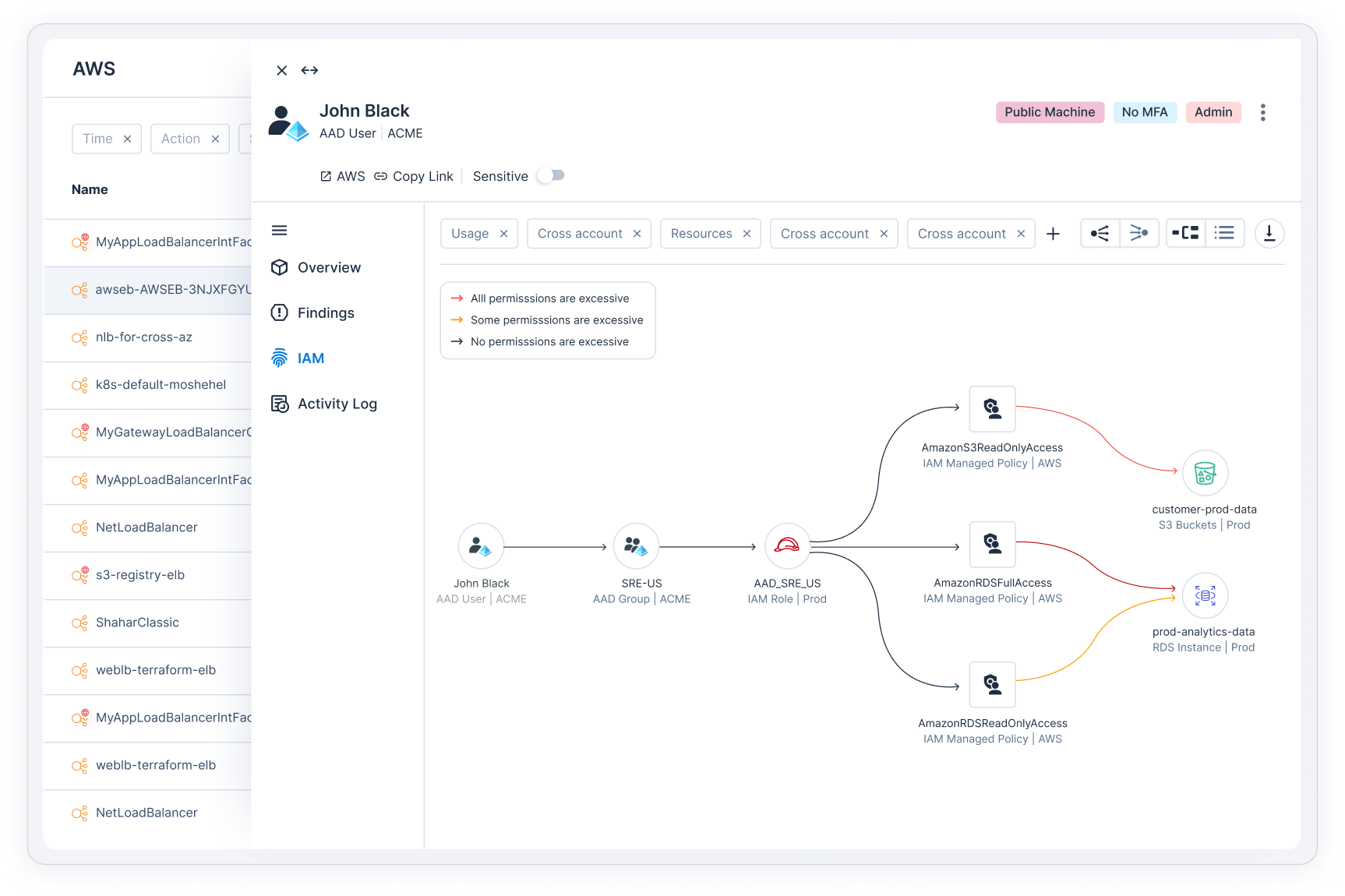
Cloud Infrastructure Entitlement Management (CIEM) solutions help organizations manage identities and permissions across public cloud platforms such as AWS, Microsoft Azure, and Google Cloud. They continuously analyze cloud permissions to identify excessive, unused, or risky entitlements that could increase the likelihood of unauthorized access. CIEM provides visibility into both human and machine identities, including service accounts and workloads.
CIEM platforms support least privilege by recommending or automatically removing unnecessary permissions based on actual usage. They:
Detect permission changes
Monitor access to cloud resources
Generate reports that support security audits and compliance efforts
As cloud environments grow more complex, CIEM helps organizations reduce identity-related risks while maintaining operational flexibility.
Notable Identity and Access Management Solutions
How we selected these solutions: We shortlisted identity and access management solutions based on their coverage of authentication, authorization, identity lifecycle automation, access governance and certification, privileged access controls, customer identity and consent, and cloud entitlement management.
Identity Governance and Administration
1. Opti

Best for: Teams adding AI-native intelligence to identity governance
Strengths: Access graph spanning human, non-human and agentic identities
Things to consider: Newer vendor with limited independent review coverage
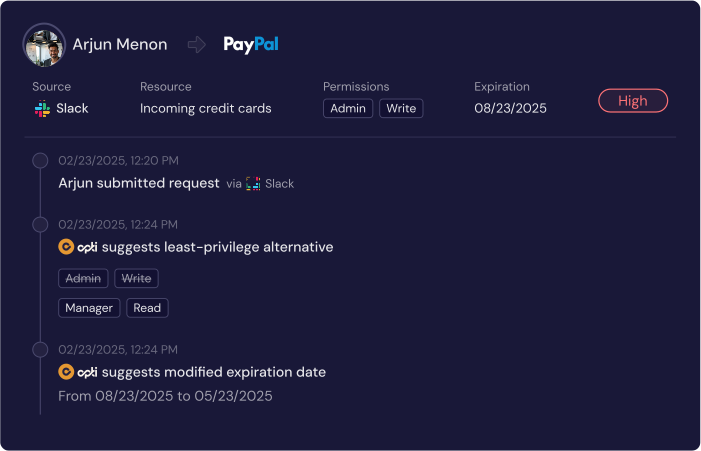
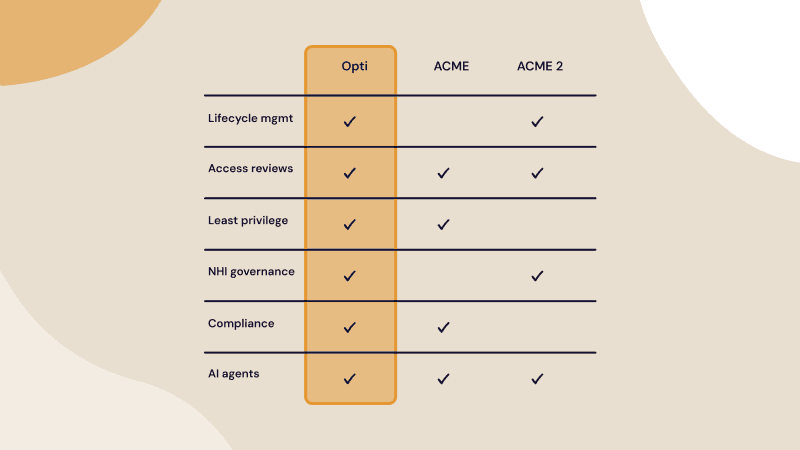
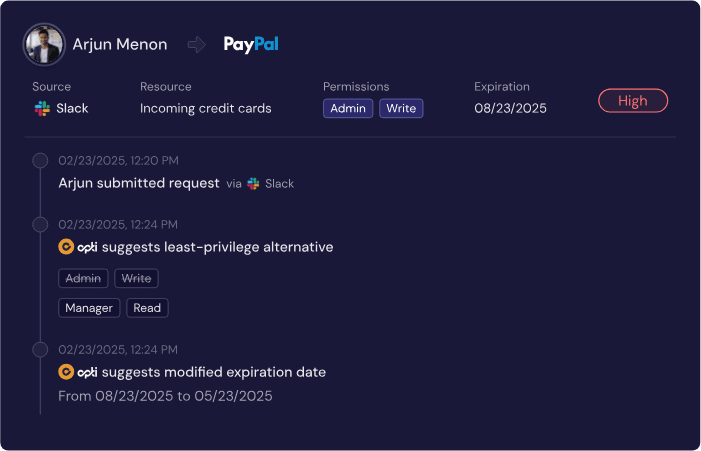
Opti is an AI-native identity security platform that ingests, normalizes and analyzes identities across applications, covering human, non-human and agentic identities. A context-aware engine continuously evaluates access behavior and risk, and specialized entitlement models interpret entitlements to surface risky access and excessive privileges.
Rather than stopping at detection, an identity workflow engine builds automated policies and remediation plans, with human approval applied where required. Opti runs alongside an existing identity stack or in place of an IGA, deploys in hours, and connects to more than 250 integration types, including homegrown applications its AI engine interprets directly.
Key features include:
Contextual access graph: Builds a living graph of identities, entitlements, roles and usage, with visibility into individual entitlements and the business context attached to them.
Interactive control plane: Entitlement and permission changes can be executed directly from the access graph rather than in each downstream system.
Natural language queries: Administrators ask questions such as who holds admin access to a given application and receive answers without writing queries or applying filters.
Plain-English policy engine: Policies are written in ordinary language, continuously scanned for violations, and supplemented by policy suggestions derived from observed access patterns.
Automated remediation: Revokes stale entitlements, addresses orphaned accounts and over-privileged access, and initiates just-in-time access workflows from a defined remediation path.
Lifecycle recommendations: Suggests least-privilege access at onboarding based on role, team and peer behavior, then recalibrates entitlements as users change teams or responsibilities.
AI agent governance: Tracks agent activity, shows what each agent can read, write or manage across connected applications, and flags over-privileged capabilities and anomalies.
Continuous audit readiness: Aggregates identity, access and entitlement data mapped to policies, roles and usage so access reviews can be produced on demand.
Limitations (based on publicly available sources):
Limited public track record: The company was founded in 2024 and made its platform generally available in late 2025, so there is little independent review coverage compared with established IGA vendors.
Complements the existing stack: The platform is positioned as an intelligence and workflow layer over directories, IGA tools and business applications, so those systems remain part of the architecture.
No published pricing or self-service trial: Evaluation runs through a scheduled demo rather than a public pricing page or sign-up.
Source: Opti
2. SailPoint Identity Security Cloud

Best for: Large enterprises standardizing human identity governance
Strengths: AI access modeling, certifications and lifecycle automation
Things to consider: High licensing cost and slow support response times
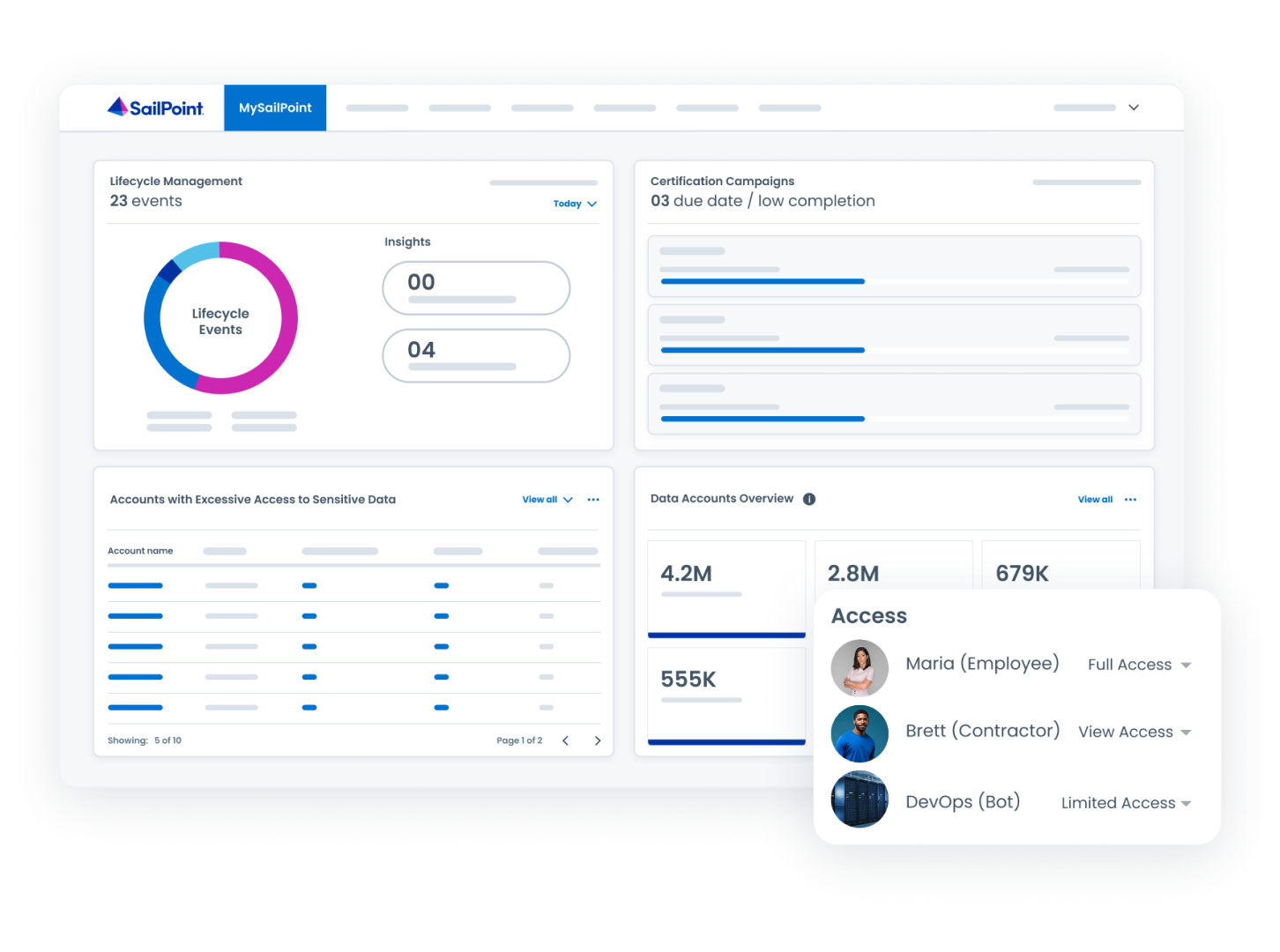
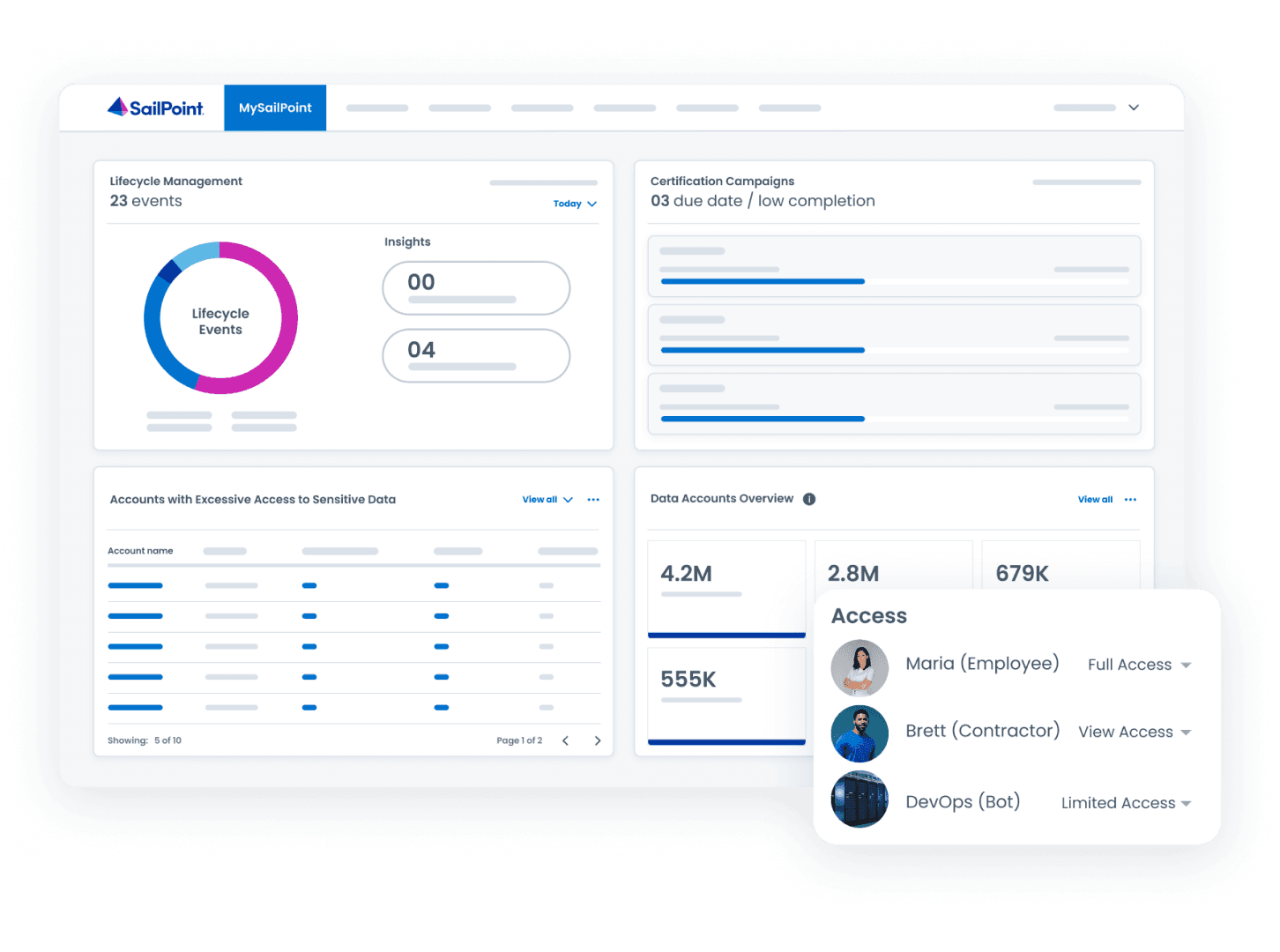
SailPoint Identity Security Cloud governs human identities, their access and their entitlements from a single SaaS solution. It is built on the SailPoint Platform, a multi-tenant foundation that supplies a common identity data model, AI services and a connectivity fabric shared across SailPoint products.
The solution is packaged as four core modules covering lifecycle management, access modeling, compliance management and analytics, with progressive suites for organizations that expand scope over time. Additional capabilities are licensed separately, including non-employee risk, cloud entitlements, unstructured data access and access risk analysis.
Key features include:
Lifecycle management: Automates joiner, mover and leaver processes, provisioning and deprovisioning access as employment status changes to limit access creep.
AI-driven access modeling: Recommends, designs and maintains roles, aligning entitlement bundles with business needs and identifying outliers against peer groups.
Compliance management: Enforces access policies automatically and runs certification campaigns with visibility into user entitlements for audit evidence.
Identity analytics: Analyzes access behavior and patterns across the organization to surface access risks and abnormal activity.
Cloud infrastructure entitlement management: Discovers and certifies cloud entitlements using an identity-focused view of cloud permissions.
Non-employee risk management: Applies risk-based access and lifecycle management to contractors, vendors and other third-party identities.
Accelerated application management: Provides visibility across enterprise applications and shortens application onboarding into governance.
Data access security: Extends governance and protection to unstructured data alongside application entitlements.
Limitations (as reported by users on G2):
Support responsiveness: Reviewers describe slow response times, difficulty communicating with support, and cases redirected to paid expert services before resolution.
Total cost: Licensing is described as the most expensive in the category, with further spending required for implementation, consultants, add-on modules and a token-based services model.
Implementation effort: Setup is reported as time-consuming and dependent on specialized expertise, with multi-month deployments in complex environments.
Learning curve: Administrators without a development background report difficulty configuring rules, workflows and connectors.
Customization side effects: Heavy custom code is reported to complicate upgrades, since tailored logic can break when new versions are released.
Feature gaps and roadmap pace: Reviewers note requested functionality that remains unavailable and enhancements that take longer than expected to ship.
Source: SailPoint
3. Saviynt Identity Governance and Administration

Best for: Enterprises converging IGA, PAM and app access governance
Strengths: Single cloud platform with AI-assisted reviews and onboarding
Things to consider: Steep learning curve and complex administration
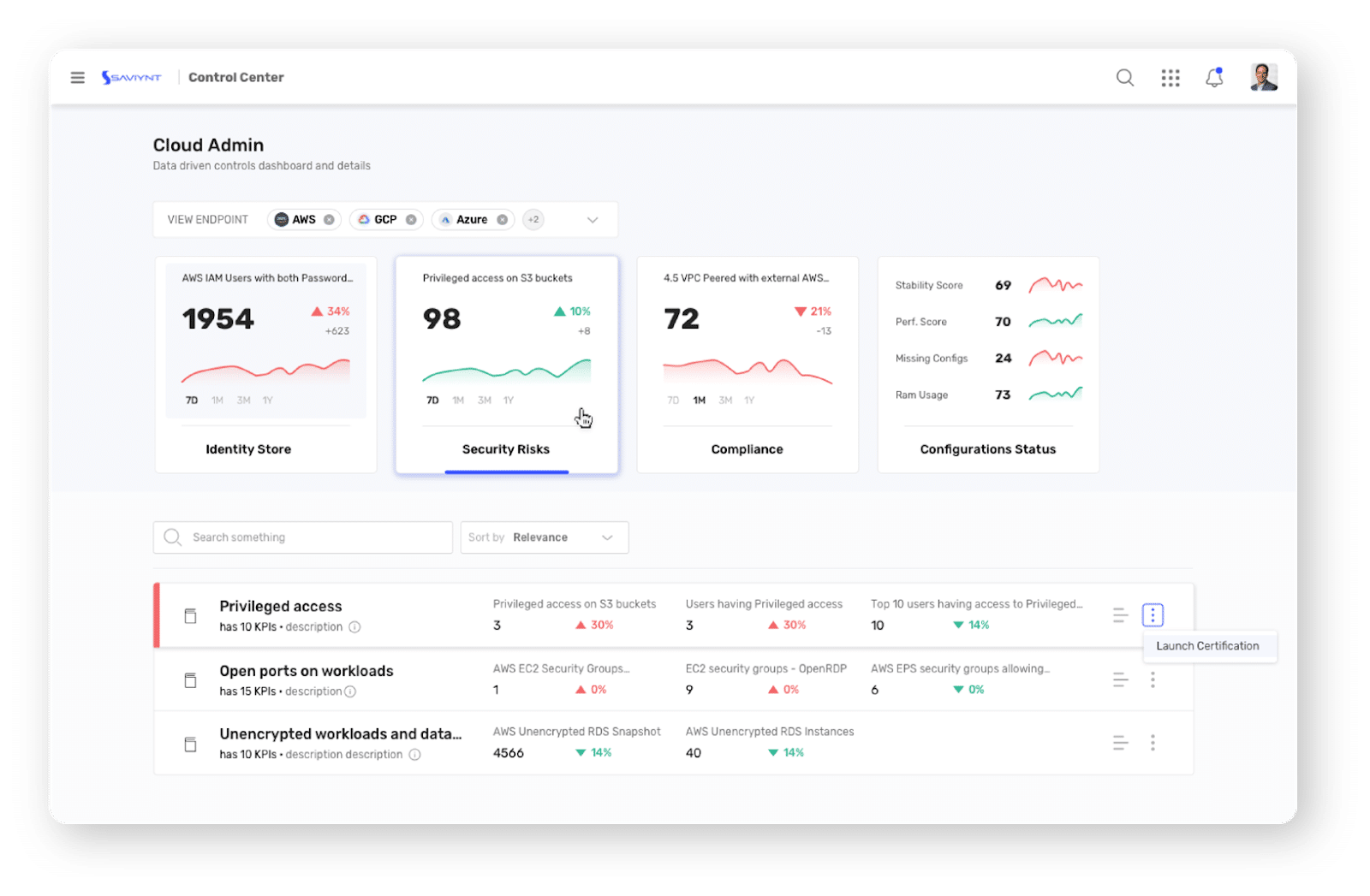
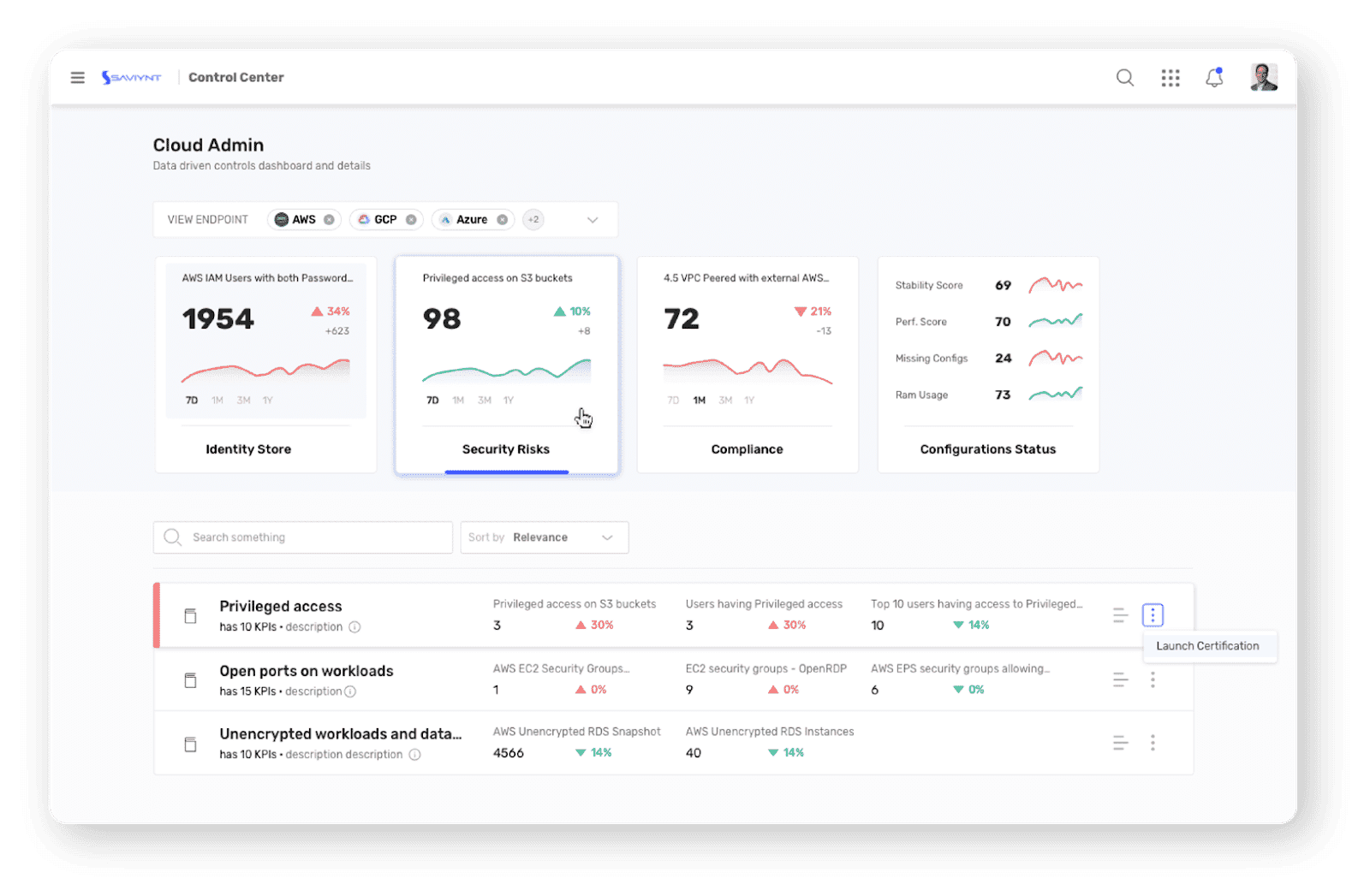
Saviynt Identity Governance and Administration governs access for internal users, external users, non-human identities and AI agents across cloud, hybrid and on-premises resources. Identity data, security controls and compliance processes are consolidated in one platform so policy enforcement and audit reporting draw on the same records.
The solution automates the identity lifecycle from onboarding through revocation and applies AI recommendations to access requests and certification campaigns to reduce reviewer workload. It sits alongside adjacent Saviynt modules for privileged access, identity security posture management and application access governance on a shared cloud-native architecture.
Key features include:
Full lifecycle automation: Assigns access during onboarding and revokes it on departure, covering workforce, external, non-human and AI agent identities in one platform.
Certification campaigns with recommendations: Automates a large share of access review decisions and directs approver attention to higher-risk items to reduce rubber-stamping.
Identity warehouse: Correlates access permissions gathered across the ecosystem to give an enterprise-wide view of access risk at the entitlement level.
SaviAI assistants: Separate assistants handle end-user access questions in natural language, application onboarding configuration, security operations triage, and administrative tasks such as entitlement and policy changes.
Cross-application separation of duties: Detects conflicting entitlements that span multiple applications and surfaces mitigation actions.
Application onboarding: Learns integration patterns to configure connections to complex applications, including ERP, EMR, CRM and HR systems.
Just-in-time access: Grants time-bound access to high-risk resources instead of maintaining standing entitlements.
Unified controls framework: Provides an out-of-the-box control repository cross-mapped to regulations and standards for continuous compliance reporting.
Limitations (as reported by users on G2):
Learning curve: Reviewers describe a non-intuitive user experience and unclear form instructions that slow down new administrators.
Interface design: The interface, and the campaign module in particular, is described as poorly laid out and confusing during setup and form completion.
Configuration complexity: Users report high overall complexity that makes configuration time-consuming, with some implementations extending well beyond initial estimates.
Customization limits: Reviewers note limited options for adapting the platform to specific requirements.
Feature gaps: Some users report missing functionality relative to their needs, including in privileged access management.
Integration effort: The ServiceNow connector for account and access requests is described as difficult to configure and use.
Source: Saviynt
Workforce Identity and Access Management
4. Okta Workforce Identity

Best for: Cloud-first workforce access and single sign-on
Strengths: SSO, adaptive MFA, governance and a large integration network
Things to consider: Frequent re-authentication prompts and complex policy setup
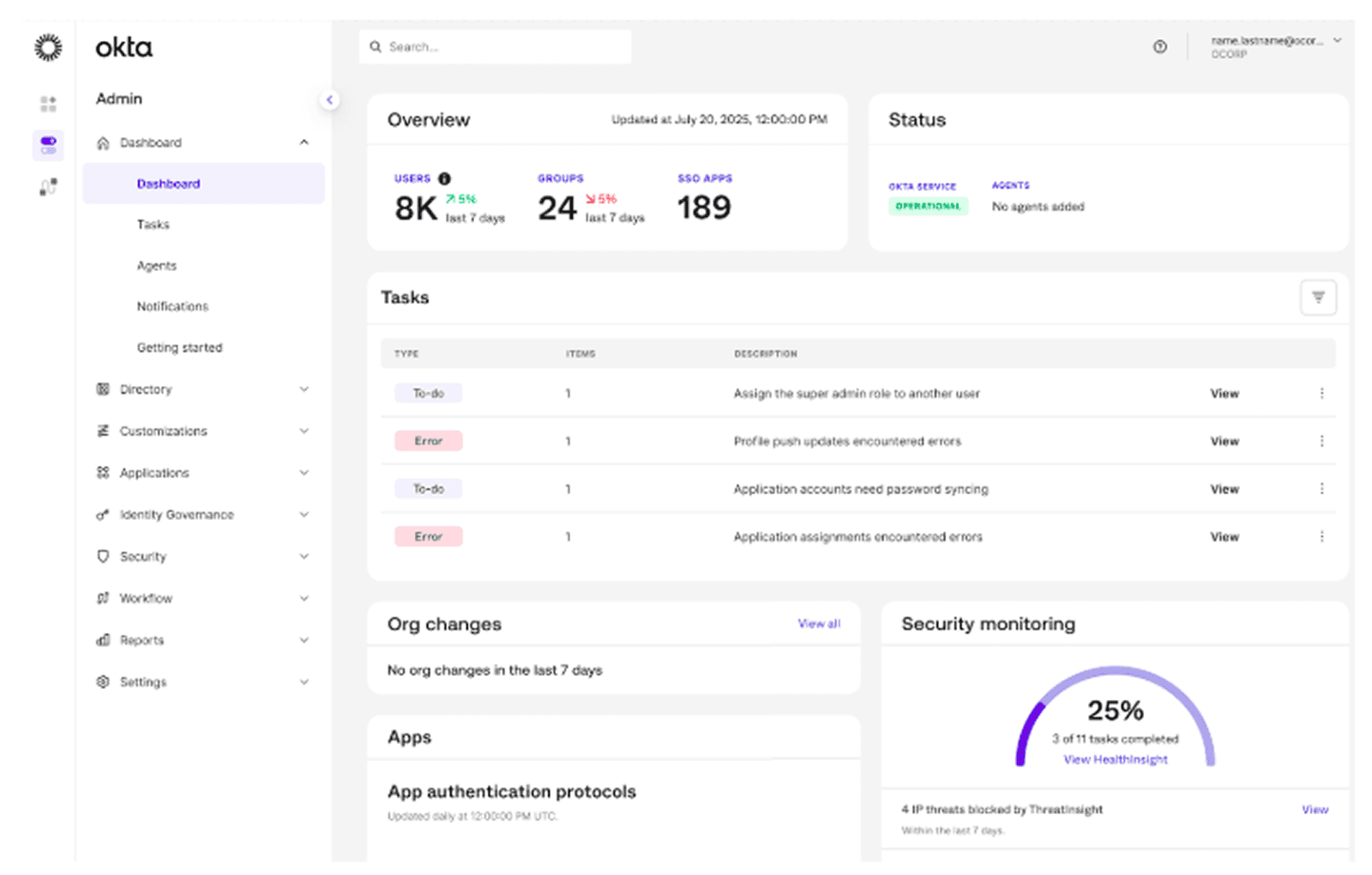
Okta Workforce Identity manages access for employees, contractors and partners through a single identity layer covering authentication, authorization, lifecycle management and governance. Access decisions are evaluated against contextual signals such as device posture, which supports zero trust enforcement regardless of user location.
The platform spans several product lines, including access management, directory services, lifecycle automation, governance, privileged access and identity threat detection. The Okta Integration Network supplies thousands of pre-built application integrations, and Workflows provides no-code automation for identity processes.
Key features include:
Single sign-on and adaptive MFA: Unifies application access under one login and applies risk-aware authentication policies across apps and devices.
FastPass passwordless authentication: Provides device-bound, phishing-resistant sign-in, with support for third-party FIDO2 authenticators.
Lifecycle management: Syncs with the HR system to provision application access for new hires and revoke it immediately on termination.
Identity governance: Adds automated access reviews and certifications so entitlements match current roles and least standing privilege is maintained.
Universal Directory: Consolidates users, groups and devices in a single directory used across the platform.
Privileged access and server access: Enforces least privilege for critical accounts and provides centralized identity-based access to server infrastructure.
Identity Security Posture Management: Identifies identity-related vulnerabilities, prioritizes risks and guides remediation of identity sprawl.
Identity Threat Protection with Okta AI: Continuously monitors risk signals to detect threats and orchestrates responses across applications and security tools.
Access Gateway and Workflows: Extends modern access controls to on-premises applications without code changes and automates identity processes without scripting.
Limitations (as reported by users on G2):
Authentication frequency: Reviewers describe repeated authentication prompts through the working day as disruptive, particularly during long sessions.
Initial configuration: Setting up SSO and MFA for the first time is described as tricky, with the same interface requiring repeated verification steps.
Troubleshooting: Diagnosing authentication and policy issues is reported as unintuitive for administrators.
Cost: Pricing is a frequent criticism, and reviewers note that it scales with headcount.
Advanced configuration effort: Basic deployment is straightforward, but reviewers report that advanced setup requires significantly more work.
Source: Okta
5. Microsoft Entra ID

Best for: Microsoft 365 and Azure-centric workforce identity
Strengths: Conditional Access, MFA and deep Microsoft integration
Things to consider: Advanced features require higher-tier licenses
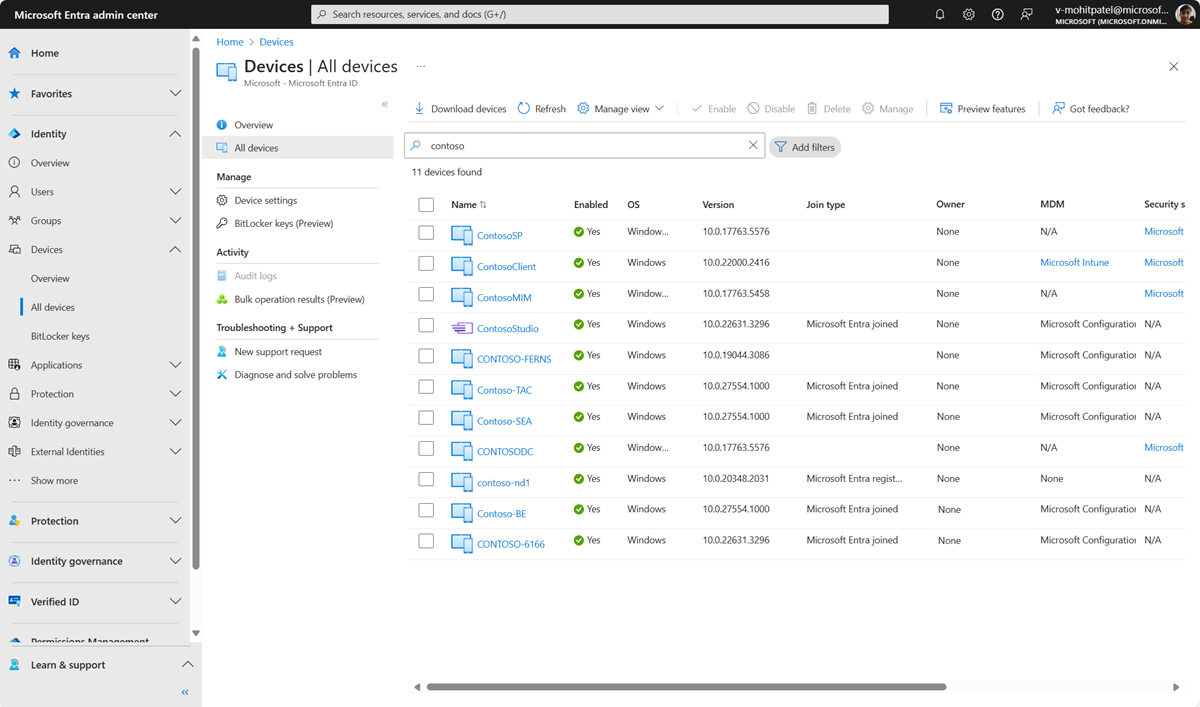
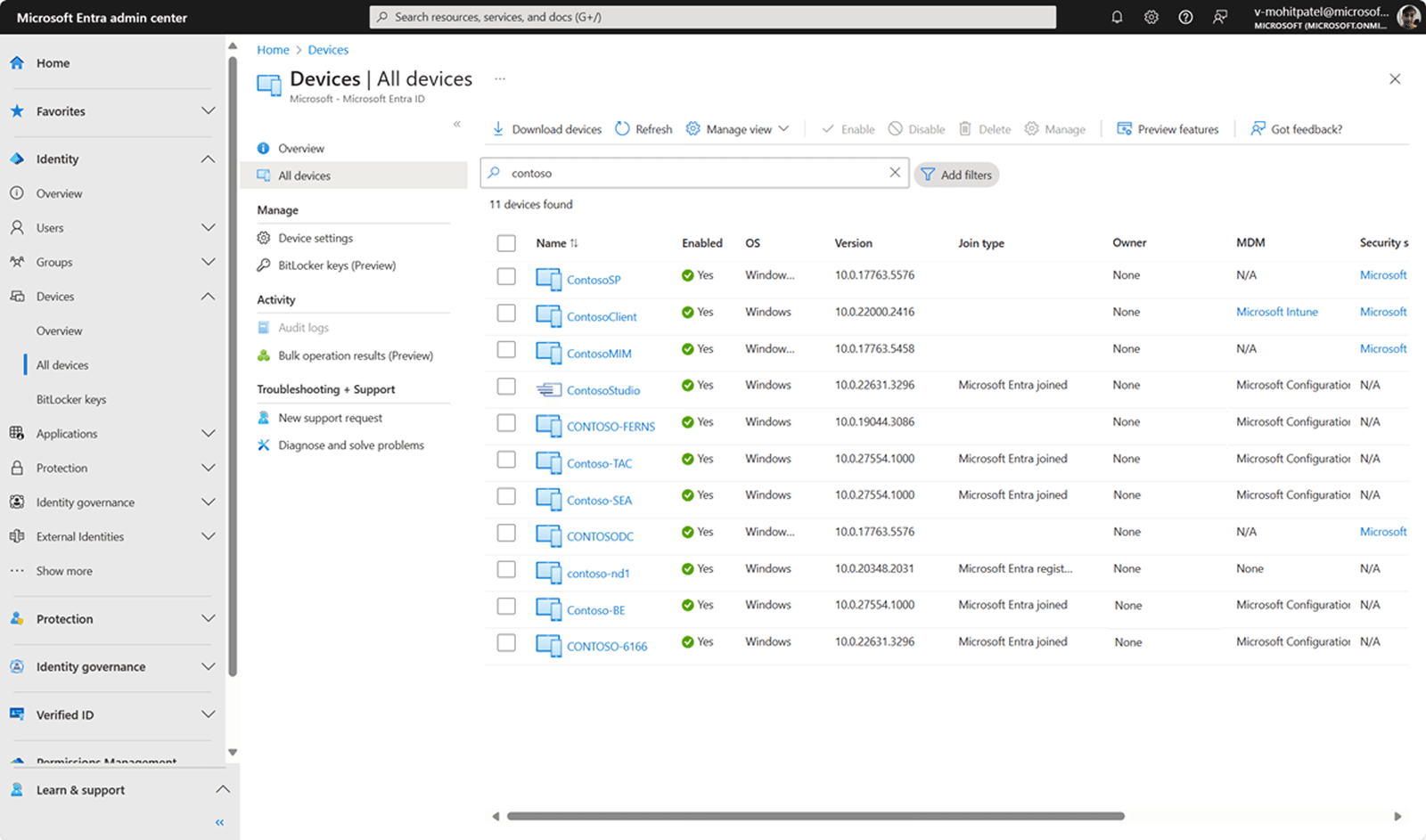
Microsoft Entra ID is a cloud identity and access management solution that authenticates users and controls access to applications, data, resources and devices across cloud and on-premises environments. Access is evaluated through risk-based Conditional Access policies that integrate with the rest of the Microsoft security stack.
Coverage extends from legacy applications to SaaS applications, AI assistants and devices, with single sign-on, multi-factor authentication, passwordless options and self-service portals for end users. Governance capabilities cover provisioning, access packages and access reviews, and licensing is split across P1 and P2 tiers.
Key features include:
Conditional Access: Applies adaptive policies that weigh user, device, location and risk signals before granting access to an application or resource.
Strong authentication: Supports multi-factor authentication and phishing-resistant passwordless sign-in across workforce accounts.
Single sign-on and app integrations: Connects the workforce to cloud and on-premises applications from any location and device through one credential.
Identity Protection: Uses machine learning to detect sign-in and user risk and blocks account takeover through risk-based access policies.
Privileged Identity Management: Enables just-in-time elevation to enforce least-privilege access for sensitive resources.
Identity governance: Provides provisioning, access packages and access reviews to monitor and audit access to critical assets.
Security Copilot in Microsoft Entra: Uses natural language prompts to investigate risky users, authentication anomalies, access changes and policy gaps.
Employee self-service: Lets users manage their own accounts and access requests, including self-service password reset.
Related Entra products: Extends into Private Access and Internet Access for network-level zero trust, External ID for external users, Verified ID, and Agent ID for AI agent identities.
Limitations (as reported by users on G2):
Licensing structure: Reviewers describe licensing tiers as confusing, with useful security features spread across plans and little in-product guidance on what a given tier includes.
Cost of advanced capabilities: Features such as risk-based Conditional Access, Identity Protection and privileged identity management sit in premium tiers, which raises cost for larger organizations.
Configuration complexity: Conditional Access and advanced security settings are reported as difficult to configure, with a steep learning curve for new administrators.
Day-to-day administration: Reviewers note that routine changes require extensive navigation across multiple admin portals, and that renamed features and shifting menus slow work down.
Troubleshooting visibility: Diagnosing access failures and policy conflicts is described as slow, with error messages that lack detail.
Non-Microsoft integration: Reviewers report additional configuration or workarounds when connecting legacy or non-Microsoft applications.
Source: Microsoft
6. Ping Identity Platform

Best for: Enterprises needing federation and flexible deployment
Strengths: No-code orchestration with standards-based access controls
Things to consider: Console experience and documentation gaps slow admin work
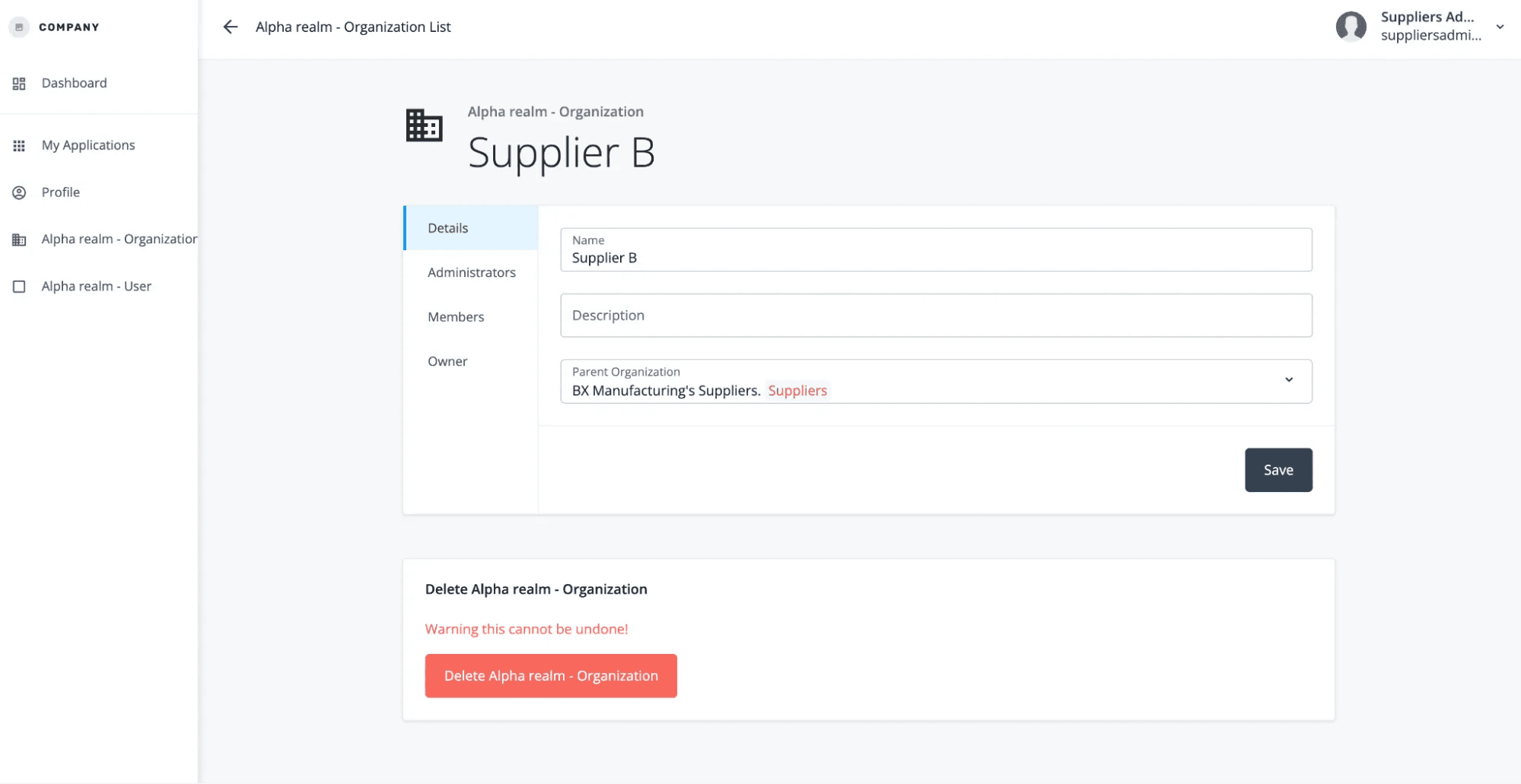
The Ping Identity Platform covers workforce, customer, B2B and agentic identities from a single platform organized around identification, management, access, governance, protection and orchestration. Templates and no-code tooling are used to assemble identity journeys rather than building them in code.
Deployment options are a differentiator, spanning multi-tenant SaaS, dedicated-tenant SaaS, self-managed software and FedRAMP High environments, which suits organizations with regulatory or architectural constraints. Helix, the platform AI engine, underpins its intelligent identity services, and identity capabilities can also be reached through APIs, MCP, CLI and AI assistants rather than only through an admin console.
Key features include:
Access controls: Provides single sign-on, authorization, MFA and passwordless authentication, plus just-in-time privileged access.
Identity management: Automates onboarding and offboarding, maintains user profile data in a directory, and models relationships between identities.
Governance: Handles access requests, segregation of duties and access reviews with preventative and detective controls and policy enforcement.
Identity verification: Issues verifiable credentials, confirms real-world identity in real time and supports privacy-preserving biometric authentication.
No-code orchestration: A drag-and-drop interface builds, tests and deploys identity workflows spanning registration, authentication and risk assessment.
Threat protection: Applies threat detection, AI-driven fraud prevention and real-time risk analysis across identities and interactions.
Deployment flexibility: Runs as multi-tenant SaaS, dedicated-tenant SaaS or self-managed software, with a FedRAMP High option.
Headless and agent access: Identity services can be discovered, configured and deployed through APIs, MCP, a CLI or AI assistants as well as a guided UI.
Limitations (as reported by users on G2):
Console experience: Reviewers describe the administrative console user experience as an area needing improvement.
Documentation quality: Users report documentation that is not thorough enough, with errors in examples and syntax that cost time to work around.
Administrative complexity: Setup and ongoing maintenance are described as confusing in places, which affects flexibility.
Interface clarity: The interface is reported as difficult to navigate during configuration and maintenance despite the platform's flexibility.
Adaptive authentication setup: Configuring and maintaining adaptive authentication features is singled out as confusing.
Source: Ping Identity
Customer Identity and Access Management
7. Auth0

Best for: Developer teams adding customer authentication to apps
Strengths: Universal Login, passwordless MFA and 30+ SDKs
Things to consider: Costs rise as monthly active users grow
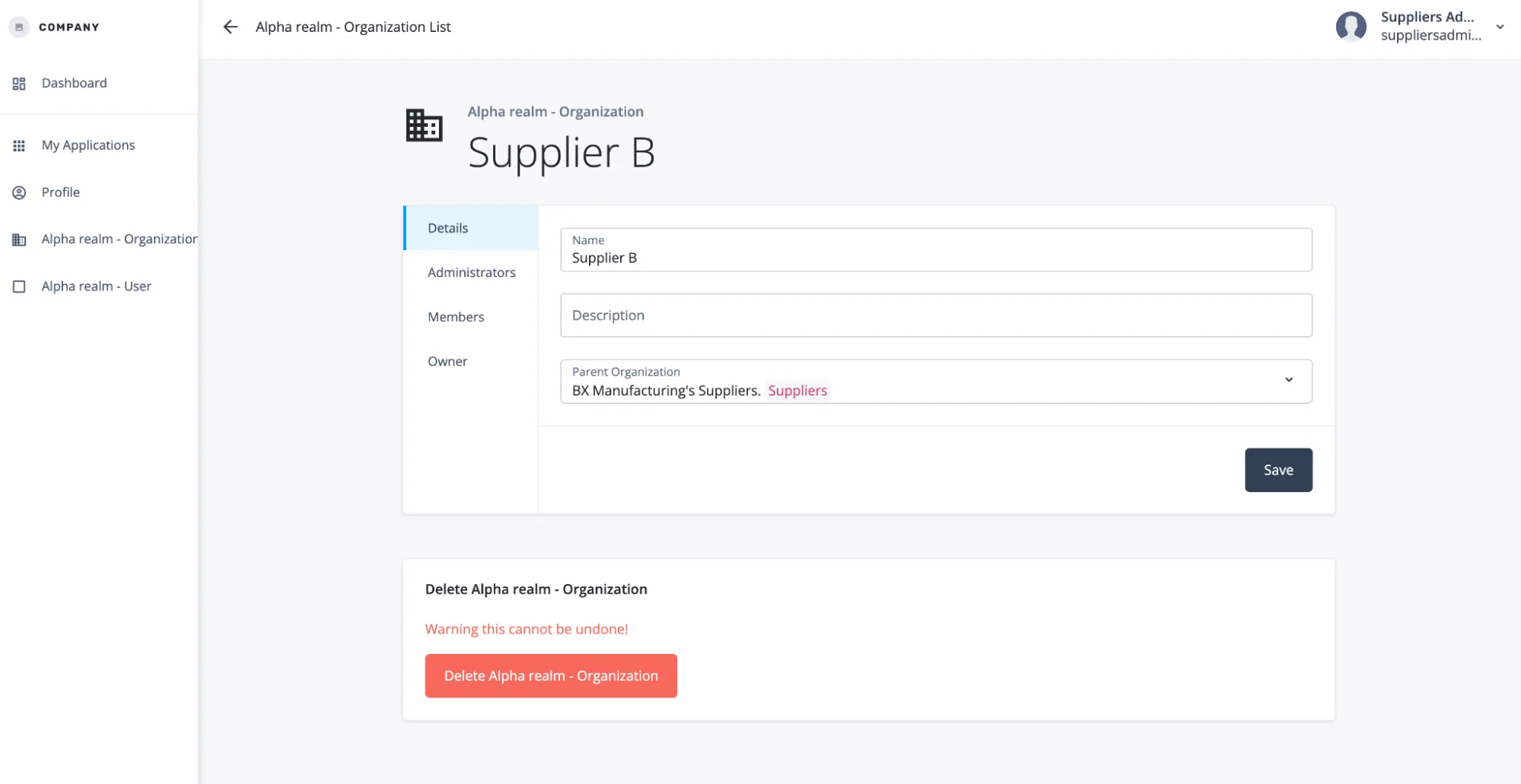
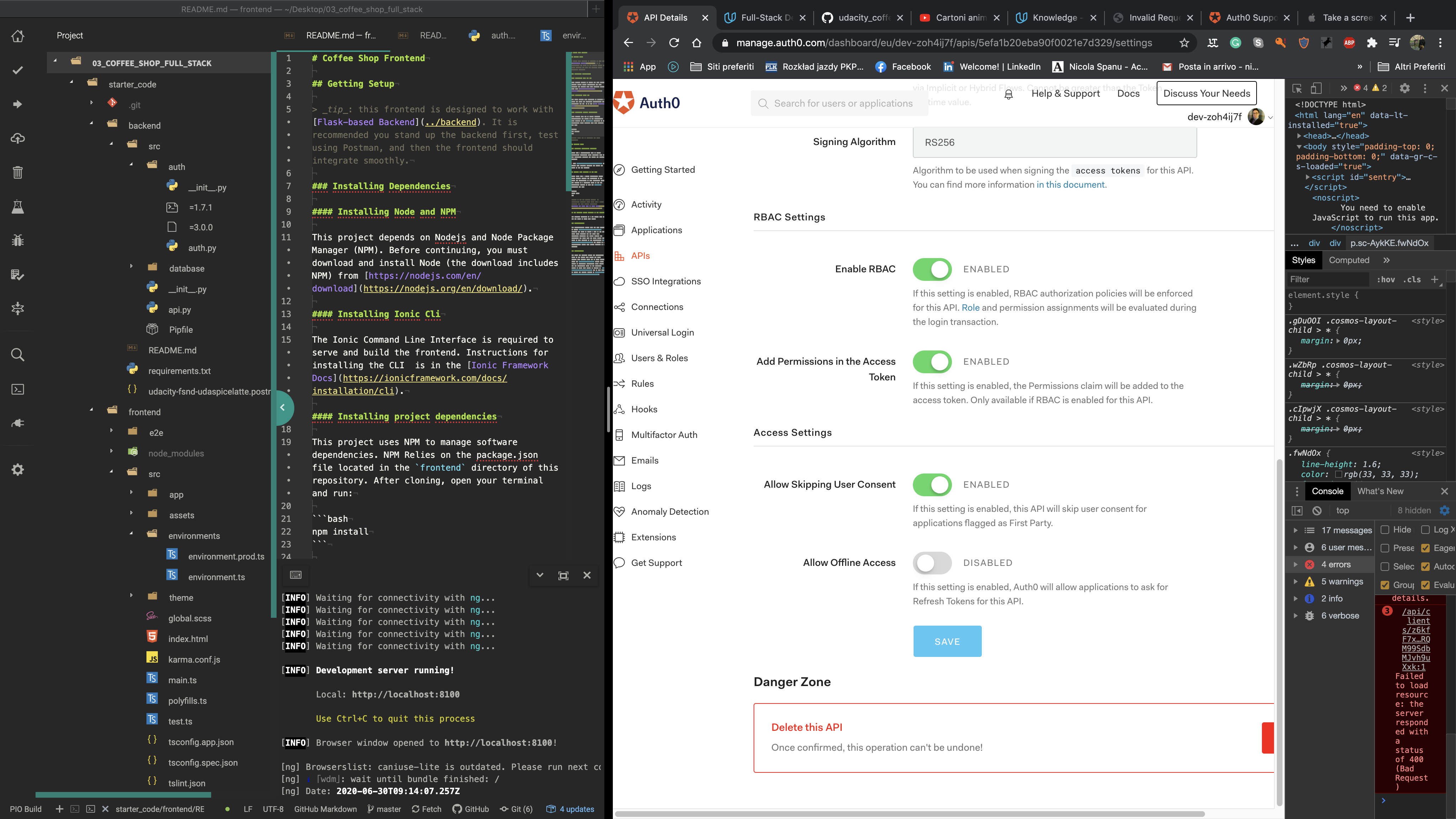
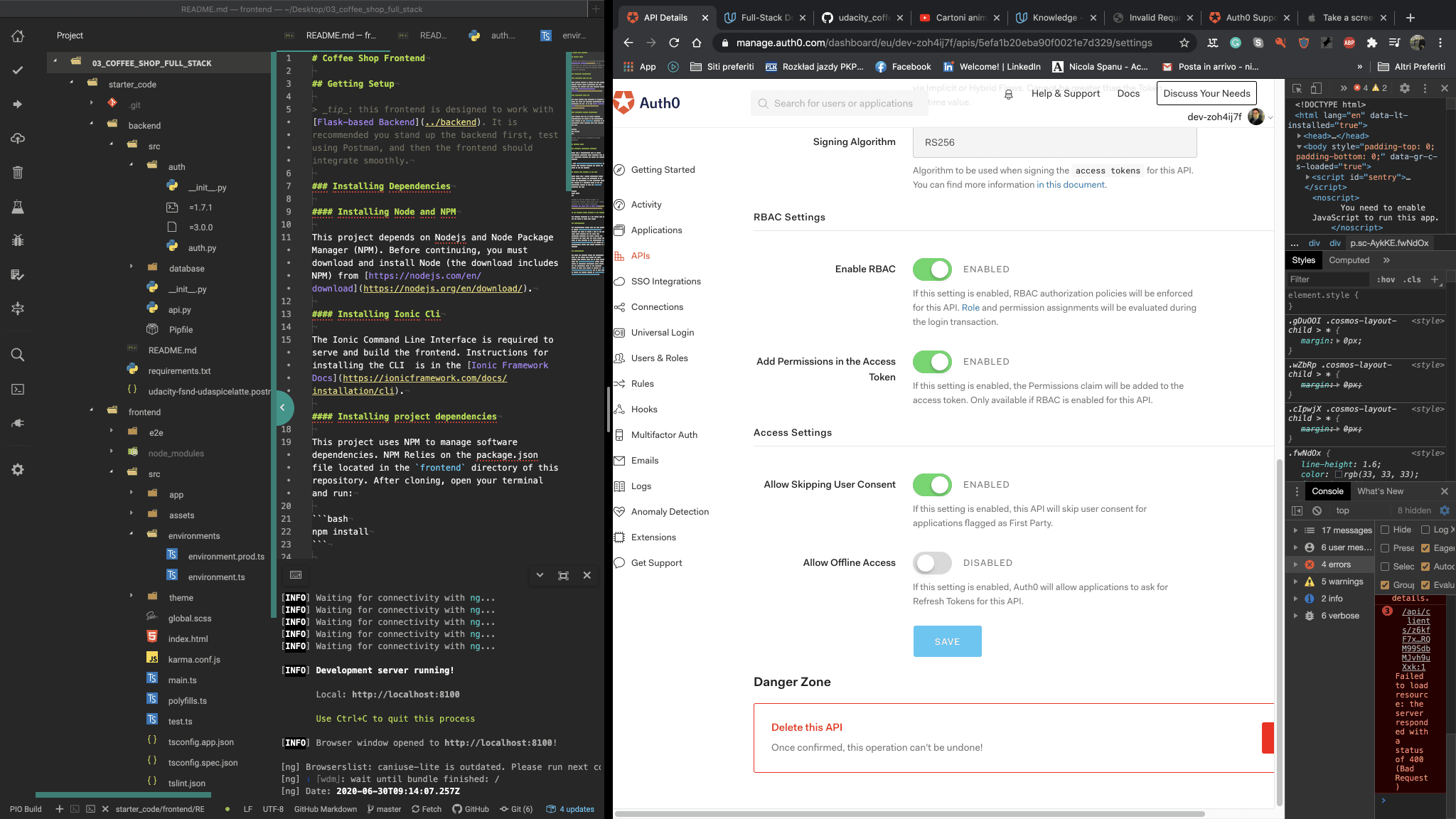
Auth0, part of Okta, is a customer identity platform that developers integrate into applications to handle authentication and authorization. It covers consumer applications, B2B SaaS products, internal tools and AI agents, with more than 30 SDKs and quickstarts for connecting applications written in any language or framework.
Login experiences run through hosted Universal Login or Embedded Login, with passwordless options, adaptive MFA and bot detection applied to sign-up and sign-in flows. Extensibility comes through Actions and Forms, which insert custom logic and additional steps into registration, login and re-engagement journeys without rebuilding the flow.
Key features include:
Universal and embedded login: Provides a hosted login page that handles the authentication flow, or in-application login flows where the experience needs to stay inside the product.
Passwordless and adaptive MFA: Supports passwordless sign-in and multi-factor authentication with bot detection applied to login attempts.
Enterprise SSO and provisioning: Enterprise connections and SCIM can be enabled for B2B customers, alongside express configuration, delegated administration and universal logout.
Multi-tenancy: Manages multiple business customers within one application, each with separate identity configuration.
Fine-grained authorization: Defines who can access what at a granular level, including authorization applied to retrieval-augmented generation pipelines.
Machine-to-machine authentication: Authenticates services, MCP servers and AI agents alongside human users.
Token Vault: Controls which APIs an AI agent can call on a user's behalf, with asynchronous authorization for agent actions.
Actions and Forms: Serverless functions and configurable forms extend identity flows and collect additional data during onboarding.
Limitations (as reported by users on G2):
Cost as usage grows: Pricing is tied to monthly active users, and reviewers report that costs escalate quickly with tier jumps that are hard to predict for consumer applications.
Feature gating: Capabilities such as enterprise SSO and enhanced role-based access control sit in higher plans.
Initial complexity: Reviewers describe the platform as feeling complex for newcomers despite the quickstarts.
Configuration depth: Callback and logout URLs, token settings and advanced configuration require working through detailed documentation.
Login customization limits: Shaping specific experiences such as password reset within Universal Login is reported as constrained, leading some teams to build those flows in their own application.
Source: Auth0
8. SAP Customer Identity and Access Management

Best for: Consumer brands tying identity to consent and profile data
Strengths: Consent management with passwordless login at high volume
Things to consider: Value depends on running the wider SAP ecosystem
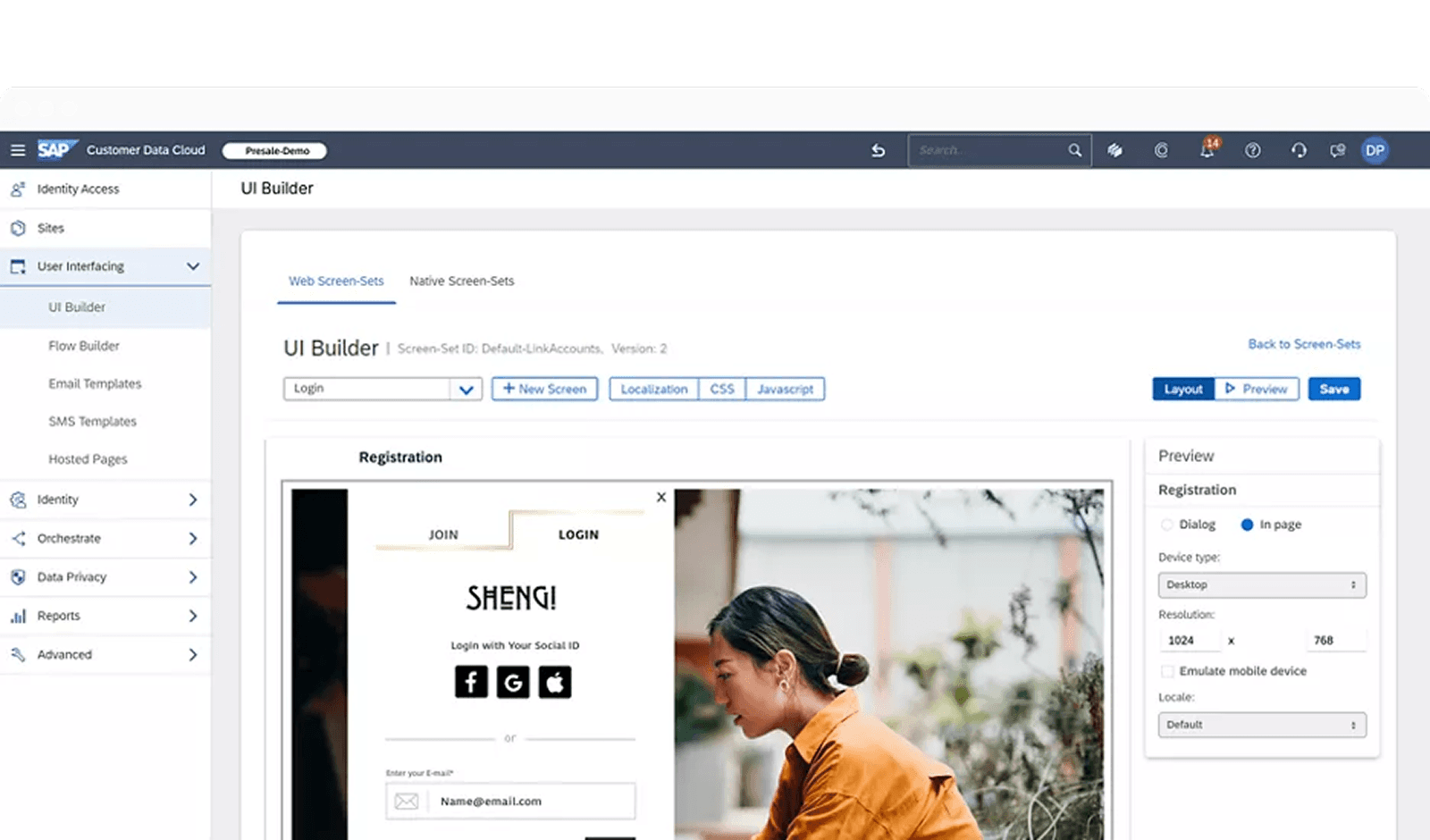
SAP Customer Identity and Access Management is a cloud-native solution within SAP Business Technology Platform that manages digital identities, user access, consent and privacy compliance for customers and partners. It covers websites, mobile applications and in-store systems, and supports both B2C and B2B use cases.
The solution pairs authentication and adaptive access control with centralized consent management, so identity data and permission records feed the same customer profile. It runs on a multi-tenant cloud architecture built for billions of identities and API calls, with capacity for surges in logins and registrations during peak retail events.
Key features include:
Passwordless authentication: Supports passkeys, phone login, magic links and one-time passwords across web, mobile and in-store kiosk environments.
Risk-based access and fraud detection: Applies AI-driven threat detection and real-time fraud detection with flexible authentication options at login.
Unified consent management: Captures and manages consent and preferences with audit-ready logging, version control and indirect consent capture, aligned to GDPR, ISO and CCPA.
Unified customer profiles: Centralizes consented zero-party and first-party data and unifies profiles across regions, brands and devices.
Rule-based global access controls: Applies access rules by region, brand and group so a single deployment covers multiple markets and business units.
Data activation: Makes identity and consent data available to analytics, marketing, personalization and AI-driven workflows.
Multi-tenant scale: Handles high volumes of identities and API calls with cloud-native scaling during demand spikes.
Limitations (based on publicly available sources):
Granular authorization: Users report difficulty granting different levels of access to different users within the same application.
Disaster recovery: Reviewers have flagged disaster recovery as an area that needs improvement.
Ecosystem dependency: The value case leans on integration with the surrounding SAP portfolio, which adds configuration work for teams outside that ecosystem.
No published pricing: Evaluation runs through a demo request rather than public pricing tiers or self-service sign-up.
Source: SAP
9. Transmit Security

Best for: Fusing customer identity with fraud and identity verification
Strengths: Orchestration with fraud detection and document verification
Things to consider: Integration and maintenance require specialist knowledge
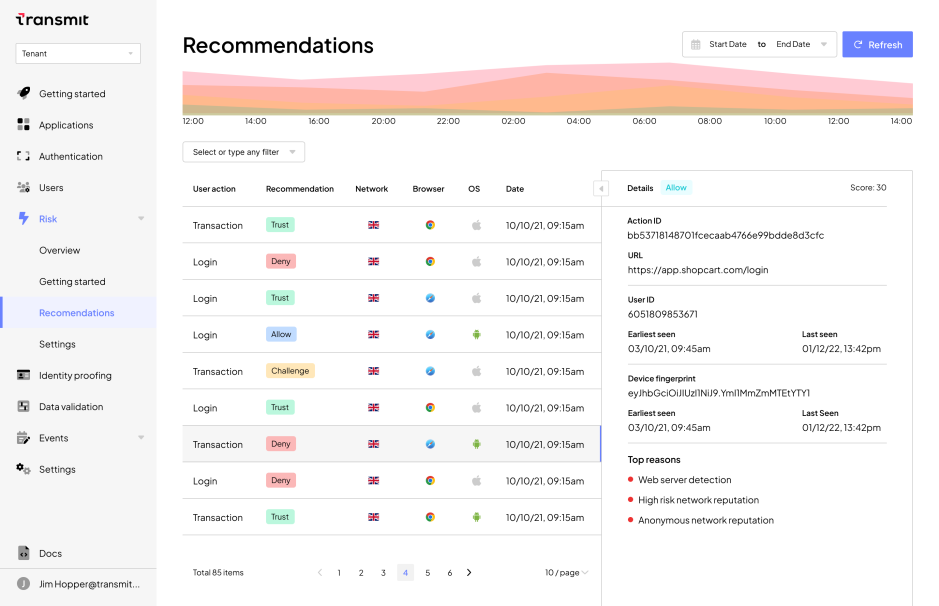
Mosaic by Transmit Security combines customer identity management, fraud prevention and identity verification in one platform, with services covering authentication, user management, identity orchestration, fraud detection and response, and identity verification. Solution packages address B2C identity, B2B identity, workforce identity and machine and automation threat detection.
The platform is microservices-based and orchestration-first. Drag-and-drop tools and natural language prompts design journeys such as registration, login and payment, while the platform handles integrations, deployment and testing. It runs active-active across GCP and AWS, and can also be deployed in the customer's own cloud environment.
Key features include:
Identity orchestration: Builds customer journeys through drag-and-drop tooling and natural language prompts, with the platform handling security, integrations and testing.
User management: Handles onboarding, lifecycle journeys, progressive profiling, consent and self-service experiences for both B2C and B2B users.
Passwordless authentication: Supports OTP, passkeys, mobile biometrics, magic links and social login, configured per application and user group.
Fraud detection and response: Uses an AI-based fraud engine with built-in workflows, automation and AI-driven investigations in place of manual rule tuning.
Identity verification: Scans and validates government-issued IDs and confirms document ownership to detect account opening and onboarding fraud.
Workflow automation: Automates identity and fraud operations across connected systems through an integration hub.
Deployment and resilience: Offers active-active multi-cloud presence across GCP and AWS, with the option to run in the customer's cloud.
Limitations (as reported by users on G2):
Required expertise: Reviewers note that integrating and maintaining the platform initially demands considerable knowledge.
Pricing: Cost is described as high, in line with comparable enterprise solutions.
Journey builder usability: Users report difficulty scrolling and pinpointing elements within nested blocks in the journey tree, which can disrupt configuration.
Scripting limits: AuthScript is reported as needing more capability for loops, array handling and container scenarios.
Limited review volume: Published review counts across platforms are small, which limits comparison against higher-volume competitors.
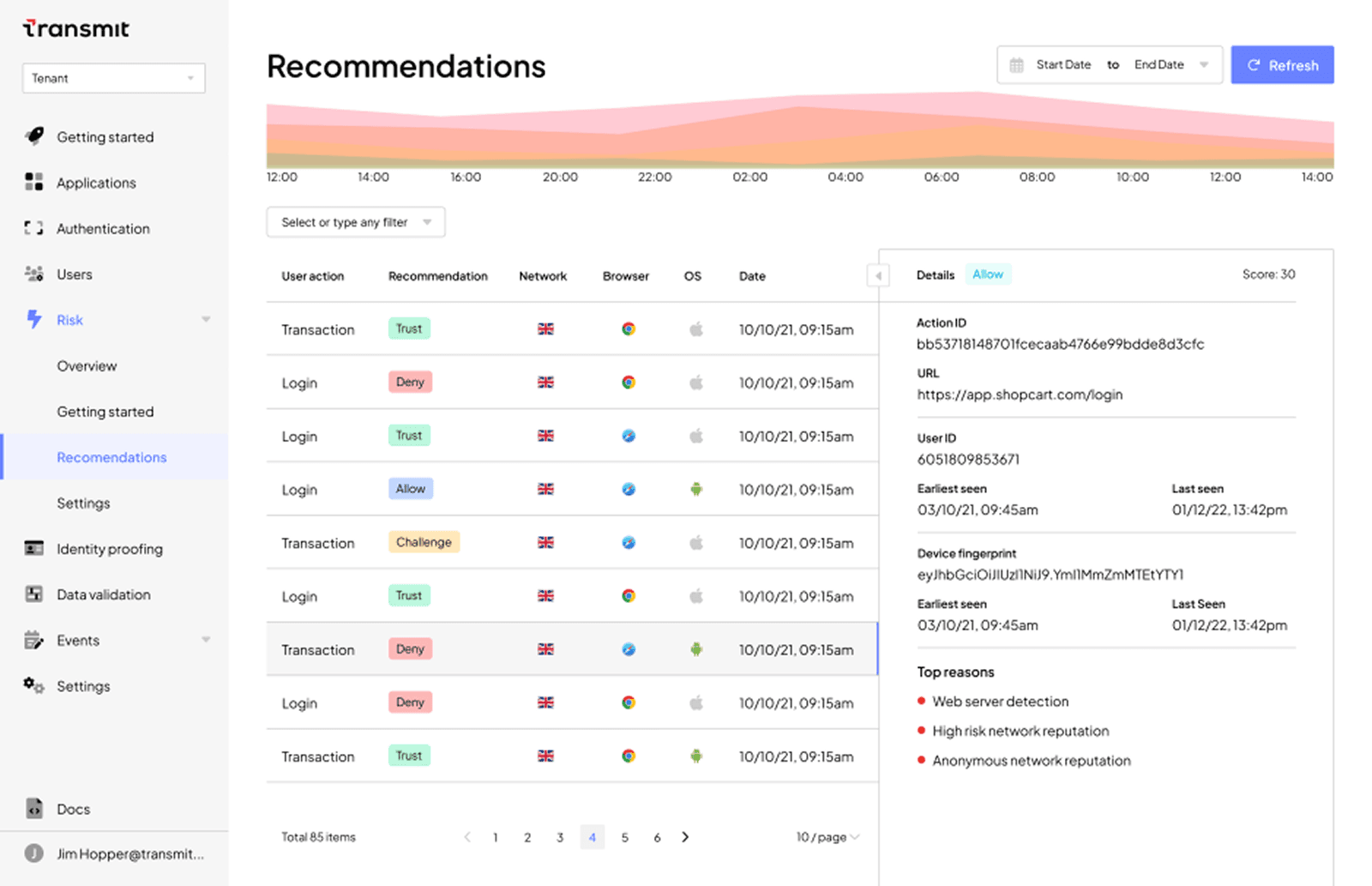
Source: Transmit Security
Privileged Access Management
10. Idira by Palo Alto Networks (formerly CyberArk)

Best for: Large enterprises with critical privileged access risk
Strengths: Zero standing privileges with session isolation and vaulting
Things to consider: Complex setup and inflexible, premium licensing
Idira is the privileged access management solution built on Palo Alto Networks' identity security platform, which replaces the CyberArk branding following the acquisition. It combines credential vaulting, zero standing privileges and session isolation into one enforcement model applied across human identities rather than only IT administrators.
The approach shifts from standing entitlements to ephemeral privileges created when a task begins and destroyed when it ends. Coverage spans cloud infrastructure, endpoints, SaaS applications and third-party access, with identity threat detection and response running natively against signals from across the identity estate.
Key features include:
Zero standing privileges: Context-aware ephemeral privileges exist only for the duration of a task, leaving no dormant credentials in place afterward.
Cloud and Kubernetes access: Provides agentless brokered access to AWS, Azure, Google Cloud and Kubernetes through native CLI and console workflows, using just-in-time entitlements in place of static IAM roles.
Endpoint privilege security: Removes standing local administrator rights on Windows, macOS and Linux and replaces them with policy-based, on-demand application elevation.
Session isolation and audit: Brokers, isolates and records privileged sessions across infrastructure and SaaS, with AI-generated summaries that surface anomalous commands.
Vendor and contractor access: Delivers browser-based, agentless just-in-time access scoped to a specific task with full session recording, removing VPN and bastion dependencies.
Credential vaulting and rotation: Stores privileged credentials in a centralized encrypted repository with automated rotation and injects them at login for applications that cannot support modern federation.
Identity threat detection and response: Analyzes signals across the identity estate and automatically terminates risky sessions or raises authentication requirements when suspicious activity such as vault sweeping is detected.
Lifecycle automation: Joiner, mover and leaver events adjust entitlements and vaulted credentials together, with behavioral profiles used to define job-appropriate entitlements.
Limitations (as reported by users on PeerSpot):
Setup and integration effort: Reviewers describe initial setup and integration as complex, requiring significant planning and resources.
Licensing model: Licensing is reported as inflexible and expensive, particularly for users who need access only occasionally.
Infrastructure footprint: The architecture is described as demanding substantial server resources, which complicates deployment.
Support experience: Users report delays reaching knowledgeable support personnel when issues arise.
Discovery and automation: Account discovery, automation and REST API integration are cited as areas needing improvement.
Password rotation: Some reviewers consider rotation less refined than in competing privileged access tools.
Reviews for this product are published under the CyberArk name, which preceded the Idira rebrand.
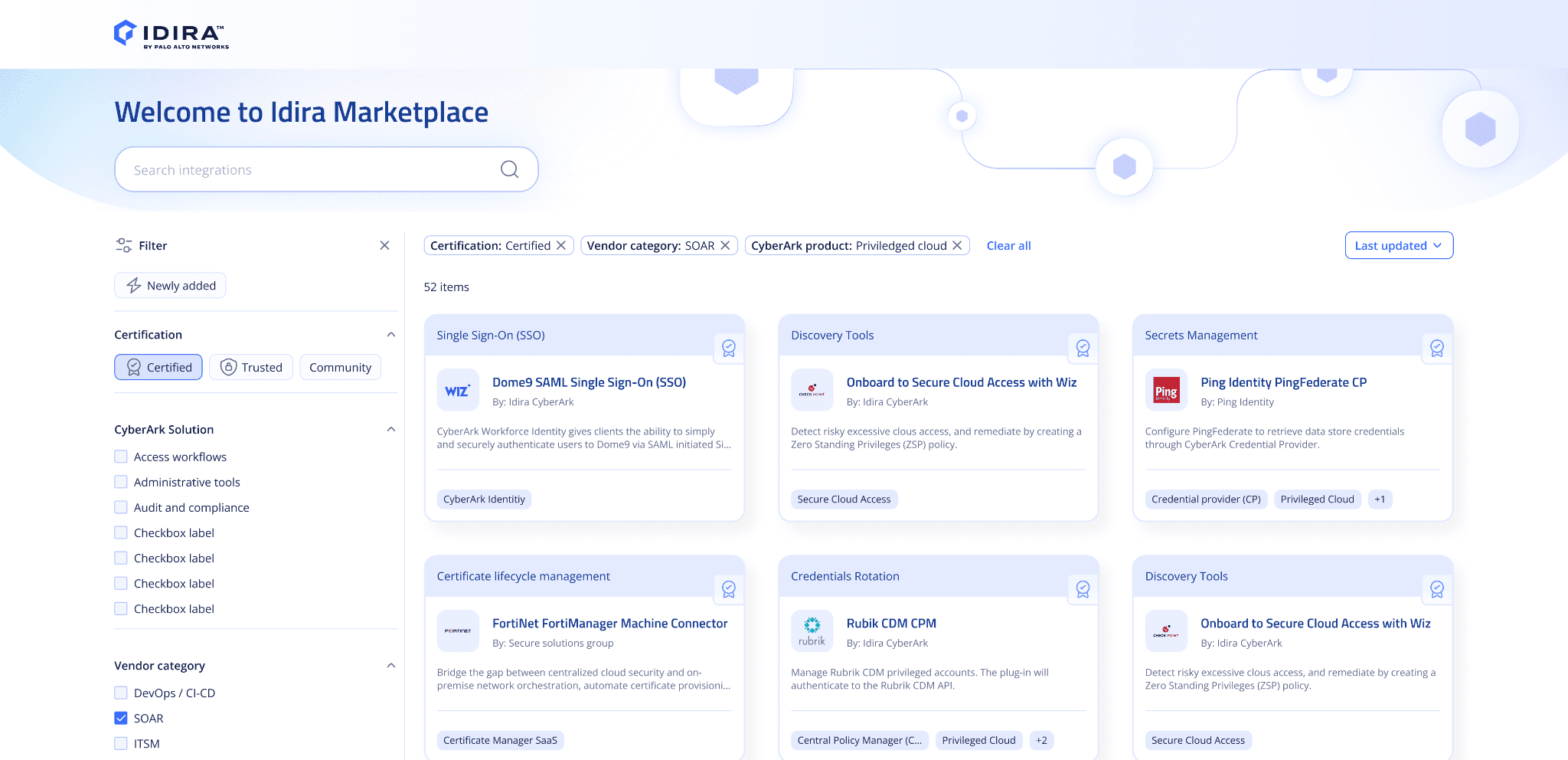
Source: Palo Alto Networks
11. BeyondTrust Pathfinder

Best for: Organizations mapping and reducing paths to privilege
Strengths: Unified PAM, CIEM and ITDR with privilege path mapping
Things to consider: Complex initial setup and premium pricing
BeyondTrust Pathfinder is the platform that brings the vendor's privileged access products under one console, fusing visibility, management and governance of identities, entitlements and access. Its distinguishing concept is the True Privilege Graph, which maps elevated access and the routes attackers can take to reach it, including indirect and inherited paths.
Coverage spans endpoints, servers, clouds, identity providers, SaaS applications and databases, with capabilities across privileged access management, identity threat detection and response, cloud infrastructure entitlement management and secrets management. Third-party connectors feed additional identity data into the same console.
Key features include:
Identity Security Insights: Correlates data from BeyondTrust and third-party solutions into one view of identities, accounts and elevated access, detecting anomalous activity and compromised credentials with risk ratings and recommended actions.
True Privilege Graph: Maps entitlements, privileges and permissions to expose paths to privilege, including hidden and inherited routes and shadow admin accounts.
Password Safe: Discovers, vaults and rotates privileged credentials, workforce passwords, DevOps secrets and SSH keys, applies just-in-time access, and records sessions with a searchable audit trail and the ability to pause or terminate activity.
Privileged Remote Access: Provides rule-based access provisioning without VPNs for employees, contractors and vendors, with video session recordings and activity logs enriched with metadata.
Entitle: Automates cloud permissions management with just-in-time controls, self-service access requests, permission bundling and over 100 integrations.
Endpoint Privilege Management: Grants privileges only as needed and applies application control, allow-lists and policy templates, with centralized policy management and file integrity monitoring for Linux environments beyond sudo.
Active Directory Bridge: Extends Kerberos authentication, single sign-on and Group Policy from Active Directory to Unix and Linux systems.
Non-human and agent coverage: Maps and manages privilege relationships for machine and workload identities, including AI agents, with auditable privileged actions.
Limitations (as reported by users on G2):
Initial setup: Reviewers describe complex initial deployment involving multiple customizations and a steep learning curve, with timelines extended by network and firewall constraints.
Pricing: Premium pricing is reported as unsuitable for smaller organizations with limited budgets.
Access visibility: Some users find it unclear how a given user is obtaining access to a particular resource or secret.
Troubleshooting: Reviewers report difficulty diagnosing problems when they occur.
Mobile capability: The mobile application is described as limited beyond approving requests.
Module maturity: Reviewers note that the secrets and workforce password modules need further development.
These reviews cover Password Safe, one of the products consolidated under the Pathfinder platform.
12. Delinea Platform

Best for: Extending PAM into continuous authorization decisions
Strengths: Credential vaulting with just-in-time authorization
Things to consider: Complex deployment and mixed support experiences
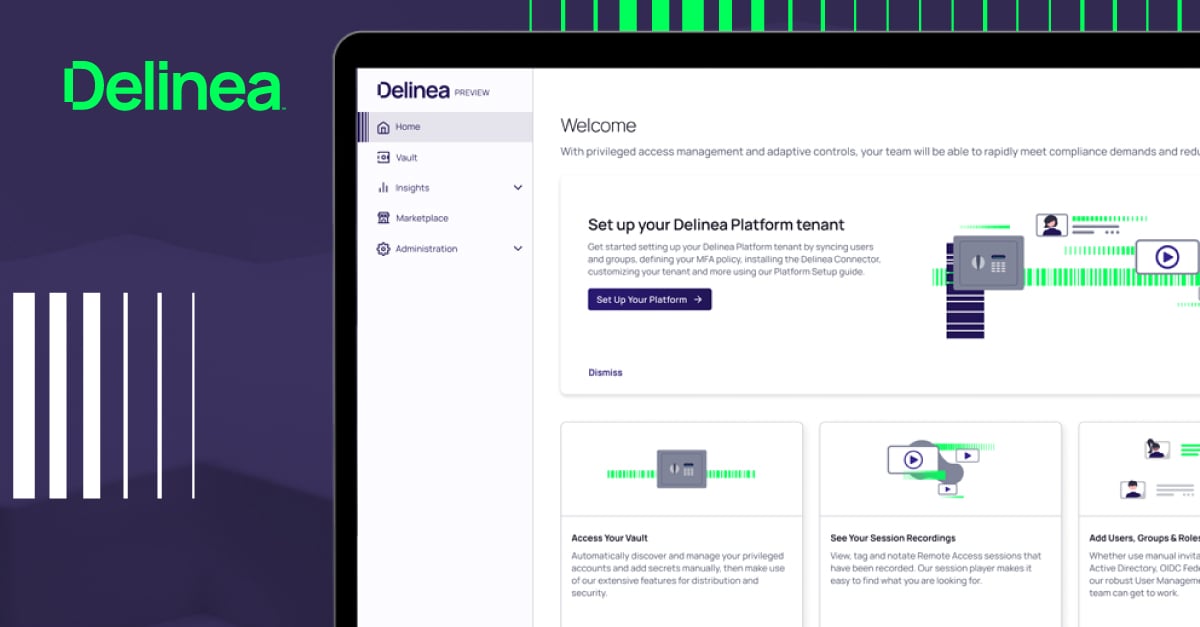
The Delinea Platform positions privileged access management as an identity security control plane that continues past the point of access approval. Rather than authorizing once at grant time, it evaluates access decisions in real time across workforce users, IT administrators, developers, machine identities and AI agents.
Iris AI, the intelligence engine built into the platform, discovers identities, analyzes their risk and authorizes access from a single control plane. The architecture follows three stages covering visibility, posture and control, and applies consistent policy across on-premises, multi-cloud and ephemeral infrastructure.
Key features include:
Discovery and inventory: Continuously discovers human, machine and AI identities and maps their access, relationships and risk.
Posture analysis and remediation: Continuously analyzes identities and their interactions and prioritizes risk so remediation targets the most significant gaps first.
Zero standing privilege enforcement: Applies just-in-time access with vaulted secrets, controlled sessions and auditable actions in place of persistent entitlements.
Credential vaulting and rotation: Vaults, rotates and governs credentials across privileged accounts, machine identities, DevOps pipelines and AI agents.
Continuous authorization: Authorizes individual queries, commands and sessions in real time rather than only at the point of initial access.
Workforce access governance: Secures and governs employee access through centralized, policy-based control.
AI agent governance: Discovers AI agents that request access and invoke APIs autonomously and applies just-in-time, least-privilege access with a complete record of activity.
Developer access: Embeds just-in-time access at the moment of execution so zero standing privilege applies in development environments.
Product coverage: Includes Secret Server, Privilege Manager, Privileged Remote Access, Server PAM, DevOps Secrets Vault, Privilege Control for Cloud Entitlements, Identity Threat Protection and segregation of duties controls.
Limitations (as reported by users on G2):
Deployment complexity: Reviewers describe initial setup as complex and difficult to deploy, with specialized expertise required in some environments.
Navigation: Users report that moving through the interface relies on the back button rather than stepping up through a hierarchy.
Documentation: Reviewers note gaps in documentation, particularly around connectors and integrations.
Support consistency: Experiences vary, with some reviewers praising configuration support and others reporting limited assistance on complex issues.
Cost and flexibility: Reviewers describe the product as costly relative to competitors and less flexible in large enterprise deployments.
Integration and API issues: Users report challenges with API tokenization and integration with external systems including Azure Active Directory.
These reviews cover Secret Server, the vaulting product delivered on the Delinea Platform.
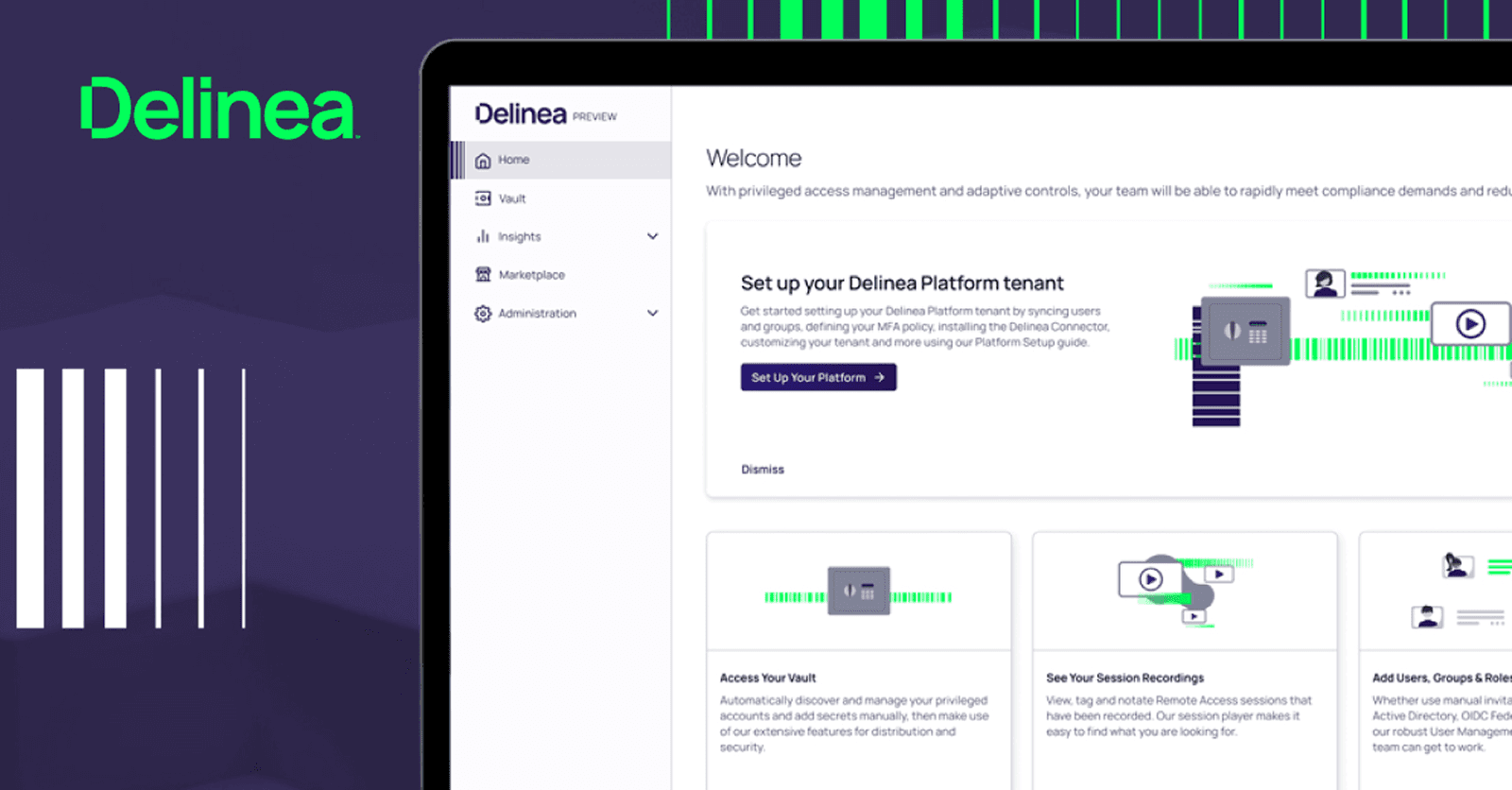
Source: Delinea Platform
Cloud Infrastructure Entitlement Management
13. Tenable Cloud Security

Best for: Right-sizing cloud entitlements alongside cloud posture
Strengths: CIEM engine with attack path context across major clouds
Things to consider: Support response times and occasional product bugs
Tenable One Cloud Exposure is Tenable's cloud-native application protection platform, and its CIEM engine analyzes entitlements across AWS, Azure and Google Cloud to identify excessive or toxic permissions and enforce least privilege. It discovers compute, identity and data assets with visibility into access and exposure paths.
Entitlement findings sit alongside misconfiguration detection, vulnerability data and sensitive data discovery, so permission risk is prioritized in the context of other cloud exposures rather than in isolation. The product integrates with major cloud providers and with identity providers including Entra ID, Google Workspace, Okta, OneLogin and Ping Identity.
Key features include:
CIEM engine: Maps effective permissions across AWS, Azure and Google Cloud, flags stale or overly broad access, and identifies toxic entitlements and hidden attack paths.
Just-in-time access controls: Supports time-bound access and automated remediation workflows that right-size permissions without blocking development work.
Identity provider inventory: IdP integrations produce a full inventory of federated users and groups tied to cloud accounts, with permission analysis for each.
Toxic combination analysis: Identifies combinations of risk with attack path visualizations and remediation workflows for the exposures most likely to cause damage.
Misconfiguration detection: Continuously checks multi-cloud configuration against frameworks including CIS, NIST and PCI DSS with guided remediation.
Sensitive data discovery: Classifies regulated data such as PII and NPI and correlates data access patterns with identity risk.
Infrastructure as code scanning: Scans Terraform, CloudFormation and Kubernetes manifests so permission and configuration issues surface before deployment.
AI workload coverage: Discovers and classifies AI models, training data and endpoints and applies just-in-time permissions to them.
Limitations (as reported by users on PeerSpot):
Support quality: Reviewers cite response times and overall support quality as areas needing improvement.
Product defects: Users report encountering bugs, along with occasional false positives.
Integration breadth: Some reviewers want more integrations to allow further customization and flexibility.
Initial adoption: The breadth of the platform is described as overwhelming at first before teams become accustomed to it.
Remediation guidance: Users note that remediation steps could be simpler to follow.
Platform coverage: Some reviewers want more complete workload and application protection alongside the entitlement capabilities.
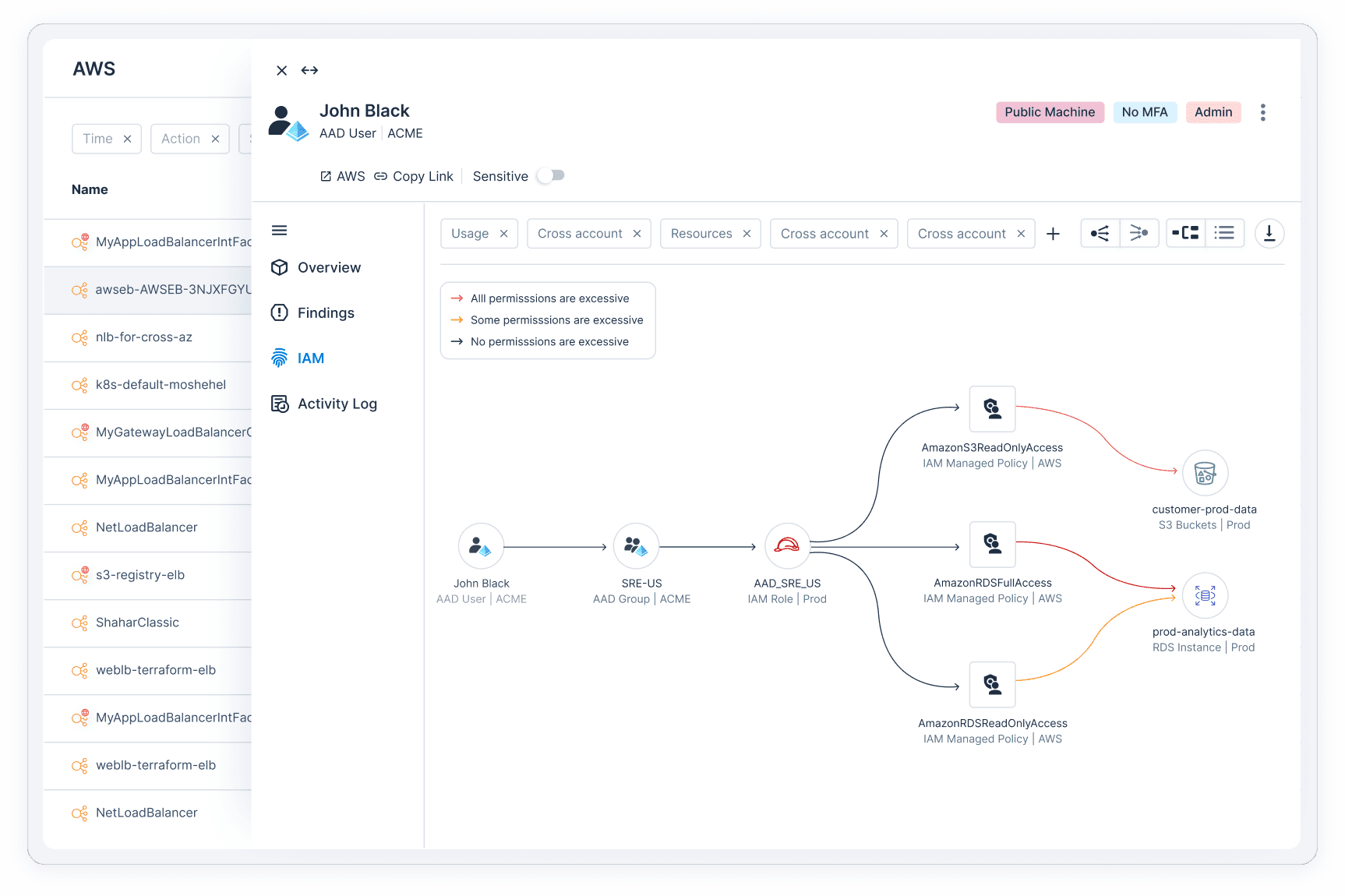
Source: Tenable
14. CrowdStrike Falcon Cloud Security

Best for: Teams tying cloud entitlements to threat detection
Strengths: CIEM inside a CNAPP with adversary intelligence context
Things to consider: Premium pricing and a steep initial learning curve
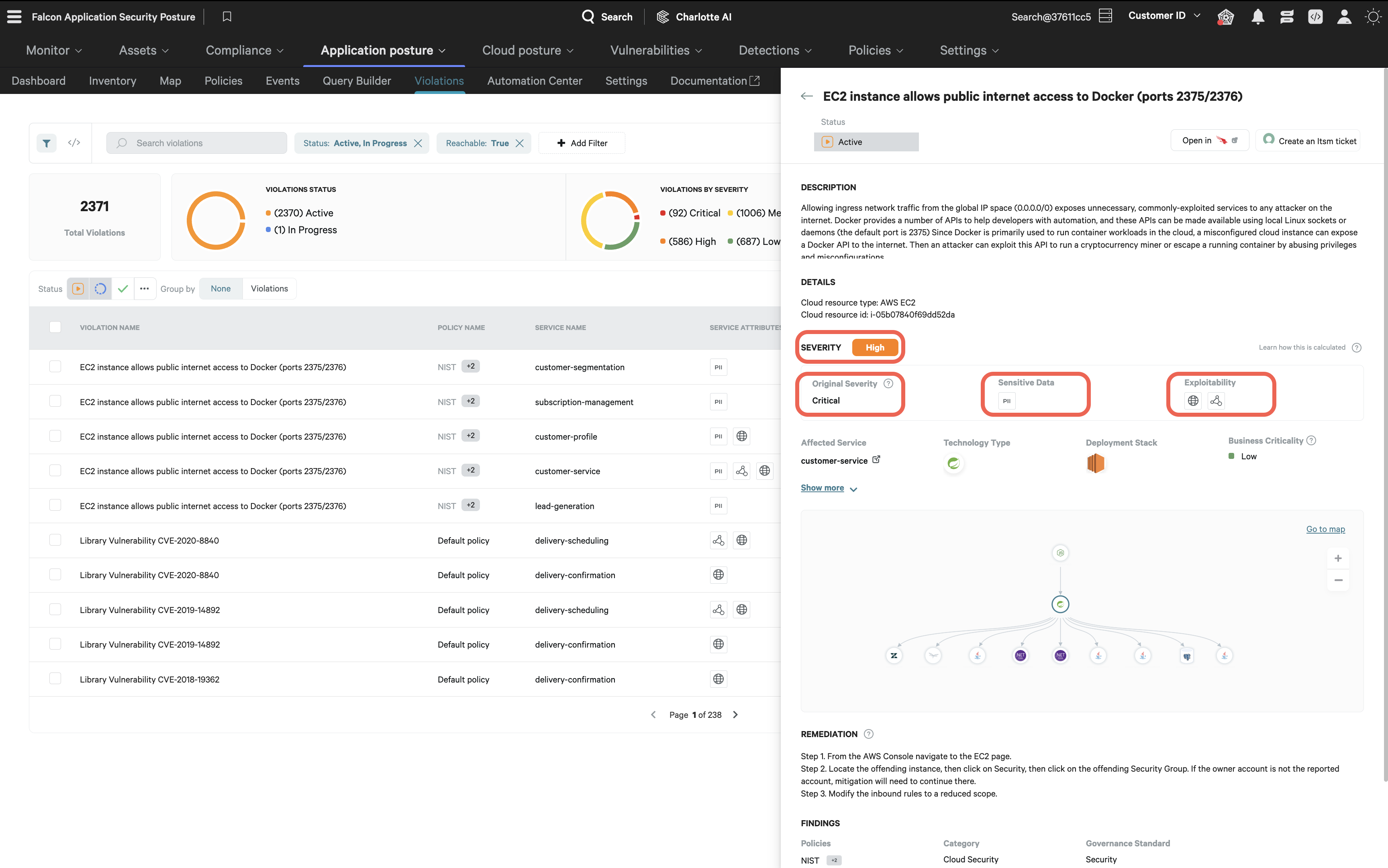
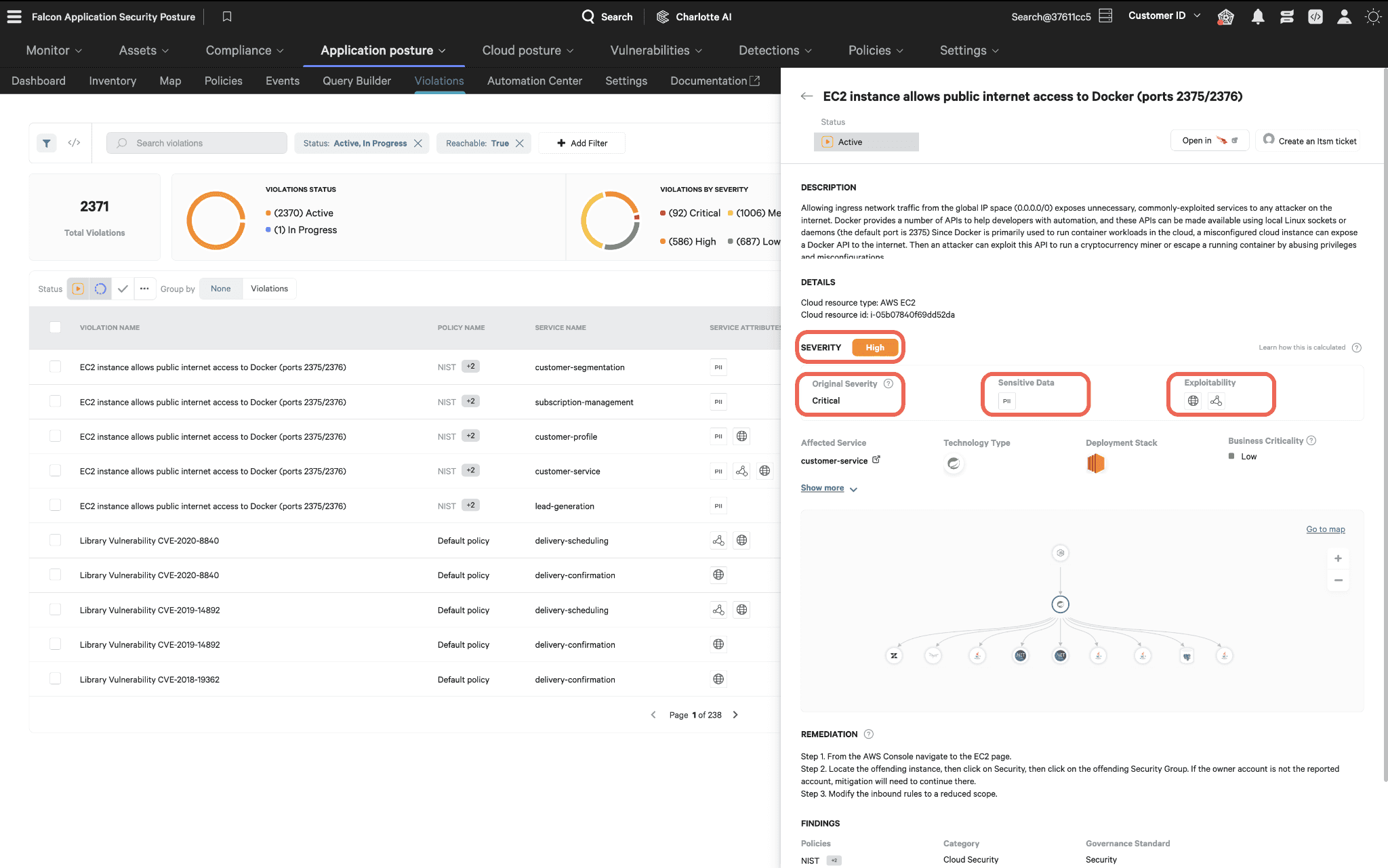
Falcon Cloud Security is CrowdStrike's cloud-native application protection platform, combining agentless visibility with the Falcon sensor. Its CIEM module controls cloud identities and entitlements alongside posture management, workload protection, container and Kubernetes security, application security posture management, data security posture management, AI security posture management and cloud compliance.
Entitlement and posture findings are enriched with adversary intelligence, mapping detections to tracked adversaries and techniques. Real-time cloud detection and response covers control plane activity across multi-cloud environments, and identity signals correlate with endpoint data for cross-domain investigation. Coverage spans AWS, Azure, Google Cloud and OCI.
Key features include:
CIEM: Manages cloud identities and entitlements with centralized control over cloud permissions.
Cloud security posture management: Detects cloud misconfigurations in real time across connected accounts.
Cloud detection and response: Provides visibility into cloud control plane activity across multi-cloud environments, unified with endpoint and identity signals for cross-domain correlation.
Adversary intelligence context: Maps detections to tracked adversaries and techniques using a large body of real-time indicators.
Agentless posture management: Enriches cloud risk detections with graph-based context so exploitable exposures are prioritized ahead of raw finding counts.
Runtime workload protection: Defends cloud workloads and scans containers and Kubernetes clusters at runtime.
Application security posture management: Uses application code analysis at runtime to prioritize vulnerabilities reachable in business-critical applications.
Data and AI coverage: Discovers and classifies cloud data and secures AI infrastructure, models and agents.
Infrastructure as code scanning: Checks infrastructure definitions before deployment and automates cloud compliance reporting.
Limitations (as reported by users on G2):
Pricing: Reviewers describe the platform as expensive, which puts it out of reach for smaller organizations.
Availability: Users report that cloud workload dashboards are occasionally unavailable and ask for better uptime during critical periods.
Enrollment experience: Onboarding and enrollment are cited as areas where the user experience needs work.
Feature complexity: The breadth of capabilities is described as overwhelming, with a significant learning curve to navigate.
Frequent changes: Reviewers note that names and features change often enough that teams need time to adapt after updates.
Source: CrowdStrike
15. Sonrai Security

Best for: One-click least privilege across cloud permissions
Strengths: Blocks unused permissions with chat-based JIT approvals
Things to consider: Focused on cloud permissions rather than broader IAM
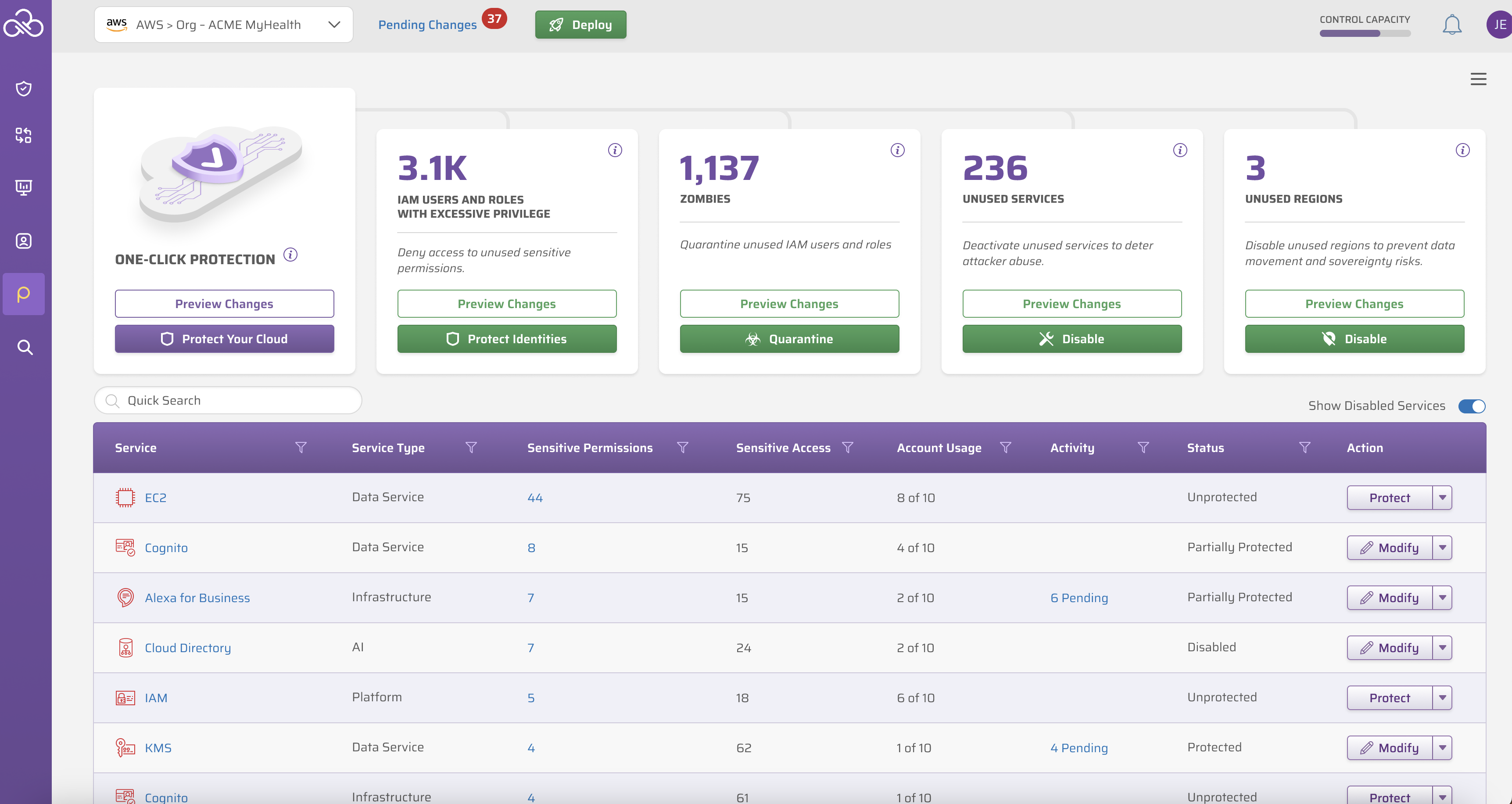
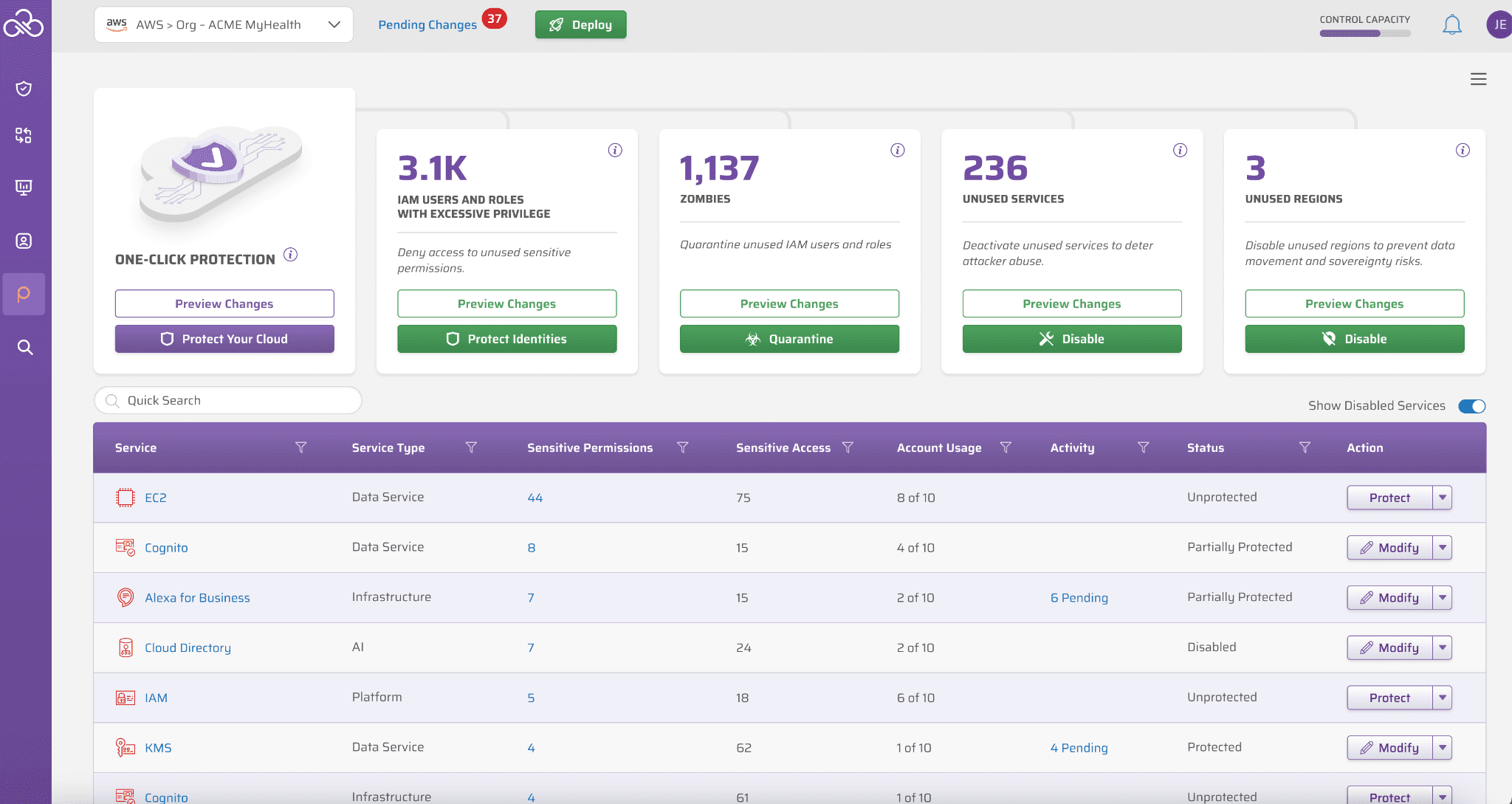
Sonrai's Cloud Permissions Firewall enforces access guardrails for human, machine and AI agent identities running on AWS, Azure and Google Cloud. It maps identities and their permissions, then blocks the permissions that are not in use, so a compromised identity or agent cannot execute commands it never needed.
WALLy, the vendor's cloud PAM agent, maps every identity and applies a default-deny state to unused privileged permissions, and can be reached from Slack or Teams. When new access is needed, an automated just-in-time workflow routes approval through the same chat tools, with the team choosing which permissions are granted and for how long before access is revoked automatically.
Key features include:
Cloud Permissions Firewall: Blocks unused permissions across agents, humans and machines with automated global policies, leaving in-use permissions untouched so development continues.
Unused service and region blocking: Disables cloud services and regions that are not being used, reducing the surface available to a compromised identity.
Zombie identity handling: Quarantines unused identities and reports on which identities are and are not exercising their permissions.
Default-deny privileged permissions: WALLy applies a default-deny state to unused privileged permissions going forward, so newly attempted privileged actions are stopped.
ChatOps just-in-time access: Routes access requests through Slack or Teams with scoped, time-bound grants and automatic revocation at expiry.
Audit logging: Records grants, revocations and privileged activity for audit purposes.
Multi-cloud coverage: Applies the same permission controls across AWS, Azure and Google Cloud accounts.
Limitations (based on publicly available sources):
Scope: The product line centers on cloud permissions and cloud privileged access, so workforce and customer identity management sit outside its coverage.
Adjacent tooling still required: Organizations needing broad cloud workload or posture security will run it alongside another platform.
Initial cost: Peer comparisons note higher initial costs than some alternatives in adjacent cloud security categories.
Limited independent review volume: Published review counts are small relative to larger cloud security vendors, which limits side-by-side comparison.
Source: Sonrai
Conclusion
Identity and access management is a foundational security capability that helps organizations control who can access business resources, under what conditions, and for how long. The right IAM solution depends on factors such as organizational size, regulatory requirements, cloud adoption, and identity complexity, whether the priority is workforce authentication, identity governance, privileged access, or cloud entitlement management. By combining strong authentication, least-privilege access, automated identity lifecycle management, and continuous governance, organizations can reduce identity-related risks, improve compliance, and provide secure access across hybrid and cloud environments.