

TL;DR: IAM security platforms with real-time identity vulnerability detection pair access management with ITDR and ISPM to surface misconfigurations, excess privilege and live attacks. Opti is best for AI-driven entitlement analysis and remediation, BeyondTrust privilege path mapping, CrowdStrike hybrid ITDR, and Semperis Active Directory hardening.
What Are IAM Security Platforms with Real-Time Identity Vulnerability Detection?
IAM security platforms with real-time identity vulnerability detection combine traditional access management with Identity Threat Detection and Response (ITDR) and Identity Security Posture Management (ISPM) to spot misconfigurations and active attacks as they happen.
This coverage must extend beyond human users. Modern environments also depend on non-human identities (NHIs), including service accounts, API keys, workload identities, machine credentials, and AI agents. Effective platforms analyze these identities in real time, map their access and behavior, and flag risks such as unmanaged secrets, overprivileged agents, unusual API activity, and unauthorized access to sensitive systems.
Why is real-time vulnerability detection important in modern IAM platforms?
Expanding identity attack surfaces: Human, machine, and AI identities are growing rapidly across cloud, SaaS, and on-prem environments, creating more paths attackers can exploit.
Excessive and unused permissions: Overprivileged, dormant, or orphaned accounts increase breach impact and make lateral movement easier for attackers using compromised credentials.
Hybrid and multi-cloud complexity: Rapid changes across cloud providers, SaaS apps, and on-prem systems can create misconfigurations that static reviews miss.
Valid credential attacks: Attackers increasingly use legitimate credentials, making real-time monitoring of behavior, entitlement use, and privilege changes essential.
Key real-time detection capabilities in IAM security platforms:
Continuous identity discovery: Continuously discovers human, machine, and AI identities across cloud, SaaS, and on-premises environments.
Identity security posture management: Detects identity misconfigurations, policy violations, and risky access settings in real time.
Real-time entitlement monitoring: Monitors permission usage to identify dormant, unusual, or newly granted access.
Excessive privilege detection: Identifies overprivileged users, service accounts, and AI agents based on actual access patterns.
Non-human identity security: Discovers and monitors service accounts, API keys, workload identities, and AI agents for risky behavior.
Credential and secret exposure detection: Detects exposed passwords, API keys, tokens, certificates, and other compromised credentials.
Just-in-time access enforcement: Grants temporary privileged access only when required and automatically revokes it after use.
SoD and toxic combination detection: Identifies conflicting permission combinations that increase fraud and security risk.
IAM Security Platforms at a Glance
The table below summarizes the key differences between the platforms covered in this guide. Each one is explored in more detail in the sections that follow.
Category | Solution | Best For | Key Strengths | Things to Consider |
Identity Security Posture and Vulnerability Detection | Opti | Enterprises replacing manual IAM review with AI-driven analysis | Plain-English policies, risk scoring, one-click remediation | Recently launched, with limited independent user feedback |
Identity Security Posture and Vulnerability Detection | BeyondTrust Identity Security Insights | Teams mapping privilege escalation paths across hybrid estates | True Privilege graph, cross-domain visibility, PAM controls | Deepest remediation value comes with other BeyondTrust products |
Identity Security Posture and Vulnerability Detection | Okta Identity Security Posture Management | Okta users needing posture visibility across SaaS and cloud | Fast deployment, attack-chain prioritization, MFA coverage checks | Real-time attack response sits in a separate Okta product |
Identity Security Posture and Vulnerability Detection | Saviynt Identity Security Posture Management | Enterprises consolidating ISPM with IGA, PAM and app governance | Broad identity data inventory, risk correlation, remediation | Setup and administration can be complex and time-consuming |
Identity Threat Detection and Response | CrowdStrike Falcon Next-Gen Identity Security | Teams unifying identity and endpoint protection in one console | Real-time detection, autonomous response, hybrid coverage | Alert volume and cost are common points of feedback |
Identity Threat Detection and Response | Microsoft Defender for Identity | Microsoft-centric SOCs working inside Defender XDR | Dedicated AD sensors, UEBA detections, automated response | Value is strongest inside Microsoft licensing and ecosystem |
Identity Threat Detection and Response | Silverfort Identity Security Platform | Extending MFA and inline controls to legacy and non-web systems | Inline enforcement at authentication, ISPM and ITDR modules | Investigation workflows and support responsiveness draw criticism |
Identity Threat Detection and Response | Semperis Directory Services Protector | Organizations hardening hybrid Active Directory and Entra ID | Tamperproof change tracking, auto-rollback, exposure indicators | Scope centers on Active Directory and Entra ID |
Why Real-Time Identity Vulnerability Detection Is Important
Expanding Human and Machine Identity Attack Surfaces
Organizations today manage thousands (sometimes millions) of identities, spanning both human users and machines such as service accounts, bots, and IoT devices. Each new identity introduces potential vulnerabilities, from weak passwords to misconfigured permissions, that can be exploited by attackers. The rapid adoption of cloud services, SaaS applications, and DevOps practices has further expanded the attack surface, making it difficult for security teams to maintain visibility and control using manual processes or static tools.
Machine identities, in particular, often have broad access rights and are created dynamically by automation tools, making them difficult to track and secure. Attackers frequently target these non-human identities because they are less likely to be monitored and can provide persistent access to critical systems. As identity sprawl accelerates, real-time detection becomes essential to identify and remediate risks across both human and machine accounts.
Risks from Excessive and Unused Permissions
One of the most common identity-related risks is the accumulation of excessive or unused permissions. Employees and service accounts are often granted broad access rights for convenience or to avoid disrupting business processes, but these permissions are rarely reviewed or revoked when no longer needed. Over time, this leads to a situation where many identities have far more access than required for their roles, increasing the potential impact of a breach.
Attackers exploit excessive permissions to move laterally within an environment, escalate their privileges, and exfiltrate sensitive data. Unused accounts, such as those belonging to former employees or dormant services, are also prime targets for compromise. Real-time identity vulnerability detection platforms can continuously monitor permissions, flag anomalies, and help enforce least-privilege principles to reduce risk.
Rapid Changes Across Hybrid and Multi-Cloud Environments
Modern organizations operate in dynamic environments where applications, users, and infrastructure frequently change. The adoption of hybrid and multi-cloud architectures has made it even more challenging to maintain consistent identity security controls. Permissions and roles can differ significantly between cloud providers, and changes made in one environment can create unintended vulnerabilities elsewhere.
Traditional IAM solutions struggle to keep pace with these rapid changes, often relying on scheduled scans or manual reviews that leave gaps in coverage. Real-time detection platforms, however, are designed to ingest identity data from multiple sources, correlate it in real time, and provide immediate visibility into security posture across all environments. This capability is critical for organizations seeking to prevent misconfigurations and unauthorized access as their infrastructure evolves.
Identity-Based Attacks Using Valid Credentials
Attackers increasingly focus on obtaining valid credentials through phishing, credential stuffing, or exploiting leaked secrets. Once inside, they can operate undetected for extended periods, as their actions appear legitimate to traditional security tools. These identity-based attacks are especially dangerous because they bypass perimeter defenses and can lead to significant data breaches or operational disruption.
Real-time identity vulnerability detection platforms address this threat by continuously monitoring for suspicious activity involving valid credentials, such as unusual login locations, access to sensitive resources, or escalation of privileges. By correlating behavioral analytics with entitlement data, these platforms can quickly identify and contain attacks before they escalate, reducing dwell time and limiting damage.
Core Capabilities of IAM Security Platforms for Real-Time Identity Vulnerability Detection
1. Continuous Identity Discovery
Continuous identity discovery is the process of automatically detecting all identities (both human and machine) across an organization’s entire digital landscape. This includes:
Employees
Contractors
Third-party users
Service accounts
APIs
Devices
By integrating with identity providers, cloud platforms, and on-premises directories, these platforms maintain an up-to-date inventory of every account that can access critical resources. Automated discovery is essential for uncovering shadow identities, orphaned accounts, and unauthorized access points that may be missed by manual processes. Real-time detection platforms can rapidly identify new or modified accounts, flagging them for review and remediation.
2. Identity Security Posture Management
Identity security posture management involves continuously assessing the configuration and health of identity systems, policies, and entitlements. This capability provides security teams with real-time insights into compliance with:
Organizational policies
Industry standards
Regulatory requirements
It highlights misconfigurations, outdated controls, and policy violations that could be exploited by attackers. These platforms generate actionable reports and dashboards that prioritize vulnerabilities based on risk, enabling faster remediation. By automating posture assessments, organizations can ensure that identity systems remain aligned with best practices as environments evolve.
3. Real-Time Entitlement Monitoring
Real-time entitlement monitoring tracks:
Which permissions each identity has
When those permissions were last used
How often they are exercised
Platforms combine entitlement data with usage telemetry to distinguish active access from dormant or rarely used privileges. This makes it possible to identify excessive access based on actual behavior rather than access lists alone.
The platform can flag unused roles, stale group memberships, and permissions that exceed normal usage patterns. It can also detect sudden changes in access frequency or the use of sensitive entitlements outside expected workflows. These signals help security teams remove unnecessary access and respond faster to emerging identity risk.
4. Excessive Privilege Detection
Excessive privilege detection identifies identities with more access than their role or activity requires. Platforms use peer-group analytics to compare users, service accounts, and agents with similar functions and flag outlier permissions. They also apply anomaly detection to identify unusual entitlement use, such as access to sensitive systems that falls outside established behavior patterns.
More advanced platforms automatically classify high-risk entitlements based on the systems, data, and actions they expose. They can prioritize privileges that enable:
Administration
Data export
Credential changes
Policy modification
This allows security teams to focus remediation on access that creates the greatest potential impact.
5. Non-Human Identity Security
Non-human identities often hold critical privileges and are frequently overlooked in traditional security programs. IAM security platforms provide dedicated capabilities to discover, monitor, and secure these accounts in real time. This includes tracking the creation, modification, and use of machine identities across cloud and on-premises environments. Examples on NHIs include:
Service accounts
Application identities
IoT devices
Securing non-human identities requires enforcing strong authentication, rotating secrets, and limiting privileges to the minimum necessary. Real-time detection platforms can automatically identify risky configurations, such as hardcoded credentials or unused service accounts, and trigger remediation actions. By prioritizing non-human identity security, organizations can close gaps that are often targeted by attackers seeking persistent, stealthy access.
6. Credential and Secret Exposure Detection
Credential and secret exposure detection continuously monitors for sensitive credentials that have been exposed or stored insecurely. These platforms integrate with source code repositories, CI/CD pipelines, cloud services, collaboration tools, and secret management systems to identify leaked or weak credentials before they are exploited. They also monitor for compromised credentials reported in threat intelligence feeds or public breach datasets.
Secrets may include:
Passwords
API keys
Access tokens
SSH keys
Certificates
When exposed credentials are detected, the platform can prioritize the risk based on the privileges associated with the affected identity and automate remediation actions such as secret rotation, password resets, token revocation, or certificate replacement. Continuous monitoring reduces the time between credential exposure and remediation, limiting opportunities for attackers to gain unauthorized access using valid secrets.
7. Just-in-Time Access Enforcement
Just-in-time access enforcement reduces identity risk by granting elevated privileges only when they are needed and for a limited period. Instead of assigning permanent administrative permissions, users or services request temporary access that is approved according to predefined policies, business context, and risk signals. Once the approved time expires, the elevated permissions are automatically revoked.
Real-time IAM platforms continuously evaluate access requests before granting privileged access, using factors such as:
User behavior
Device posture
Location
Current threat levels
They also log every approval, access session, and privilege change to support auditing and compliance. By minimizing standing privileges, organizations reduce the number of high-value accounts that attackers can exploit and limit the impact of compromised credentials.
8. SoD and Toxic Combination Detection
Segregation of duties (SoD) and toxic combination detection identifies permission sets that create risk when held by the same identity. Each entitlement may appear justified on its own, but the combined access can allow one user, service account, or agent to complete a sensitive process without independent oversight. Examples include:
The ability to create a vendor and approve payments
To develop code and deploy it directly to production
Real-time platforms evaluate entitlement changes as they occur and flag combinations that violate policy or create fraud, compliance, or operational risk. They can also detect toxic access that spans multiple applications, cloud services, or business processes. This enables teams to block risky assignments, require compensating controls, or trigger immediate review before the combined permissions are used.
Notable IAM Security Platforms with Real-Time Identity Vulnerability Detection
How we selected these platforms: We shortlisted IAM security platforms based on continuous identity discovery, identity security posture management, real-time entitlement and privilege monitoring, behavioral threat detection, non-human identity coverage, and automated response.
Identity Security Posture and Vulnerability Detection Platforms
1. Opti

Best for: Enterprises replacing manual IAM review with AI-native analysis
Strengths: Plain-English policies, risk scoring, one-click remediation
Things to consider: Recently launched, with limited independent user feedback
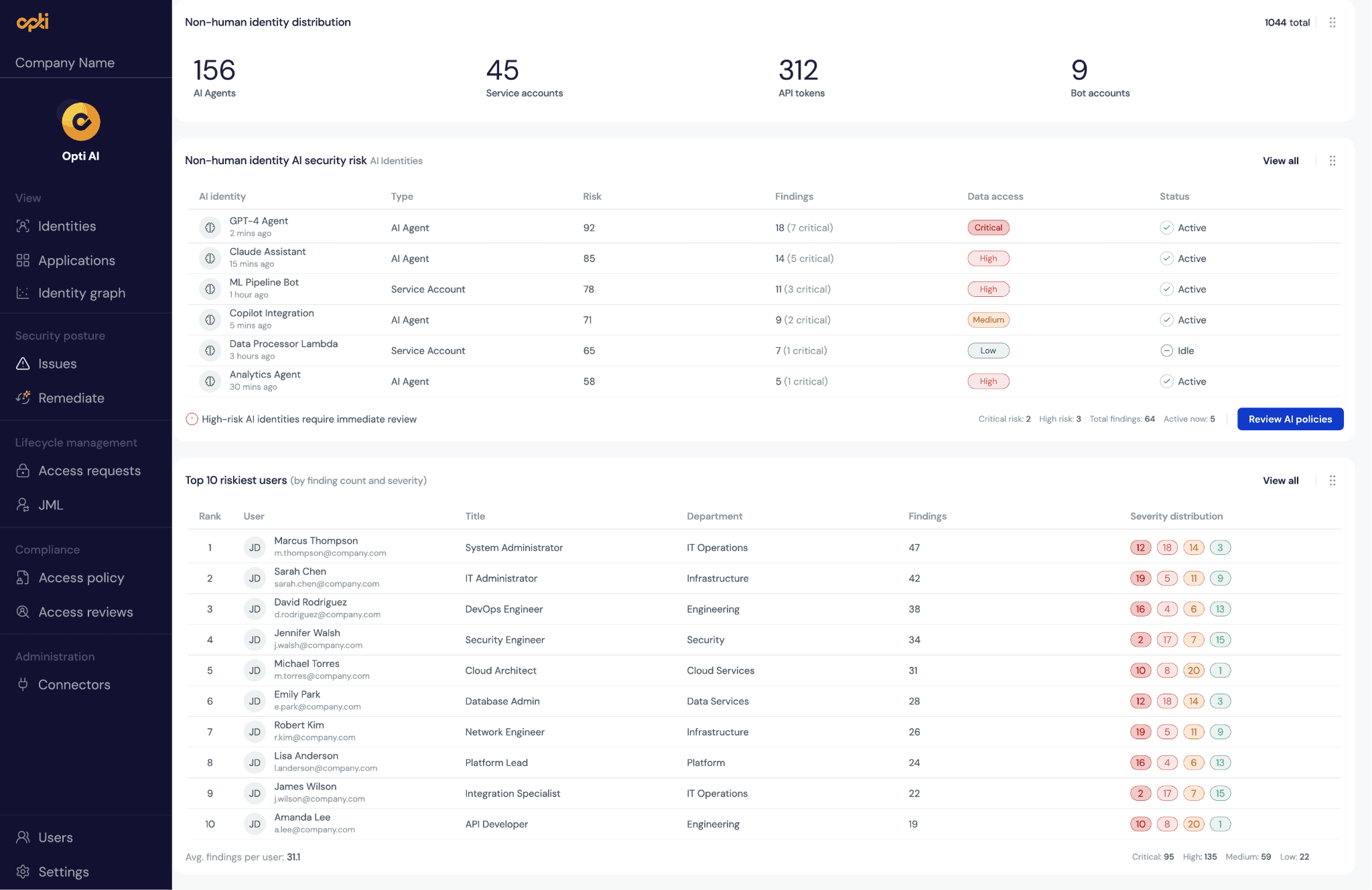
Opti is an AI-native identity security platform that ingests, normalizes and analyzes identities across an organization's applications. It covers human, non-human and agentic identities, building a living access graph of identities, entitlements and usage. Positioned as an IVIP, it unifies identity data, detects risk and automates remediation.
Opti connects to identity providers, IGA systems and business applications through more than 250 integrations, and its models can interpret homegrown applications as well. Continuous sync keeps the access map current, flags policy violations early, triggers reviews and recommends fixes, with human approval retained where changes matter most.
Key features include:
Continuous identity and entitlement discovery: Ingests, normalizes and analyzes identities across clouds and applications, covering human, non-human and agentic accounts, and maps every entitlement and access path.
Contextual entitlement risk scoring: Quantifies the attack surface with continuously updated risk scores that weigh policy, role, peer usage and business context rather than raw permission lists.
Plain-English policy detection: Policies written in everyday language, such as restricting production access to engineers, are scanned continuously for violations without custom code.
Guided least-privilege remediation: Over-privileged access, orphaned accounts and stale entitlements come with a precise remediation path that can be executed directly from the platform.
Just-in-time access control: Elevated privileges are granted on request and expire automatically once the task is complete, removing standing access.
Natural language access queries: An interactive access graph answers questions such as who holds admin access to a given application, and entitlement changes can be made from the graph itself.
Non-human identity governance: Discovers and right-sizes cloud roles, service principals, API keys, vault secrets, database roles and AI agents across IaaS, SaaS, PaaS and on-premises systems.
Limitations (based on publicly available sources):
Limited independent review coverage: The platform became generally available in late 2025, so third-party user feedback on major review sites is still scarce.
Sales-led evaluation: Pricing is not published, and evaluation starts with a scheduled demo rather than a self-service trial.
Coverage depends on connected sources: Applications outside the connected identity providers, IGA systems and business apps need onboarding before they appear in the access graph.
2. BeyondTrust Identity Security Insights

Best for: Teams mapping privilege escalation paths across hybrid estates
Strengths: True Privilege graph, cross-domain visibility, PAM controls
Things to consider: Deepest remediation value comes with other BeyondTrust products
BeyondTrust Identity Security Insights is an identity visibility and intelligence platform that continuously assesses identity security posture across endpoints, servers, cloud services, DevOps systems and identity providers. It analyzes identity data from sources including Active Directory, Entra ID, Ping, Okta, GitHub, AWS, GCP, Salesforce and ServiceNow.
The product centers on True Privilege, the effective access an identity holds including indirect escalation paths. AI and machine learning analysis connects configurations, authentication methods, synchronization state and security controls to expose interconnected risks, and findings can be pushed to SIEM, ITSM and collaboration tools in real time.
Key features include:
True Privilege graph: Visualizes the entitlements and escalation pathways of human, workload and machine identities, including indirect paths that cross domains.
Continuous posture assessment: Monitors changes and activity across environments to catch issues such as service accounts in Domain Administrator groups, dormant admin accounts with stale passwords and privileged accounts without MFA.
AI/ML detections and recommendations: Flags privilege abuse and manipulation of identity infrastructure, with contextual guidance explaining the reason behind each finding.
Non-human and AI identity discovery: Discovers, classifies and monitors service accounts, Entra ID service principals, domain accounts, AI agents and automated workloads, and detects excessive privilege granted to AI entities.
Integrated PAM controls: Applies just-in-time access, blocks vendor and guest accounts and enforces least privilege from within the findings workflow.
Prebuilt reporting: Ready-to-use reports cover non-human accounts, local accounts running services and scheduled tasks, risky SSH keys and unmanaged users with excessive privileges.
Enterprise integrations: Connects to Splunk, ServiceNow, Jira, Slack, Teams, Ping DaVinci, AWS and SailPoint, with webhooks for custom workflows.
Limitations (based on publicly available sources):
Limited independent review coverage: The product has far less public review volume than BeyondTrust's established PAM products.
Remediation depends on the wider platform: Enforcement actions such as just-in-time access and account blocking rely on integrated BeyondTrust PAM controls.
Newer capabilities are staged: The PathfinderAI natural language query feature entered early release in the United States only as of April 2026.
Regional availability expanded recently: Australia and India regions were added in 2026, so data residency options were narrower before that.
Interface complexity: The vendor overhauled the interface in 2026 to improve usability when investigating access chains and large graphs.
3. Okta Identity Security Posture Management

Best for: Okta users needing posture visibility across SaaS and cloud
Strengths: Fast deployment, attack-chain prioritization, MFA coverage checks
Things to consider: Real-time attack response sits in a separate Okta product
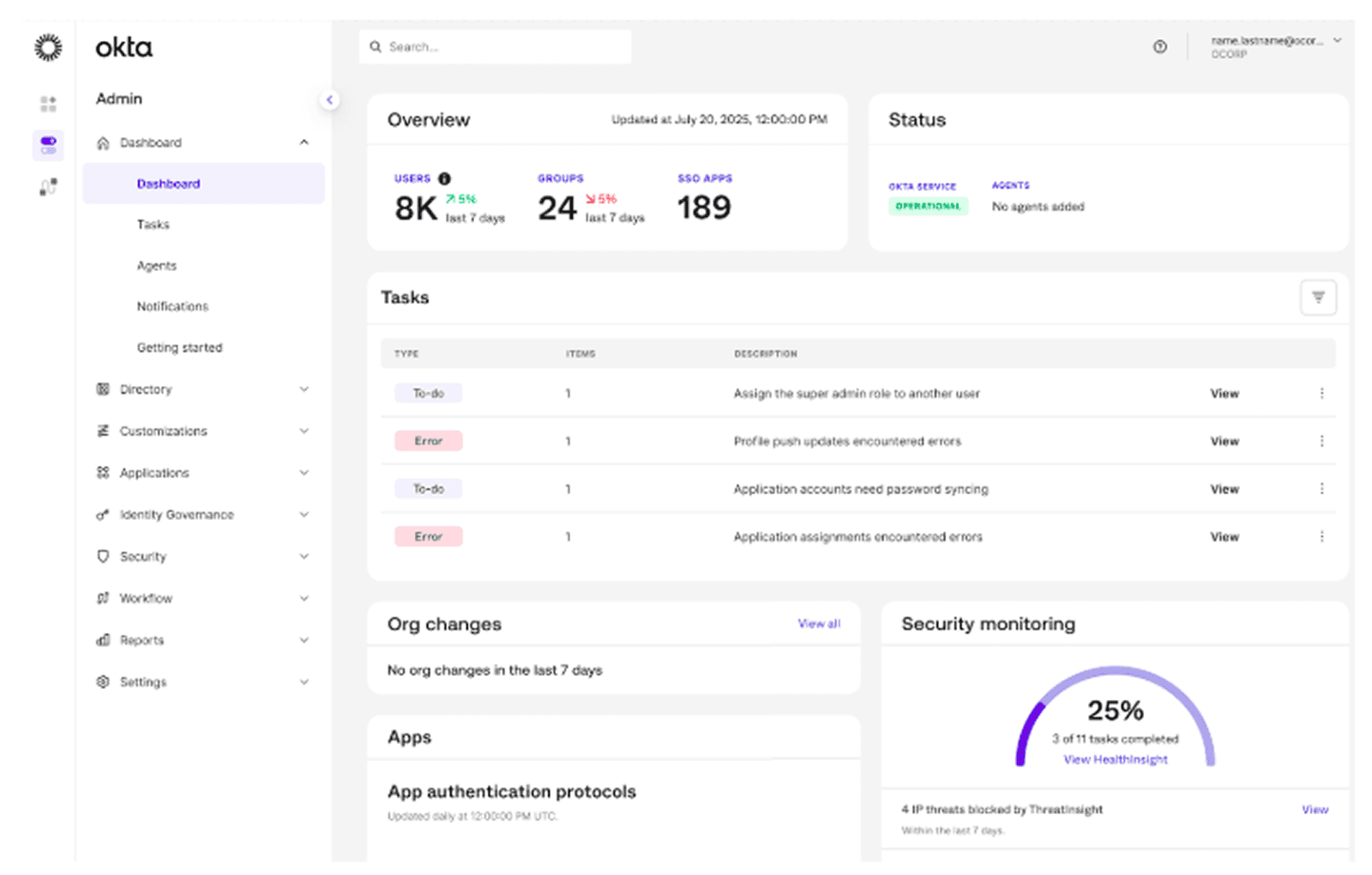
Okta Identity Security Posture Management continuously scans human and non-human identities across identity providers, SaaS applications and cloud infrastructure, then prioritizes vulnerabilities by impact. Rather than producing simple lists, it maps the relationships between identities and their permissions, including AI agents.
The product is a native component of Okta's platform and works alongside Identity Threat Protection and Identity Governance. Okta positions ISPM as the proactive layer that remediates identity risks before they become incidents, while Identity Threat Protection handles attacks in real time. Deployment takes minutes, after which exposure analysis runs continuously.
Key features include:
Identity graph analysis: Continuously scans and analyzes the organization's identity graph to expose relationships between identities and their corresponding permissions.
Admin sprawl detection: Identifies shadow admin accounts and permissions so least privilege can be enforced on privileged users.
MFA coverage validation: Detects access points without MFA and identifies local accounts that bypass the identity provider.
Offboarding validation: Surfaces offboarded users who still hold active access, shortening the time needed to complete offboarding and support compliance.
Dormant and over-privileged account detection: Flags accounts unused for 90 days and analyzes permissions across integrated applications to find permission creep.
Prioritized remediation: Maps findings to known best practices and ranks them by attack chain and consolidated context so urgent issues surface first.
Third-party source coverage: Integrations address Entra ID and Microsoft 365 nested groups and conditional access policies, AWS virtual machines, databases, S3 buckets and API keys, and Salesforce accounts.
Limitations (based on publicly available sources):
Real-time response is a separate product: ISPM covers proactive posture, while Okta positions Identity Threat Protection for handling attacks as they happen.
Limited independent reviews: ISPM-specific user feedback is scarce on major review platforms, where most Okta reviews cover SSO, MFA and lifecycle management.
Some detections arrive gradually: Several posture checks, including admin accounts where MFA is enabled but not enforced, ship as limited early access before general availability.
Findings still need operational follow-through: The product surfaces and prioritizes issues, but remediation depends on teams acting on the guidance.
Sales-led procurement: Pricing is not published, and evaluation runs through a sales conversation or a guided assessment.
Source: Okta
4. Saviynt Identity Security Posture Management

Best for: Enterprises consolidating ISPM with IGA, PAM and app governance
Strengths: Broad identity data inventory, risk correlation, remediation
Things to consider: Setup and administration can be complex and time-consuming
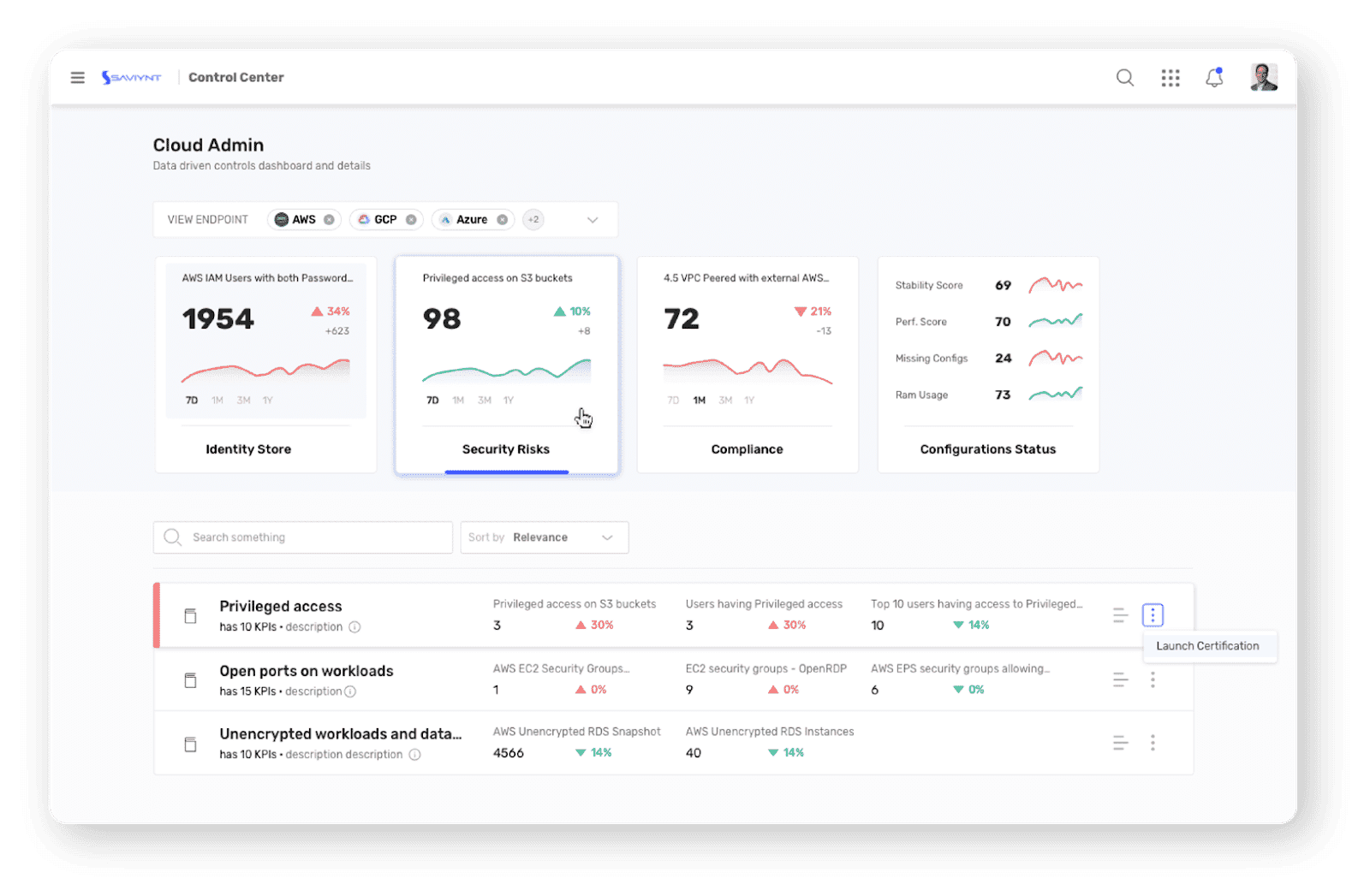
Saviynt Identity Security Posture Management is part of the company's converged identity platform and starts with discovery of identities, access and assets to build a complete identity data inventory. It correlates identities with access and resources to eliminate risky access, then prioritizes remediation of the identity and access risks it finds.
The product applies AI and machine learning to identity data, access and assets, detecting overprivileged and dormant accounts, misconfigurations, policy drift and policy violations. It runs continuous monitoring rather than point-in-time reporting, alerting as new risks surface, and ingests data from IGA, PAM, application access governance, SIEM and CASB tools.
Key features include:
Continuous discovery and inventory: Identifies human and non-human identities and resources across on-premises, cloud and hybrid environments to build an identity data inventory.
Risk assessment and posture analysis: Analyzes permissions, policy and role configurations and access patterns to detect overprivileged and dormant accounts, misconfigurations and policy violations.
Ongoing monitoring and alerts: Watches for changes in risk-related posture continuously and raises alerts as new risks appear.
Prioritized remediation recommendations: Ranks recommendations against KPIs and benchmarks based on the riskiest access, and can trigger remediation actions in other systems.
Identity data hygiene: Improves the completeness and accuracy of identity records to support governance posture and audit readiness.
Cross-tool data correlation: Ingests and correlates data from IGA, privileged access management, application access governance, SIEM and CASB deployments.
Converged platform integration: Operates alongside Saviynt's identity governance, privileged access management, application access governance and non-human identity capabilities.
Limitations (as reported by users on G2, which lists the wider Saviynt platform rather than ISPM alone):
Learning curve: Reviewers describe the interface as non-intuitive for new users, with unclear form instructions and a longer ramp-up period.
Setup complexity: Initial deployment and migration are frequently described as difficult, with several teams relying on professional services for the first months.
Support responsiveness: Users report slow ticket resolution, meetings that rehash the original ticket and answers that are sometimes incomplete.
Interface and performance: Reviewers cite UI and UX inconsistency, slow page loading and excessive clicks in request management.
Release quality: Some users report defects surfacing in production and issues appearing with new releases, requiring vendor support and manual intervention.
Pricing structure: One reviewer noted that pricing across separate capabilities such as NHI, ISPM and PAM could be simplified.
Source: Saviynt
Identity Threat Detection and Response Platforms
5. CrowdStrike Falcon Next-Gen Identity Security

Best for: Teams unifying identity and endpoint protection in one console
Strengths: Real-time detection, autonomous response, hybrid coverage
Things to consider: Alert volume and cost are common points of feedback
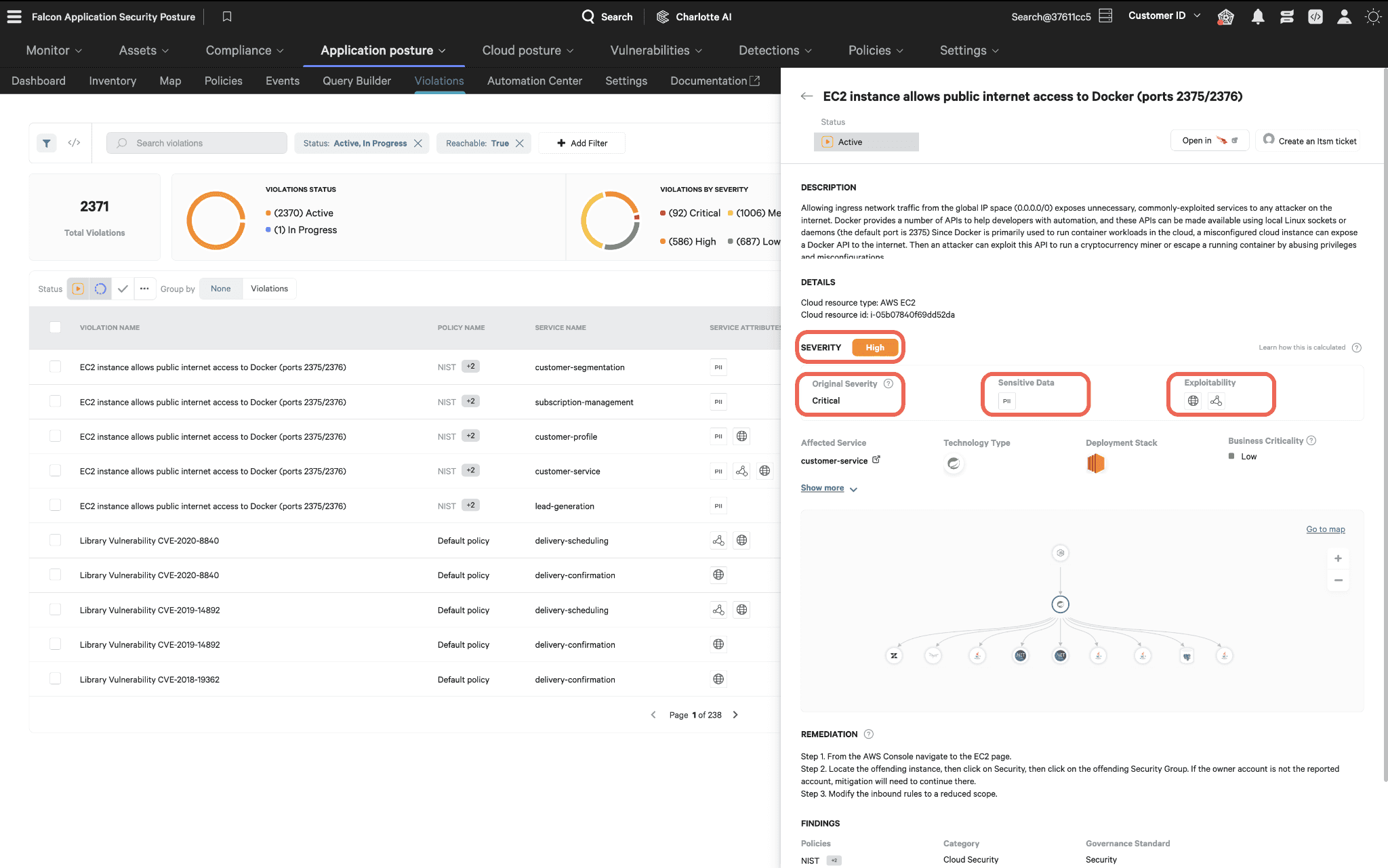
CrowdStrike Falcon Next-Gen Identity Security is an identity threat detection and response product that runs on the Falcon platform with one agent and one console. It secures on-premises Active Directory alongside cloud identities in Entra ID and Okta, correlating identity, endpoint and data signals to detect threats along the identity attack path.
Detection and triage are handled by Charlotte AI, which analyzes user behavior in context, uncovers anomalies and prioritizes identity alerts. Response actions can run automatically, including enforcing MFA or resetting passwords, and context-aware MFA extends across hybrid environments. A managed service is available for teams that want CrowdStrike analysts monitoring identity threats around the clock.
Key features include:
Real-time detection and autonomous response: Identifies identity threats as they occur and automatically enforces controls such as MFA or password resets.
Agentic detection triage: Charlotte AI analyzes user behavior in context, uncovers anomalies and prioritizes identity alerts through agentic workflows.
Hybrid identity coverage: Protects on-premises Active Directory and cloud identities in Entra ID and Okta with visibility, detection and integrated response.
Lateral movement prevention: Stops attackers from spreading across identities, endpoints and environments along the identity attack path.
Just-in-time privileged access: Falcon Privileged Access grants elevated roles on demand and removes standing privileges for privileged accounts.
Context-aware MFA: Applies risk-based conditional access to verify authentication traffic consistently across hybrid environments.
Single agent and console: Identity, endpoint and data protection are correlated on one platform rather than deployed and managed separately.
Limitations (as reported by users on G2):
Cost: Several reviewers describe the subscription as expensive relative to alternatives and note limited fit for smaller organizations.
Alert volume: Users report a high number of informational alerts and events, and cite false positive and false negative accuracy as a challenge.
Deployment complexity at scale: Implementation and configuration are described as complex in large organizations with diverse devices and applications.
Data consistency: Reviewers mention redundant or inaccurate data appearing in the dashboard, attributed to syncing issues.
Uneven feature depth: Some users find capabilities beyond advanced threat hunting less developed, and describe the administration experience as weaker than expected.
Friction for end users: Extra verification steps can interrupt workflows, and blocked actions are not always explained clearly to non-technical staff.
Source: CrowdStrike
6. Microsoft Defender for Identity

Best for: Microsoft-centric SOCs working inside Defender XDR
Strengths: Dedicated AD sensors, UEBA detections, automated response
Things to consider: Value is strongest inside Microsoft licensing and ecosystem
Microsoft Defender for Identity delivers identity threat detection and response for security operations teams. Dedicated sensors monitor on-premises identity infrastructure while purpose-built connectors bring in signals from cloud identity providers and other parts of the identity fabric, and those signals are correlated automatically with data from other security domains.
Alongside detection, the product covers posture and vulnerability management, providing identity-specific recommendations that close attack paths and reduce the attack surface. Preconfigured alerts cover common and emerging attack patterns, confirmed compromised identities can be restricted immediately, and a pre-installed agent shortens deployment for qualifying on-premises infrastructure.
Key features include:
Dedicated on-premises sensors: Specialized sensors monitor domain controllers and other critical on-premises identity infrastructure.
Purpose-built cloud connectors: Platform-level connectors pull insights from cloud identity providers and other elements of modern identity fabrics.
Posture and vulnerability management: Identity-specific recommendations resolve vulnerabilities and close potential attack paths before they are exploited.
Advanced identity threat detections: Preconfigured alerts and detections spot common and emerging attack patterns in real time.
Automated response: Identities confirmed as compromised can be restricted immediately so they cannot persist or be exploited further.
Enhanced identity inventory: Links accounts across environments, applications and vendors to deliver identity-level rather than account-level insight.
Non-human identity protection: Monitors, secures and manages non-human identities across the organization.
Native Entra ID integration: Shares consistent data, alerts and workflows between Microsoft Entra and Defender for Identity.
Limitations (as reported by users on G2):
False positives: Reviewers report alert noise and false positives that cause fatigue and lengthen investigations, including honeytoken alerts triggered by vulnerability scanners.
Setup complexity: Initial installation and configuration are described as intricate and requiring solid Active Directory knowledge.
Domain controller overhead: The product requires elevated permissions and changes on domain controllers, and users report increased CPU and memory usage.
Licensing cost: Several users note the standalone price sits at the higher end, with best value realized inside E5 and similar bundles.
Limited customization: Reviewers describe constrained options for advanced detections and raw data hunting, and note that alerts need tuning.
Active Directory dependency: Coverage is strongest for organizations running on-premises Active Directory, which narrows its fit elsewhere.
Data sync gaps: Users mention on-premises objects remaining visible after deletion and difficulty retrieving on-premises group membership details.
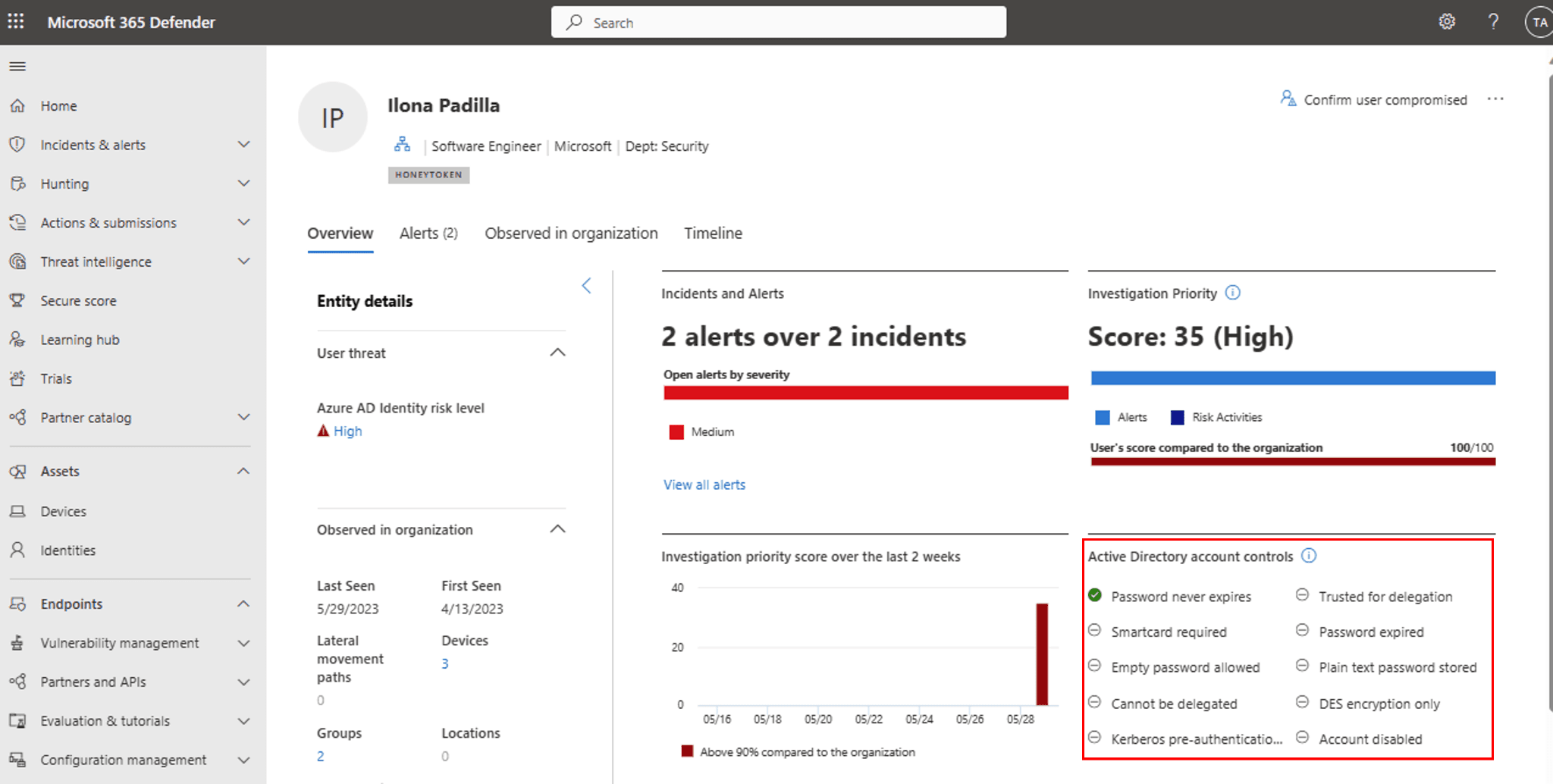
Source: Microsoft
7. Silverfort Identity Security Platform

Best for: Extending MFA and inline controls to legacy and non-web systems
Strengths: Inline enforcement at authentication, ISPM and ITDR modules
Things to consider: Investigation workflows and support responsiveness draw criticism
Silverfort integrates with existing IAM infrastructure and enforces identity security inline at the moment of authentication. Its Runtime Access Protection technology has the IAM infrastructure forward each access request to Silverfort, which analyzes risk, triggers security controls where needed and returns a verdict before access is granted or denied.
Coverage spans workforce users, privileged users, third parties, non-human identities and AI agents, across on-premises, OT, hybrid and multi-cloud environments, and reaches resources from legacy systems and command-line tools to SaaS applications. The platform combines discovery, continuous analysis of exposures and threats, and runtime enforcement without proxies or application changes.
Key features include:
Runtime Access Protection: Every access request is evaluated inline and independently in real time, with a security verdict returned before access is granted.
ISPM module: Finds identity weaknesses and exposures across the environment and supports fixing and fortifying them.
ITDR module: Analyzes all identities and access attempts continuously to uncover exposures and detect threats as they occur.
Universal MFA: Extends multi-factor authentication to systems that do not natively support it, without installing software on every workstation.
Authentication firewall: Adds a deny control at the identity layer so access can be blocked outright based on policy.
Non-human identity security: Discovers, monitors and controls service accounts and machine identities, with policies that can be created directly from access logs.
Identity graph and access intelligence: Discovers every identity and its relationships and provides context on access rights.
Privileged access security: Applies controls such as virtual fencing and just-in-time access without vault infrastructure.
Limitations (as reported by users on G2):
Support responsiveness: Reviewers cite delays and unclear communication during critical updates and issues.
Upgrade process: Version upgrades require approval from support or an account manager before they can be pushed to appliances.
Investigation workflows: Users describe circular navigation when investigating threats, with limited ability to act on information from the dashboard itself.
Alert context: Risk indicators such as abnormal authentication are described as insufficiently explained, making severity ratings hard to interpret.
Implementation issues: Some deployments encountered bugs and inefficiencies during proof of concept and rollout.
Architectural dependency: The platform requires a domain controller in the environment.
Pricing: Some reviewers note the cost is higher than they expected.
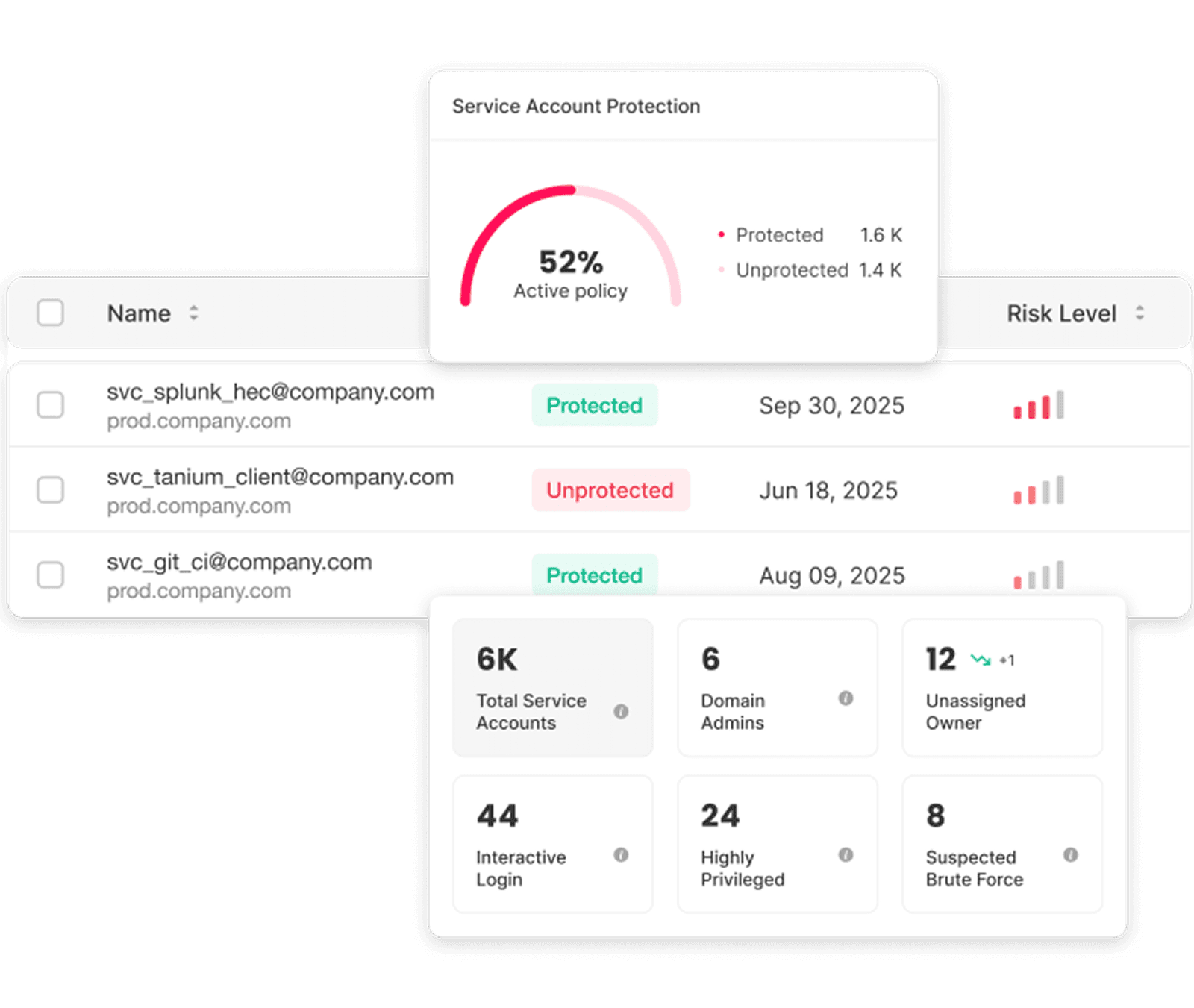
Source: Silverfort
8. Semperis Directory Services Protector

Best for: Organizations hardening hybrid Active Directory and Entra ID
Strengths: Tamperproof change tracking, auto-rollback, exposure indicators
Things to consider: Scope centers on Active Directory and Entra ID
Semperis Directory Services Protector provides identity threat detection and response for hybrid Active Directory and Entra ID. It tracks directory changes through the AD replication stream, which captures activity even when security logging is off, logs are missing, agents are disabled or changes are injected directly into the directory.
The product continuously assesses exposure using hundreds of security indicators maintained by an in-house threat research team, presenting a posture score and severity breakdown in a dashboard. Machine learning models detect attack patterns such as password spray, credential stuffing and brute force attempts, and automated rollback reverses malicious changes in AD and Entra ID.
Key features include:
Hybrid vulnerability assessment: Monitors AD and Entra ID for indicators of exposure and compromise across account security, Group Policy, Kerberos, delegation and infrastructure categories.
Tamperproof change tracking: Captures changes through the AD replication stream even when logging is off, logs are missing or agents are inoperable.
Automated rollback: Reverses unwanted or malicious changes to objects, users, groups and roles in both AD and Entra ID using custom rules.
AI-powered attack pattern detection: Identity Runtime Protection uses machine learning models to surface password spray, credential stuffing, brute force attacks and risky anomalies as incidents.
Service account protection: Discovers and inventories service accounts, detects stale and misconfigured accounts and alerts on anomalous behavior.
Automated response actions: Creates ServiceNow tickets, requires password changes and disables either the changing user or the target object when risky changes occur.
Granular rollback and forensics: Reverts individual attributes, group members, objects and containers to any point in time and isolates changes made by compromised accounts.
SIEM integration: Forwards change data, security indicator results and notification events to Microsoft Sentinel and Splunk with prebuilt dashboards and analytic rules.
Limitations (as reported by users on G2):
Reporting flexibility: Reviewers describe built-in reports as clunky and note that report and notification customization could be improved.
Setting exceptions: Some users report that configuring exceptions for indicators requires manual file editing rather than console settings.
Installation in hardened environments: Deployment in secured environments is described as complex, with numerous challenges along the way.
Tier 0 privilege requirement: The product needs highly privileged directory access, which some reviewers flag as a standing concern.
Data retention limits: Rollback depends on retained history, so changes older than the retention window cannot be undone.
Signal scope: Reviewers note the current version surfaces directory changes but not authentication events such as Kerberos pre-authentication failures.
Alert prioritization: The volume of information presented can make prioritizing findings difficult.
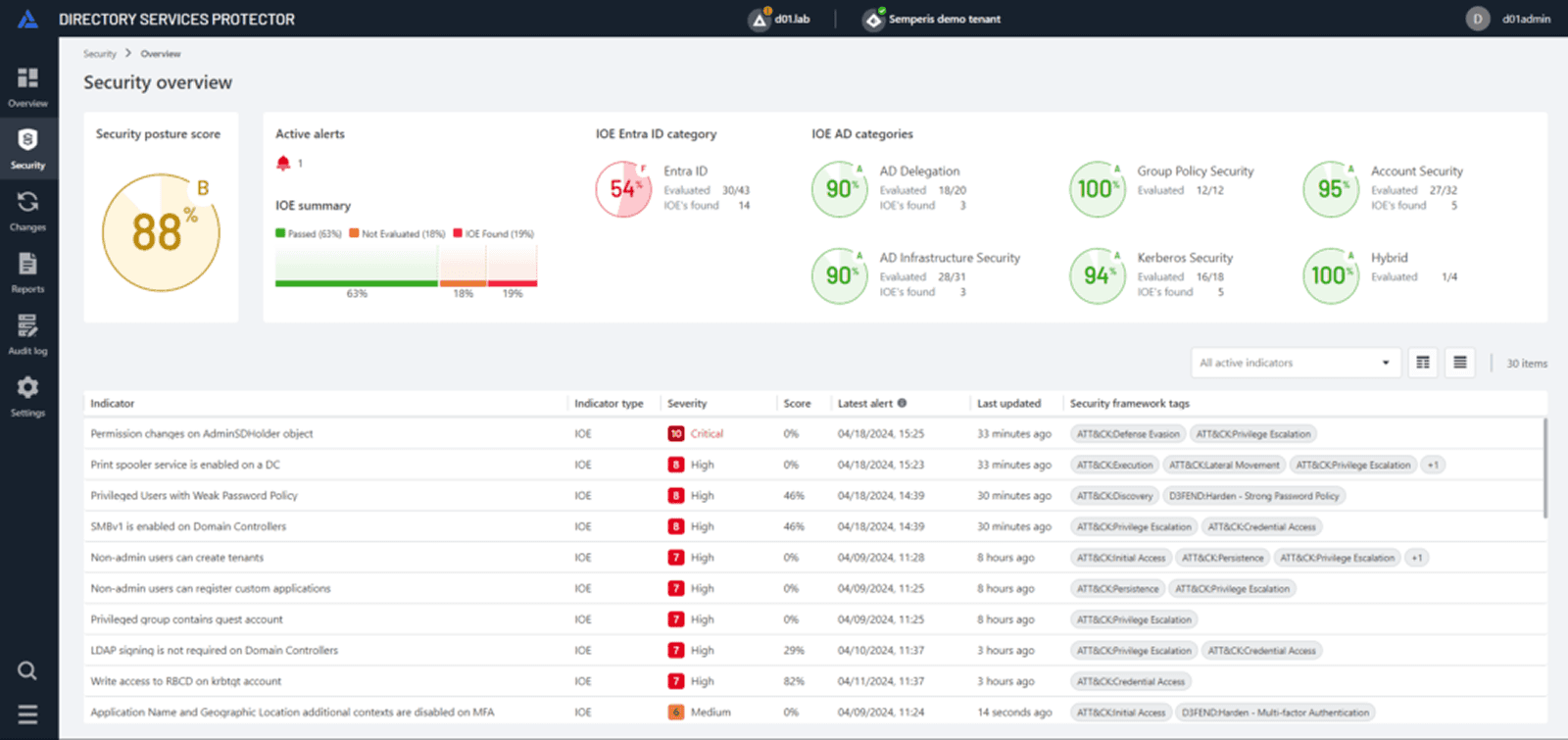
Source: Semperis
How to Choose an IAM Security Platform with Real-Time Detection
Selecting the right platform requires evaluating how well it covers the organization’s identity environment, detects meaningful risks, and supports remediation. The platform should provide continuous visibility without creating excessive alerts or adding unnecessary operational complexity:
Identity coverage: Confirm that the platform supports employees, contractors, privileged users, service accounts, APIs, workloads, and other machine identities. It should discover identities across cloud, SaaS, on-premises, and hybrid environments.
Detection speed and accuracy: Evaluate how quickly the platform identifies permission changes, exposed credentials, dormant accounts, privilege escalation, and abnormal activity. Detection should operate continuously and minimize false positives.
Integration support: Check compatibility with existing identity providers, directories, cloud platforms, privileged access management tools, security information and event management systems, and ticketing platforms. Strong integrations reduce deployment effort and improve response workflows.
Risk prioritization: Look for contextual risk scoring that considers identity privileges, resource sensitivity, credential exposure, behavior, and attack paths. This helps security teams focus on vulnerabilities with the greatest potential impact.
Automated remediation: Determine whether the platform can revoke permissions, disable accounts, rotate secrets, expire temporary access, or open remediation tickets automatically. Controls should include approval steps and rollback options for sensitive actions.
Entitlement analysis: The platform should identify excessive, unused, inherited, and conflicting permissions. It should also recommend least-privilege access based on actual usage rather than relying only on predefined roles.
Non-human identity security: Assess whether the platform can monitor service accounts, application identities, tokens, certificates, and secrets throughout their lifecycle. It should detect stale credentials, missing owners, and unusually broad access.
Behavioral analytics: Review how the platform establishes normal activity and detects deviations, such as unusual login locations, unexpected resource access, or changes in privilege use. Behavioral signals should be correlated with entitlement and asset data.
Deployment and scalability: Consider deployment requirements, data collection methods, processing limits, and support for large identity volumes. The platform should maintain near-real-time analysis as the organization adds users, workloads, applications, and cloud accounts.
Compliance and reporting: Ensure the platform provides audit trails, access histories, policy reports, and evidence for regulatory reviews. It should help demonstrate compliance with frameworks such as SOX, SOC 2, ISO/IEC 27001, HIPAA, PCI DSS, NYDFS Cybersecurity Regulation, the NIS2 Directive, and GDPR. Look for capabilities that support access certification, segregation of duties, continuous control monitoring, and automated evidence collection to reduce the effort required for audits.
Alert and workflow management: Verify that alerts include enough context for investigation and can be routed to the appropriate team. Custom policies, suppression rules, and workflow integrations help prevent alert fatigue.
Data security and governance: Review how identity data is collected, stored, encrypted, retained, and accessed. The platform should support data residency requirements, role-based administration, and detailed logging of administrative actions.
Conclusion
Real-time identity vulnerability detection helps organizations move beyond periodic access reviews to continuously identify and reduce identity risk across human and non-human identities. By combining continuous identity discovery, entitlement analysis, posture management, behavioral monitoring, and automated remediation, modern IAM security platforms help enforce least privilege, detect identity-based attacks earlier, reduce the impact of compromised credentials, and maintain a stronger security posture across hybrid and multi-cloud environments.