TL;DR: IAM security platforms enforce least privilege at scale by discovering entitlements, right-sizing access, and granting privileges just in time. Opti is best for AI-native entitlement remediation, SailPoint for enterprise IGA breadth, Veza for permission-level visibility, and Idira for zero standing privilege.
What Are IAM Security Platforms for Enforcing Least Privilege?
Identity and access management (IAM) security platforms enforce the principle of least privilege at scale by combining automated permission discovery, Just-In-Time (JIT) access, and continuous entitlement governance:
By enforcing strict access controls and policies, IAM platforms help reduce the attack surface, limit lateral movement for attackers, and prevent unauthorized access to sensitive resources. These platforms operate by integrating with various systems, applications, and cloud environments to centralize identity management.
Why least-privilege enforcement Is difficult at scale:
Rapid identity and resource growth: Expanding users, applications, cloud services, and infrastructure create more permissions than teams can track manually.
Excessive standing privileges: Users and service accounts often retain permissions long after they are needed, increasing exposure if credentials are compromised.
Inconsistent access policies: Decentralized teams may apply different access rules across systems, making least-privilege enforcement uneven and difficult to audit.
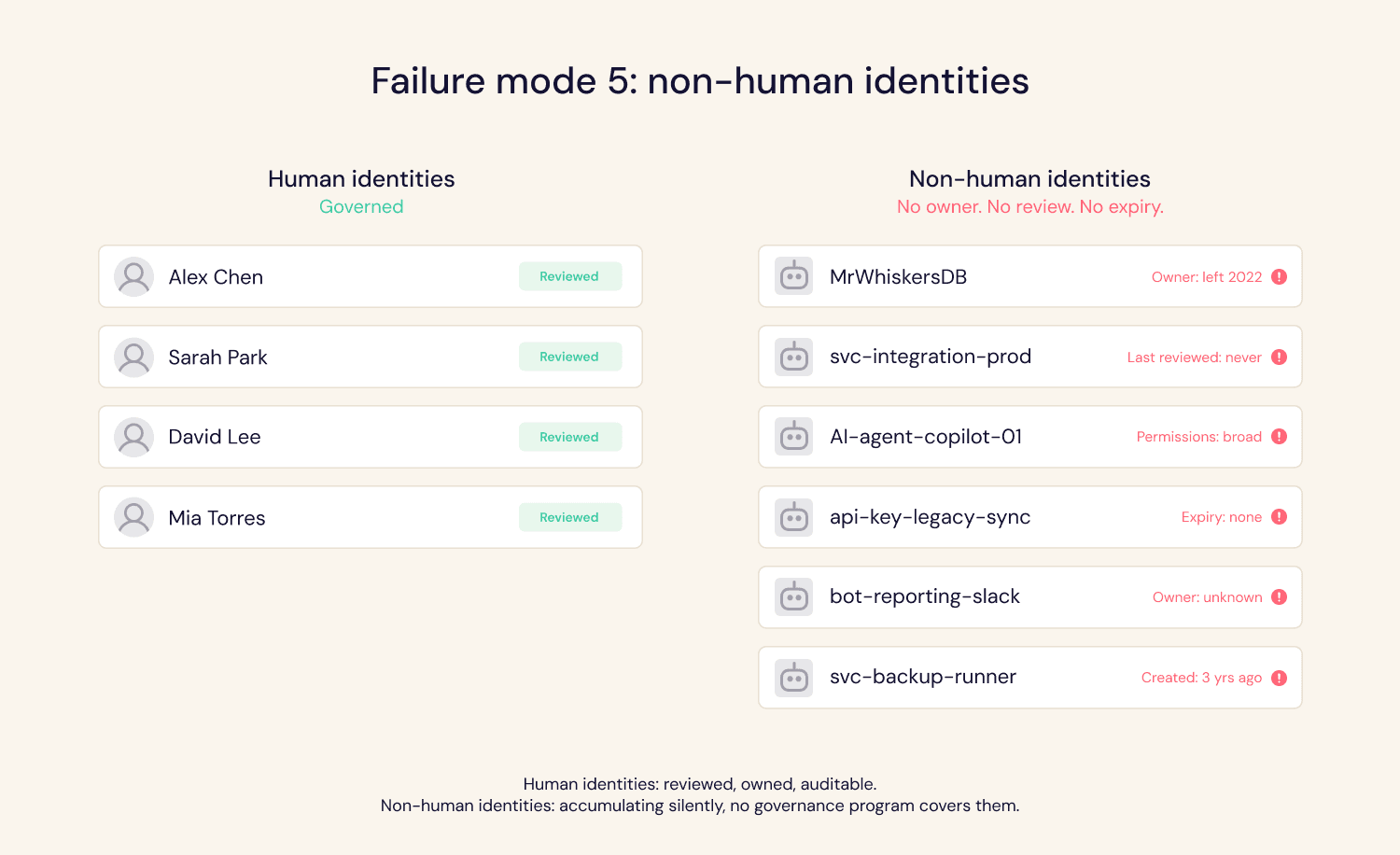
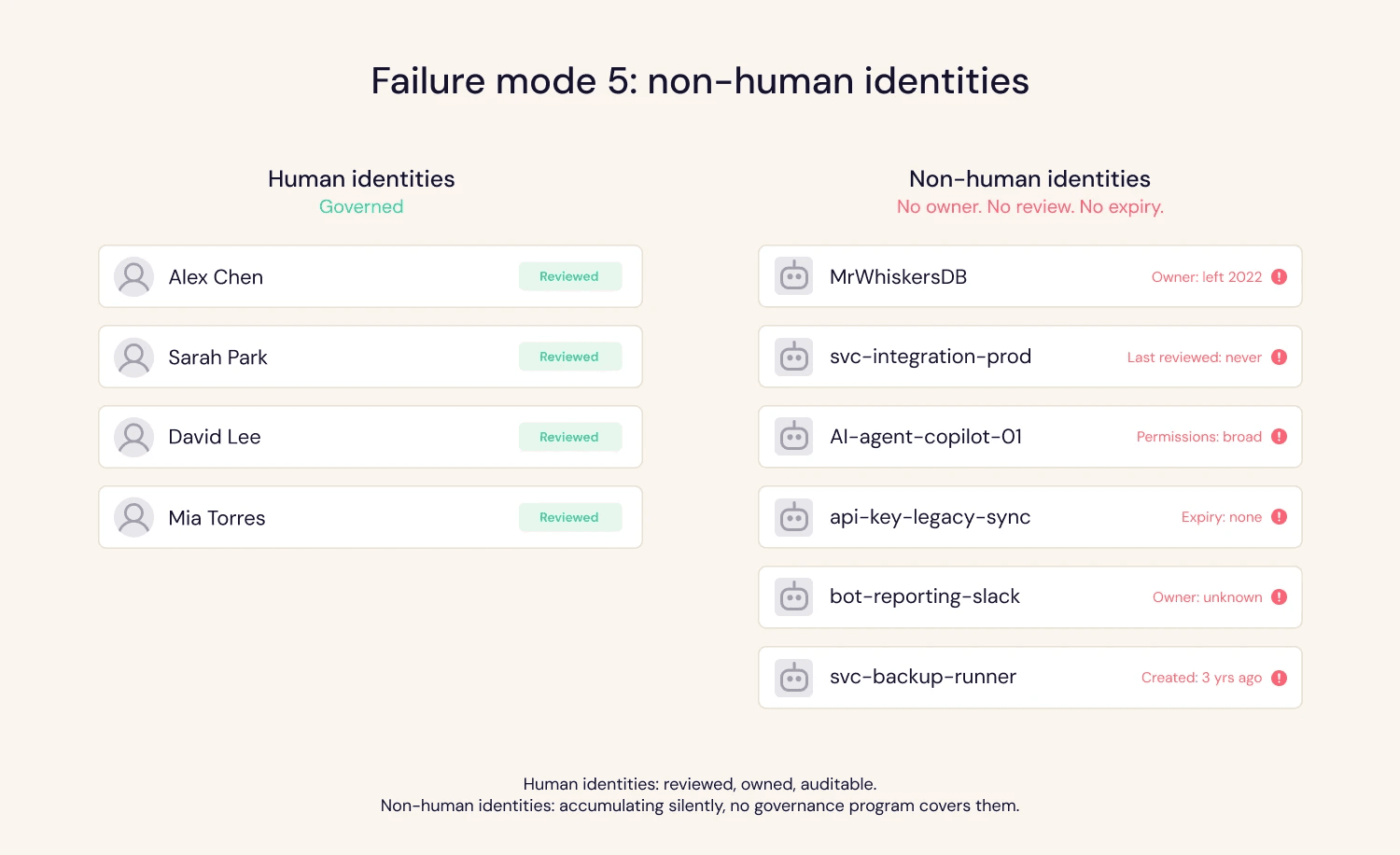
Machine identity and service account sprawl: Service accounts, workloads, APIs, and AI agents accumulate broad permissions that are difficult to review and rightsize continuously.
Core capabilities for scaling least privilege:
Identity and resource discovery: Continuously discovers users, machine identities, applications, and resources across hybrid environments.
Access entitlement mapping: Maps effective permissions to identify who can access which systems and data.
Role-Based Access Control (RBAC): Assigns baseline access based on job roles and automates role-based provisioning.
Attribute-Based Access Control (ABAC): Grants access dynamically using attributes such as department, device, location, and risk.
Policy-based access management: Enforces centralized access policies consistently across applications and cloud platforms.
Just-in-Time (JIT) privileged access: Grants temporary privileged access only when needed and automatically removes it afterward.
Automated access provisioning and deprovisioning: Automatically grants or removes access as users join, change roles, or leave.
Separation of duties and toxic combination detection: Detects conflicting permission combinations that increase fraud or security risk.
Peer-group analytics and anomaly detection: Identifies overprivileged identities and unusual access compared with similar users.
Continuous, usage-driven access reviews: Uses real permission usage to identify and remove unnecessary access over time.
IAM Security Platforms at a Glance
The table below summarizes the key differences between the platforms covered in this guide. We explore each one in more detail in the sections that follow.
Category | Solution | Best For | Key Strengths | Things to Consider |
Identity governance and entitlement intelligence | Opti | Enterprises automating least-privilege cleanup with AI | Entitlement intelligence, plain-language policies, JIT access | Newer vendor; coverage depends on connector onboarding |
Identity governance and entitlement intelligence | SailPoint Identity Security Cloud | Large enterprises needing broad, auditable IGA coverage | Role modeling, lifecycle automation, certification campaigns | Costly, and complex to implement and customize |
Identity governance and entitlement intelligence | Saviynt Identity Governance and Administration | Converged governance across apps, ERP, and machine identities | Risk-based certifications, AI recommendations, JIT access | Interface complexity and lengthy onboarding |
Identity governance and entitlement intelligence | Veza Access Platform | Teams needing permission-level visibility across systems | Effective-permissions graph, risk queries, access reviews | High cost, complex setup, limited inline enforcement |
Identity governance and entitlement intelligence | Microsoft Entra ID Governance | Microsoft-centric estates governing access at scale | Entitlement management, access reviews, PIM elevation | Added licensing cost and non-trivial setup effort |
Privileged access and just-in-time elevation | Idira Privileged Access Management | Enterprises removing standing privilege from admin access | Zero standing privilege, vaulting, session isolation | Complex architecture and limited custom reporting |
Privileged access and just-in-time elevation | BeyondTrust Pathfinder Platform | Mapping and closing hidden privilege escalation paths | Privilege graph, endpoint least privilege, cloud JIT | Steep learning curve and detailed policy tuning |
Privileged access and just-in-time elevation | Delinea Platform | PAM programs moving to continuous authorization | Identity discovery, JIT access, vaulting, SoD reviews | Dated interfaces and convoluted licensing tiers |
Related content: Read our guide to IGA solutions.
Why Least-Privilege Enforcement Is Difficult at Scale
Rapid Growth of Users, Applications, and Cloud Resources
Modern organizations face explosive growth in users, applications, and cloud resources. Each new employee, contractor, or system component requires unique access permissions, and every new SaaS application or cloud service introduces additional complexity. As organizations adopt multi-cloud and hybrid environments, the number of entities that require identity and access management increases exponentially. This rapid expansion creates a sprawling landscape of permissions that is challenging to track and govern.
Maintaining least-privilege access in such a dynamic environment is difficult because manual tracking of access rights becomes impractical. IT and security teams often lack visibility into who has access to which resources, making it easy for excessive or outdated privileges to go unnoticed. The pace of change means that traditional, manual IAM processes cannot keep up, leading to overprovisioned accounts and increased risk of unauthorized access.
Excessive Standing Privileges
Excessive standing privileges occur when users or service accounts retain high levels of access beyond what is necessary for their roles. This often results from the “set and forget” nature of traditional access management, where permissions are granted for convenience and not revisited as responsibilities change. Over time, users accumulate privileges that are never revoked, creating significant security risks if credentials are compromised.
This accumulation of privileges makes enforcing least privilege difficult because it requires continuous monitoring and regular review of access entitlements. Without automated tools to identify and remediate excessive permissions, organizations struggle to keep access aligned with actual job requirements. Attackers who gain access to accounts with excessive privileges can move laterally and escalate attacks, making this a critical challenge for large organizations.
Inconsistent Access Policies
Inconsistent access policies arise when different departments or business units implement their own access controls without centralized oversight. This often happens in organizations with decentralized IT, where each team manages its own resources and defines its own security standards. As a result, access policies become fragmented, with varying levels of strictness and enforcement across the organization.
Such inconsistency undermines the principle of least privilege, as users may be granted broader access in one environment compared to another, or policies may conflict. Ensuring uniform enforcement of least-privilege access requires centralization and standardization, which is difficult to achieve without robust IAM platforms. Inconsistent policies also complicate auditing and compliance, increasing the risk of gaps in security controls.
Machine Identity and Service Account Growth
Organizations now manage far more non-human identities than human users, including service accounts, workloads, APIs, containers, and AI agents. AI agents have become a major driver of excessive standing privileges because they often need access to multiple systems, data sources, and APIs to complete tasks autonomously. To avoid disrupting workflows, organizations frequently grant these agents broad permissions that are rarely reviewed. Unlike traditional users, AI agents have no offboarding process, do not use MFA, and are often deployed quickly, making them harder to govern than other non-human identities.
The rapid growth of machine identities makes least-privilege enforcement significantly more difficult. Service accounts and AI agents often accumulate permissions over time as new integrations and capabilities are added, while unused privileges remain in place. Because these identities operate continuously and support critical business processes, security teams are often reluctant to reduce permissions without clear visibility into actual usage. Without continuous discovery, monitoring, and automated rightsizing of machine identities, excessive standing privileges become widespread and increase the potential impact of a compromise.
Key IAM Platforms Capabilities for Enforcing Least-Privilege Access
1. Identity and Resource Discovery
Effective least-privilege enforcement starts with comprehensive discovery of all identities and resources within the environment. IAM platforms automatically scan networks, directories, and cloud environments to catalog:
Users
Machine identities
Applications
Data repositories
This visibility helps identify who or what requires access and to which resources, forming the basis for any access control strategy. Automated discovery helps uncover shadow IT, orphaned accounts, and previously unidentified resources that may pose security risks. By maintaining an up-to-date inventory, organizations can more accurately assess where excessive privileges exist and target remediation efforts. Continuous discovery also supports ongoing compliance by ensuring that new resources and identities are promptly integrated into the IAM program.
Related content: Read our article about identity sprawl.
2. Access Entitlement Mapping
Access entitlement mapping involves cataloging and visualizing the permissions assigned to each identity across all systems and applications. IAM platforms provide tools to map entitlements, showing which users and service accounts have access to which resources and what actions they can perform. This mapping is critical for identifying overprivileged accounts and unnecessary access.
With clear entitlement mapping, organizations can conduct effective access reviews and certification processes, ensuring each identity’s permissions align with business requirements. This approach:
Simplifies the identification of risky or redundant access paths
Supports targeted removal of unnecessary entitlements
Reduces the attack surface
Improves overall security posture
3. Role-Based Access Control
Role-Based Access Control (RBAC) assigns permissions according to job functions, such as:
Finance analyst
Developer
HR administrator
IAM platforms use the HRIS as the source of truth for attributes including job title, department, manager, location, and employment status. These attributes drive automated role-based provisioning when employees join, change roles, or leave the organization.
At scale, least privilege should treat access as an exception rather than a birthright. Users should start with zero standing access beyond the minimum required to sign in and perform basic duties. Additional permissions should be granted only through approved requests, with defined scope and duration, instead of assigning broad baseline entitlement sets and attempting to remove unnecessary access later.
This approach limits privilege creep and reduces the number of permissions that require ongoing review. Roles still provide a consistent foundation for common access needs, but higher-risk or less frequently used entitlements remain outside the default role. Regular role analysis, usage data, and access reviews help ensure that role definitions remain narrow and aligned with actual business requirements.
4. Attribute-Based Access Control
Attribute-Based Access Control (ABAC) extends access management by considering attributes such as:
User department
Location
Device type
Resource sensitivity
IAM platforms leverage these dynamic attributes to make granular, context-aware access decisions. For example, a user may only access certain resources from a trusted network or during specific hours, enforcing tighter least-privilege controls.
ABAC enables organizations to enforce fine-grained policies that adapt to changing conditions, reducing the risk of unauthorized access. By combining multiple attributes, IAM platforms can tailor permissions more precisely than with roles alone. This flexibility is particularly valuable in complex environments with diverse users and resources, where static role assignments may be insufficient to enforce least privilege.
5. Policy-Based Access Management
Policy-based access management centralizes the definition and enforcement of access rules through policies that specify who can access what, under which conditions. IAM platforms provide policy engines that evaluate access requests in real time against these rules, ensuring consistent and automated enforcement across all systems and environments. Policies can incorporate both roles and attributes for nuanced control.
Centralized policy management:
Reduces the risk of inconsistencies and errors that can arise from manual configurations.
Makes it easier to audit and update access rules in response to evolving business needs or regulatory requirements.
Allows organizations to maintain least-privilege access without relying on ad hoc, manual interventions that are prone to oversight.
6. Just-in-Time Privileged Access
Just-in-Time (JIT) privileged access grants elevated permissions to users only when needed and for a limited duration. IAM platforms implement JIT by requiring users to request temporary access, which is automatically revoked after the task is completed. This approach minimizes the window during which sensitive privileges are active, reducing the risk of misuse or exploitation.
JIT privileged access is especially effective for managing administrative or sensitive operations, where standing privileges pose significant security risks. By eliminating persistent access, organizations limit the potential impact of compromised accounts and can more easily monitor and audit privileged actions. Integrating JIT access with approval workflows and session recording further improves oversight and accountability.
7. Automated Access Provisioning and Deprovisioning
Automated access provisioning and deprovisioning simplify the process of granting and revoking permissions based on changes in user status or role. IAM platforms automatically adjust access rights when employees join, move, or leave the organization, connecting to:
HR systems
Directories
Cloud services
This reduces the lag between role changes and access updates, closing potential security gaps. Automated deprovisioning is critical for preventing orphaned accounts and lingering privileges that attackers can exploit. By ensuring that access is promptly removed when it is no longer needed, organizations maintain tighter control over their environments and reduce the risk of data breaches. Automation also lightens the administrative burden on IT and security teams, allowing them to focus on more strategic tasks.
8. Separation of Duties and Toxic Combination Detection
Separation of duties (SoD) controls prevent a single identity from holding permissions that enable conflicting or high-risk actions. IAM platforms analyze entitlement combinations to detect cases where each permission may appear justified on its own but creates risk when combined. For example, a user who can both create vendors and approve payments may be able to bypass financial controls.
Toxic combination detection helps organizations enforce least privilege at the level of effective access, not just individual entitlements. IAM platforms can flag these combinations during:
Provisioning
Access reviews
Policy evaluation
They may then require remediation or compensating controls. This reduces fraud, misuse, and compliance risk that standard entitlement reviews may miss.
9. Peer-Group Analytics and Anomaly Detection
Peer-group analytics compares an identity’s access with that of users who have similar roles, departments, locations, or responsibilities. IAM platforms use these comparisons to identify outliers, such as a user with significantly broader access than others in the same function. This helps uncover excessive privileges that may not violate a formal policy but are inconsistent with normal business needs.
Anomaly detection can also identify unusual access patterns, including:
Rarely used permissions
Access to sensitive resources
Sudden changes in entitlement levels
By prioritizing these outliers for investigation, organizations can focus remediation efforts on the highest-risk cases. This improves least-privilege enforcement without requiring teams to review every entitlement manually.
10. Continuous, Usage-Driven Access Reviews
Continuous access reviews evaluate permissions based on current usage telemetry rather than relying only on periodic manual certification. IAM platforms monitor:
Whether entitlements are actively used
How often they are exercised
Whether access remains relevant to an identity’s role
Permissions that are unused, rarely used, or inconsistent with expected activity can be flagged for removal or further review. Usage-driven reviews provide a more accurate view of access needs than quarterly or annual certification campaigns. They reduce reviewer fatigue, shorten the time excessive privileges remain active, and support ongoing rightsizing of access. By linking review decisions to observed behavior, organizations can remove unnecessary permissions while reducing the risk of disrupting legitimate workflows.
Notable IAM Security Platforms for Enforcing Least Privilege
How we selected these platforms: We shortlisted IAM security platforms based on entitlement discovery and visibility, least-privilege recommendation and remediation, just-in-time elevation, role and policy management, access review automation, and coverage for human, non-human, and AI identities.
Identity Governance and Entitlement Intelligence Platforms
1. Opti

Best for: Enterprises automating least-privilege cleanup with AI
Strengths: Entitlement intelligence, plain-language policies, JIT access
Things to consider: Newer vendor; coverage depends on connector onboarding
Opti is an AI-native identity security platform that ingests, normalizes, and analyzes identity, access, and entitlement data across an organization's applications and infrastructure. It builds a single view of every identity and access path, scores entitlement risk continuously, and then acts on that analysis rather than stopping at a findings list.
The platform covers human users, non-human identities, and AI agents across IaaS, SaaS, PaaS, and on-premises systems. It layers an AI-guided governance function on top of existing directories, HR systems, and ITSM workflows, handling provisioning, right-sizing, just-in-time elevation, revocation, and access review evidence.
Key features include:
AI-powered entitlement mapping: Analyzes roles, entitlements, and actual usage patterns to determine the minimum access each identity requires, so users are not over-provisioned at the point of grant.
Plain-language policy authoring and violation scanning: Policies are written in everyday language, such as restricting production system access to engineers, and the platform continuously scans the environment for violations without requiring code.
Just-in-time access with automated revocation: Elevated privileges are granted only when requested and approved, and permissions expire once the task is finished. Access decisions are evaluated against identity, role, and behavior signals in real time.
Adaptive role mining: Connecting Okta or Entra maps the organization's real role structure within hours, with no application integrations, schemas, or spreadsheets required. Roles can be tuned between broader coverage and tighter fit, and the model updates as people move.
Overprivilege detection and one-click remediation: Users whose access exceeds their peer role baseline are flagged, and over-privileged access or orphaned accounts can be remediated directly from the platform through a single approval.
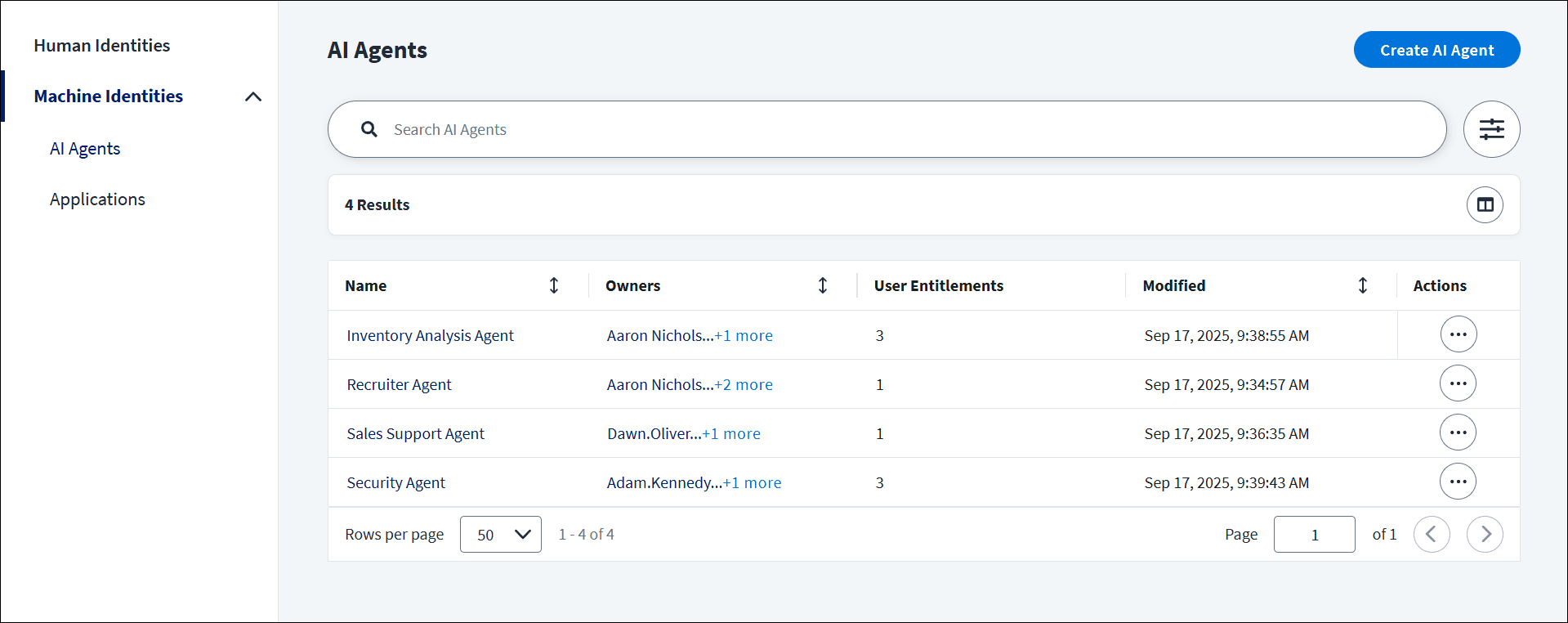
Non-human and AI agent governance: Discovers and right-sizes service accounts, API keys, bots, cloud workload roles, and service principals in AWS, Azure, GCP, and Oracle Cloud, and governs secrets held in vaults and cloud secret managers under least-privilege policies.
Risk-scoped access reviews: Review campaigns filter out low-risk and policy-aligned access so reviewers see outliers, high-risk roles, and exceptions, with last-access data, peer comparison, and risk indicators attached to each decision.
Limitations (based on publicly available sources):
Recent market entry: Opti was founded in 2024 and its platform became generally available in late 2025, so third-party review coverage and long-run enterprise references are still limited compared with established IGA vendors.
Coverage grows with connector onboarding: The platform starts from the identity provider and expands to legacy and home-grown systems through additional connectors and proprietary integration work, so full estate coverage is phased rather than immediate.
Human approval remains in the loop: Remediation and access corrections are designed to retain human oversight for critical changes, so teams still need review capacity for sensitive actions.
Book a demo to see how Opti enforces least privilege at scale
Source: Opti
2. SailPoint Identity Security Cloud

Best for: Large enterprises needing broad, auditable IGA coverage
Strengths: Role modeling, lifecycle automation, certification campaigns
Things to consider: Costly, and complex to implement and customize
SailPoint Identity Security Cloud governs human identities, their access, and their entitlements from a single SaaS platform. It is organized around four core modules covering role design, joiner-mover-leaver automation, compliance certification, and access analytics, all running on the shared SailPoint Platform.
The platform continuously assesses risk, context, and behavior across identities and adjusts access as conditions change. Additional capabilities extend governance to cloud infrastructure entitlements, unstructured data, non-employee populations, and real-time access risk, and are licensed separately from the core suites.
Key features include:
AI-assisted access modeling: Recommends, designs, and manages roles based on peer group comparison, aligning permission sets with business function instead of accumulating ad hoc grants.
Lifecycle management: Automates provisioning and deprovisioning for joiners, movers, and leavers, reducing manual handling and closing the gap between a role change and the corresponding access change.
Compliance management: Enforces access policies automatically and runs certification campaigns with full visibility into user entitlements, producing the evidence trail auditors ask for.
Identity analytics and outlier detection: Analyzes access patterns and behavior across the organization to surface identity outliers and abnormal access that falls outside peer norms.
Cloud infrastructure entitlement management: An add-on that discovers and governs cloud entitlements with an identity-centric model, extending certification to infrastructure-as-a-service permissions.
Access risk management: An add-on that performs real-time access risk analysis, including separation-of-duties exposure across ERP and other business applications.
Accelerated application management: Provides visibility across enterprise applications and speeds up onboarding new applications into governance scope.
Limitations (as reported by users on G2):
Implementation effort and learning curve: Reviewers describe multi-month rollouts, a steep learning curve for administrators, and a need for specialized technical expertise to deploy and maintain the platform.
Customization creates maintenance debt: Heavy use of custom rules, workflows, and code is reported to complicate debugging and break during upgrades, adding unplanned work.
Cost and licensing structure: Users describe the platform as expensive, with an opaque licensing model, paid expert services, and additional charges for supporting modules.
Support responsiveness: Several reviewers report slow support turnaround, email-based handling of issues that could be resolved on a call, and redirection toward paid services.
Reporting and interface friction: Reporting tools are described as difficult for pulling statistical data, and the administrative interface is reported as less intuitive than newer tools, with slow loading on large certification campaigns.
Source: SailPoint
3. Saviynt Identity Governance and Administration

Best for: Converged governance across apps, ERP, and machine identities
Strengths: Risk-based certifications, AI recommendations, JIT access
Things to consider: Interface complexity and lengthy onboarding
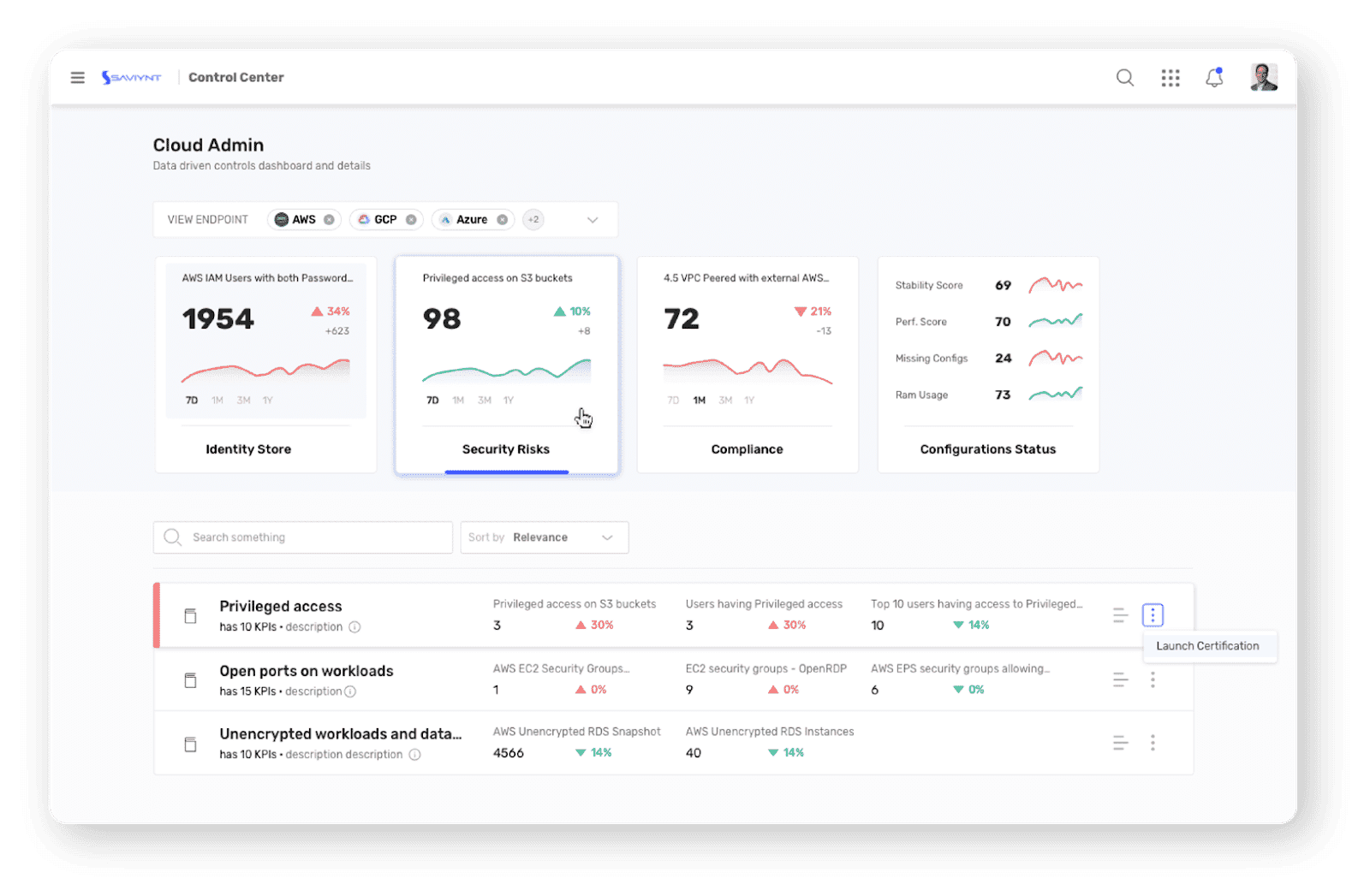
Saviynt provides end-to-end identity governance for internal workforce users, external users, non-human identities, and AI agents across cloud, hybrid, and on-premises environments. It brings identity data, security controls, and compliance processes into one platform so policy enforcement and audit reporting run from a single place.
The platform is built on a cloud-native architecture with a catalog of pre-built integrations for SaaS, IaaS, hybrid, ERP, EMR, CRM, and HR systems. Governance capabilities sit alongside privileged access management, application access governance, and identity security posture management within the same product family.
Key features include:
Complete identity lifecycle automation: Assigns access at onboarding and revokes it automatically on departure, covering internal, external, human, and non-human identities from one control plane.
Risk-based certification campaigns: Automates a large share of access review decisions and focuses approver attention on the highest-risk items, which is aimed at reducing review fatigue and rubber-stamping.
AI-powered access recommendations: Provides guidance and recommendations on access requests and reviews, using peer analytics, usage patterns, and access risk to inform each decision.
Role and policy management: Designs and manages roles and policies based on job function and organizational attributes, with continuous evaluation and tuning as the organization changes.
Just-in-time access and privileged access governance: Extends time-bound elevation and privileged access controls to all identity types, including external users and AI agents, within the same platform.
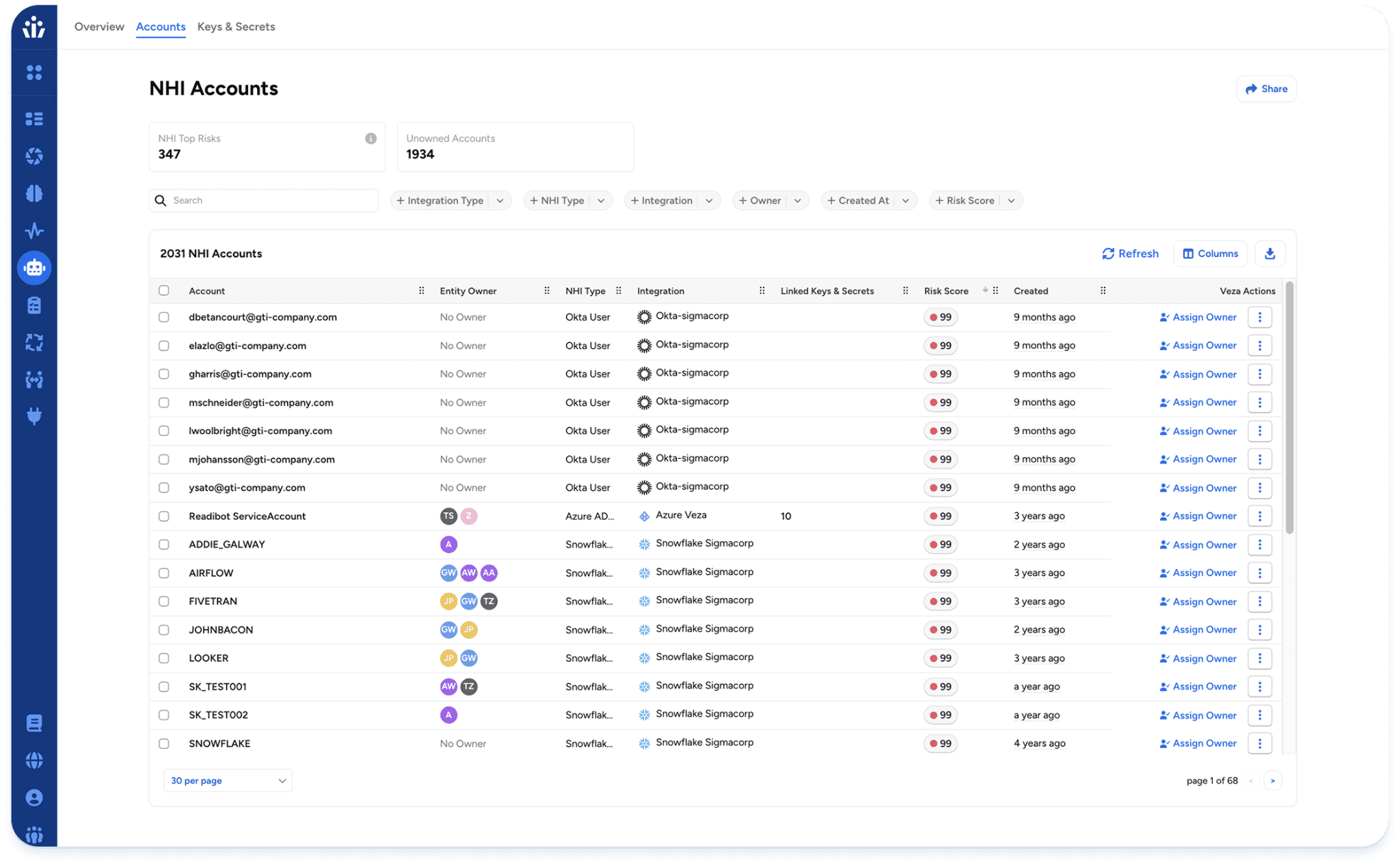
Non-human identity governance: Discovers service accounts and other non-human identities, assigns ownership, and applies consistent access management to credentials, accounts, and workloads.
AI onboarding and administration assistants: SaviAI assistants configure application connections, manage entitlements and policies, and handle lifecycle changes conversationally, shortening application onboarding work.
Limitations (as reported by users on G2):
Interface and usability complexity: Multiple reviewers describe the user experience as non-intuitive, with excessive clicks in request management and inconsistent performance when loading pages.
Setup and migration effort: Initial deployment is reported as difficult and time-consuming, with several users relying on professional services for the first months of the project.
Support responsiveness and SLA: Reviewers report slow ticket resolution, incomplete answers, and a need to escalate before issues progress.
Release quality and stability: Users report defects surfacing in production, separation-of-duties evaluation jobs failing, and version upgrades taking significant effort.
Customization and connector gaps: Out-of-the-box connectors are described as covering users and entitlements only partially, pushing teams toward REST API work, and customization options are reported as limited in some modules.
Source: Saviynt
4. Veza Access Platform (now part of ServiceNow)

Best for: Teams needing permission-level visibility across systems
Strengths: Effective-permissions graph, risk queries, access reviews
Things to consider: High cost, complex setup, limited inline enforcement
Veza approaches least privilege from the permission layer rather than the directory layer. Its Access Graph traverses users, groups, roles, and policies to resolve what each identity can actually do on a resource, expressed in create, read, update, and delete terms across all connected systems.
That permission model feeds posture management, governance, and non-human identity products in the same platform. Veza connects to systems through more than 300 agentless, read-only integrations, with an Open Authorization API for custom applications, and runs on graph infrastructure built for cloud-scale entitlement volumes.
Key features include:
Access Graph: Maps relationships between human and machine users, applications, systems, and data sources, and resolves inherited and indirect grants into effective permissions on each resource.
Access Intelligence: Ships more than 500 pre-built queries that detect privileged users, dormant permissions, policy violations, and misconfigurations, and can open remediation tickets directly.
Access Monitoring: Tracks not only who can access a resource but who has accessed it, which supports trimming unused entitlements, right-sizing roles, and removing dormant identities.
Risk-prioritized access reviews: Builds certification campaigns that surface risky access first and give reviewers the context needed to approve or revoke, rather than presenting undifferentiated lists.
Lifecycle management with dry run: Grants and revokes access on join, role change, and departure, and can dry-run changes to catch access mistakes and policy violations before they are applied.
Access AuthZ: Automates provisioning and deprovisioning at the point of enforcement across cloud, SaaS, on-premises applications, and databases, extending last-mile execution to existing IGA, ITSM, and SOAR tools.
Separation of duties and non-human identity security: Detects toxic permission combinations within and across platforms, and inventories service accounts, keys, and secrets with ownership assignment, expired credential detection, and over-permission flagging.
Limitations (as reported by users on PeerSpot):
Cost relative to scope: Reviewers describe pricing as high and note the platform is a poor fit for smaller projects where the investment is hard to justify.
Setup complexity: Initial configuration is reported as very complex, with meaningful effort required before the platform delivers results.
Integration breadth required: Getting a complete picture depends on connecting many systems, so value is tied to how much of the estate is integrated.
Visibility rather than enforcement: Users note the platform surfaces insights and risk rather than blocking access inline, so enforcement still depends on other controls or downstream workflows.
Source: Veza
5. Microsoft Entra ID Governance

Best for: Microsoft-centric estates governing access at scale
Strengths: Entitlement management, access reviews, PIM elevation
Things to consider: Added licensing cost and non-trivial setup effort
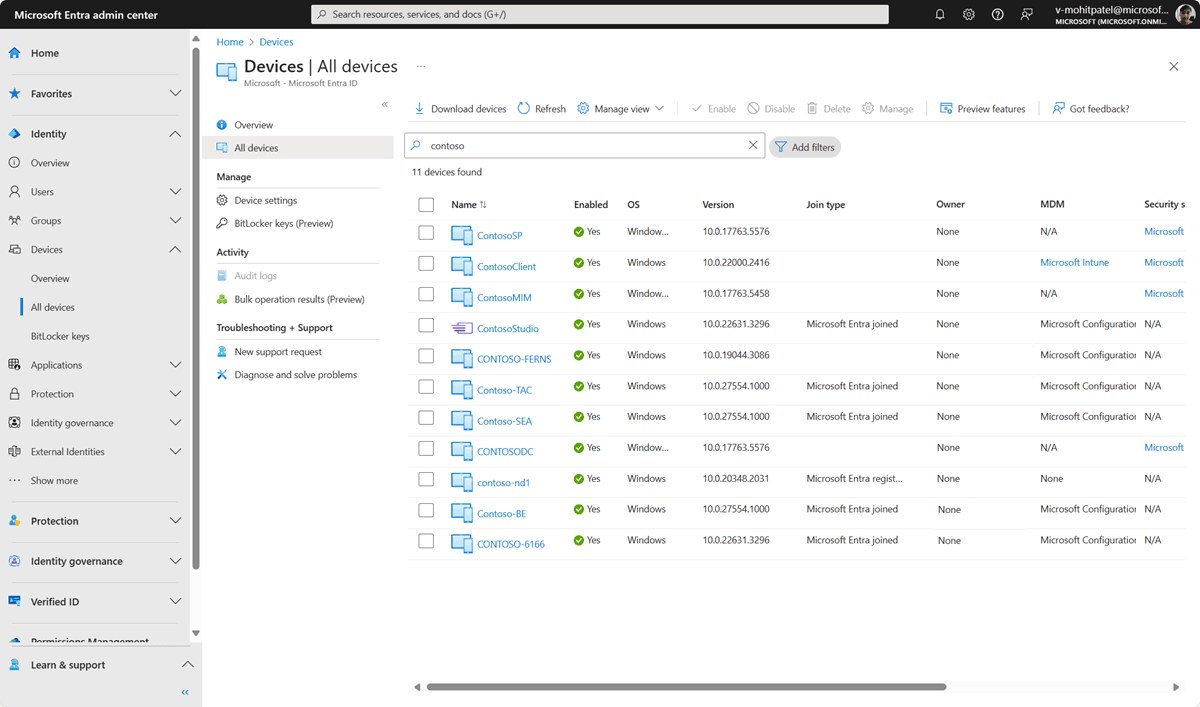
Microsoft Entra ID Governance automates access for employees, suppliers, and business partners across cloud and on-premises applications. It creates conditional, need-based identities and roles, maintains them as status changes, and removes them when they are no longer required, all from within the Entra admin experience.
The product handles access requests, assignments, reviews, and expiration as one lifecycle, and delegates day-to-day approval decisions to the relevant business groups. It supports Microsoft applications plus hundreds of non-Microsoft applications, and is included in the Microsoft Entra Suite.
Key features include:
Entitlement management: Manages the identity and resource access lifecycle at scale by automating access request workflows, assignments, reviews, and expiration dates on granted access.
Lifecycle workflows: Creates an identity from a signal in the HR system, provisions the associated app and resource access, and removes that access when the employee leaves the organization.
AI-driven and standard access reviews: Sets recurring reviews to confirm that users, group memberships, and access are still needed, using either self-attestation or assigned reviewers.
Privileged Identity Management: Applies time-based and approval-based role activation for users or groups, so elevated roles are activated on request rather than held permanently.
Separation of duties: Prevents conflicting access combinations, such as a user holding both application administrator and application user roles, at the point of assignment.
Delegated approvals: Hands routine resource access requests to the relevant business groups and automates approval for customary access, leaving security teams to handle exceptions.
Guest and partner access governance: Applies the same entitlement management and access review capabilities to partners, suppliers, and guests as to employees, with matching exception handling and reporting.
Limitations (critical feedback drawn from otherwise positive reviews on G2, where the product has a small review base):
Licensing cost: Reviewers describe the cost as high, since governance capabilities sit above the base Entra ID tiers and require separate licensing.
Setup effort: Initial configuration is reported as not straightforward, particularly where governance spans cloud and on-premises applications.
Key rotation overhead at scale: One reviewer notes that rotating security keys requires ongoing maintenance and that tracking keys across a large client and user base becomes hard to manage.
Reporting granularity: Users ask for more granular reporting than the product currently provides.
Source: Microsoft
Privileged Access and Just-in-Time Elevation Platforms
6. Idira Privileged Access Management (formerly CyberArk)

Best for: Enterprises removing standing privilege from admin access
Strengths: Zero standing privilege, vaulting, session isolation
Things to consider: Complex architecture and limited custom reporting
Idira is the Palo Alto Networks identity security platform built on the CyberArk portfolio, rebranded in 2026. Its privileged access management solutions combine credential vaulting, zero standing privileges, and session isolation into a single enforcement model that covers workforce users, cloud engineers, and third parties.
The stated design premise is that privilege is not limited to a small set of administrators, so the same controls extend across every human identity based on what it can reach. Idira also unifies IAM, PAM, and IGA functions in one platform, with lifecycle automation tied into entitlement and credential changes.
Key features include:
Zero standing privileges: Creates context-aware, ephemeral privileges for the duration of a task and destroys them when work ends, so no dormant entitlements remain to be stolen or reused.
Just-in-time cloud and Kubernetes entitlements: Brokers agentless access to AWS, Azure, Google Cloud, and Kubernetes through native CLI and console workflows, replacing static, long-lived IAM roles and removing VPN and bastion dependencies.
Workforce endpoint privilege security: Removes standing local administrator rights across Windows, macOS, and Linux and replaces them with policy-based, on-demand application elevation.
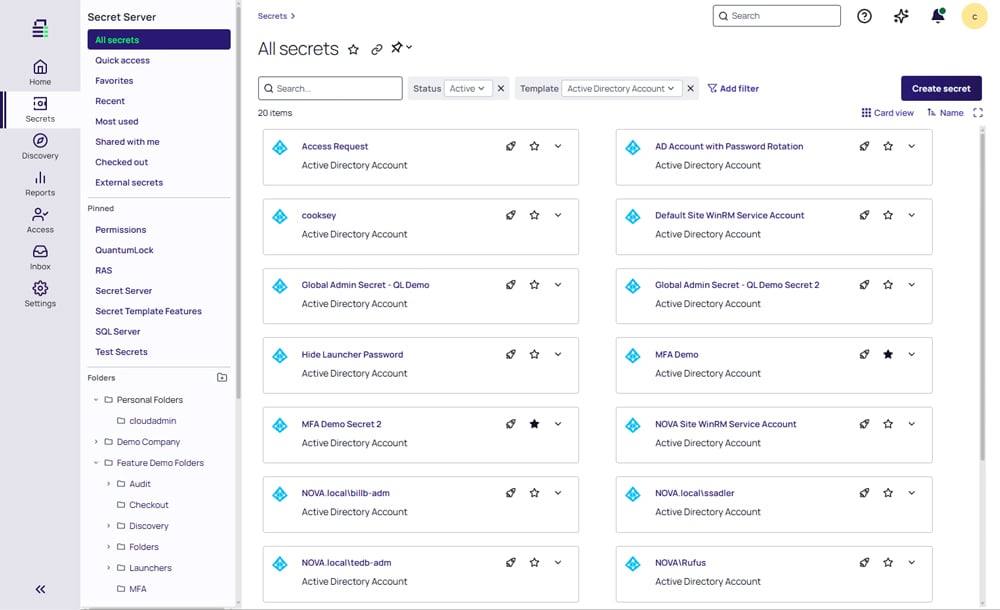
Credential vaulting and rotation: Stores system-level account credentials in a centralized repository with automated rotation, and injects them at login so users never handle the credential directly, including for legacy applications that cannot support modern federation.
Session isolation, recording, and AI summaries: Brokers and isolates privileged sessions across infrastructure and SaaS, records them, and generates summaries that surface anomalous commands during the session.
Third-party and vendor access: Provides browser-based, agentless access for external contractors, scoped to a specific task with just-in-time entitlements and full session recording.
Identity threat detection and response: Analyzes signals across the identity estate and can terminate risky sessions or raise authentication requirements when lateral movement or vault sweeping is detected.
Lifecycle automation: Joiner, mover, and leaver events trigger simultaneous adjustments to entitlements and vaulted credentials, with AI profiles analyzing behavior to define job-appropriate entitlements.
Limitations (as reported by users on G2):
Architectural and deployment complexity: Reviewers describe a complex multi-component architecture that typically requires professional services to deploy, upgrade, or re-architect.
Reporting constraints: Users report that in-depth and custom reporting is limited, with no direct database access for building reports to their own requirements.
Upgrade fragility: Several reviewers report that upgrades involve many servers in a precise order and that updates have broken functionality or required vendor involvement.
Web application credential coverage: One reviewer reports that credentials stored in web browsers and used for web logins are not rotated properly, unlike Windows and Linux accounts.
Interface and administration: The administrative experience is described as split across older and newer consoles, with day-to-day administration requiring significant product experience.

Source: Idira
7. BeyondTrust Pathfinder Platform

Best for: Mapping and closing hidden privilege escalation paths
Strengths: Privilege graph, endpoint least privilege, cloud JIT
Things to consider: Steep learning curve and detailed policy tuning
The BeyondTrust Pathfinder Platform unifies privileged access management, identity threat detection and response, cloud infrastructure entitlement management, and enterprise secrets management under a single console. Its organizing concept is the path to privilege: the routes, including indirect and inherited ones, by which an identity reaches elevated access.
Pathfinder correlates data from BeyondTrust products and third-party tools into one view of identities, accounts, elevated access, and escalation paths, then supports action on the highest-impact risks from the same console. Underlying products cover endpoints, servers, secrets, cloud permissions, and remote access.
Key features include:
True Privilege Graph: Provides visual mapping of entitlements, privileges, and permissions across cloud, hybrid, and on-premises environments for human, machine, and workload identities, including indirect and hidden paths to privilege.
Identity Security Insights: Correlates identity data across endpoints, servers, cloud services, DevOps systems, and identity providers, detects anomalous activity and compromised credentials, and attaches risk ratings and recommended actions.
Entitle for cloud permissions: Automates cloud permissions management with just-in-time access controls, self-service access requests, permission bundling, and more than 100 integrations.
Endpoint Privilege Management: Enforces least privilege on endpoints through application control, allow-lists, and prebuilt policy templates, and replaces sudo in Linux environments with centralized policy management and file integrity monitoring.
Password Safe: Discovers, vaults, and manages privileged credentials for human and non-human accounts, including cloud admin accounts, DevOps secrets, and SSH keys, with just-in-time access, session recording, and the ability to pause or terminate a session.
Privileged Remote Access: Provides rule-based access provisioning for employees, contractors, and vendors without VPN setup, enforcing least privilege per connection with video session recording.
Active Directory Bridge: Extends Active Directory Kerberos authentication, single sign-on, and Group Policy to Unix and Linux systems for consistent configuration and access control.
Remediation from one console: Removes standing privileges, implements just-in-time access, revokes access, rotates credentials, and hardens configurations from the same interface, including for machine and AI agent identities.
Limitations (as reported by users on G2 for Endpoint Privilege Management):
Initial setup and policy tuning: Reviewers report that creating and fine-tuning policies takes considerable time up front, though ongoing maintenance is described as easier once configured.
Learning curve and console usability: Users describe the interface as cluttered and hard to learn, with difficulty tracing the relationships between policies and endpoints.
Reporting interface: The reporting area is reported as awkward and sluggish compared with other parts of the console.
API and third-party integration: Reviewers report difficulty building automation through the API, including automated approval of just-in-time requests.
Endpoint performance and platform parity: Some users report increased CPU usage or slower applications after deployment, and note that advanced features are less complete on macOS and Linux than on Windows.
Training cost: One reviewer notes that vendor training is expensive and content is not freely available to paying customers.
8. Delinea Platform

Best for: PAM programs moving to continuous authorization
Strengths: Identity discovery, JIT access, vaulting, SoD reviews
Things to consider: Dated interfaces and convoluted licensing tiers
The Delinea Platform positions itself as an identity security control plane that extends privileged access management into continuous authorization. Rather than making an access decision only at the point of grant, it authorizes access decisions in real time across workforce users, IT administrators, developers, machine identities, and AI agents.
Delinea Iris AI, the platform's intelligence engine, continuously discovers identities, analyzes their risk, and evaluates access requests from a single control plane. The platform runs a closed loop of visibility, posture analysis, and runtime control, and applies consistent policy across on-premises, multi-cloud, and ephemeral infrastructure.
Key features include:
Continuous discovery and inventory: Continuously discovers every human, machine, and AI identity and surfaces access, relationships, and risk across cloud, on-premises, and hybrid environments.
Posture analysis and remediation: Continuously analyzes identities and their interactions and prioritizes risk so teams work on the most consequential gaps first.
Zero standing privilege with just-in-time access: Removes persistent entitlements and grants access only when needed, revoking it when the task completes, including at the moment of execution in developer workflows.
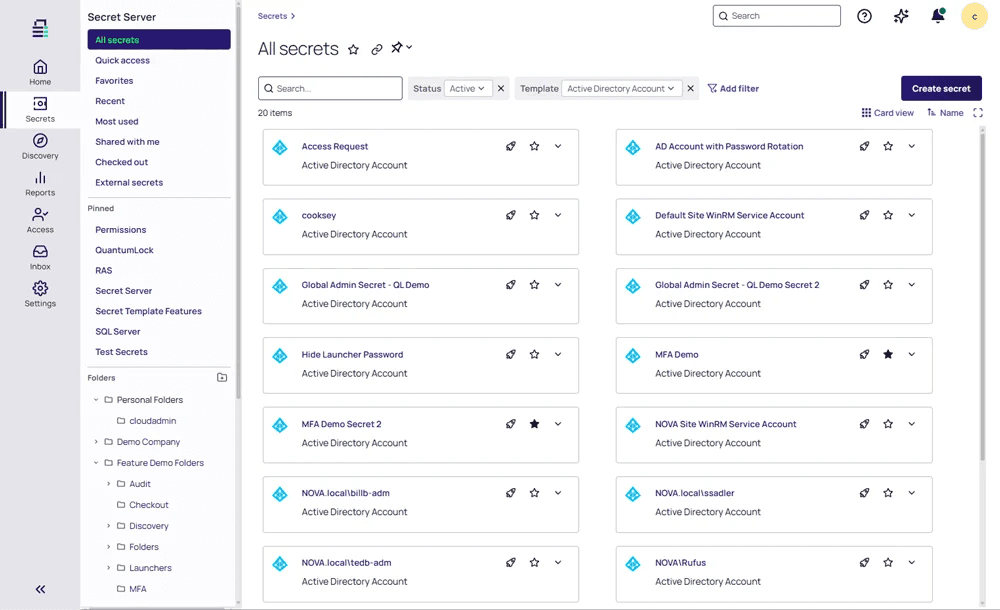
Credential vaulting and secrets management: Vaults, rotates, and governs credentials across privileged accounts, machine identities, DevOps pipelines, and AI agents, with Secret Server and DevOps Secrets Vault covering different storage patterns.
Runtime authorization of privileged actions: Authorizes each query, command, and session in real time after initial access is granted, so activity remains controlled throughout a session rather than only at login.
Cloud entitlement and server privilege control: Privilege Control for Cloud Entitlements and Privilege Control for Servers apply centralized authorization to cloud permissions and server access under one policy model.
Segregation of duties and access reviews: Fastpath access control, provisioning, and review capabilities automate access certification campaigns and enforce segregation-of-duties policies across business systems.
AI agent and machine identity governance: Discovers AI agents and machine identities, applies just-in-time least-privilege access to them, and produces an audit trail of every action they take.
Limitations (as reported by users on G2 for Secret Server, a component of the Delinea Platform):
Initial deployment complexity: Reviewers report that setup can be complex and hard to deploy, and that some components require Windows machines or distributed engines.
Interface and navigation: The interface is described as clunky and dated, with navigation that requires backtracking rather than moving up a hierarchy.
Password rotation reliability: Users report automatic password change failures leading to account lockouts, and describe rotation behavior as inconsistent in some environments.
Reporting gaps: Reviewers ask for additional built-in reports and note that application status information is not easy to access.
Licensing and cost structure: Users describe the licensing model as convoluted across products, with automation features and cloud deployment priced significantly above the on-premises base, and licenses that do not transfer between deployment models.
Commercial experience: One reviewer reports features being removed to fit a budget, unanticipated infrastructure costs, and implementation support that did not match expectations.
Source: Delinea Platform
How to Choose IAM Security Platforms for Enforcing Least Privilege
Selecting an IAM platform for least-privilege enforcement requires evaluating how well it can discover identities, control access, and continuously reduce unnecessary permissions across human and non-human identities. The following criteria help distinguish platforms that support ongoing least-privilege enforcement from those focused on only part of the problem:
IGA vs. PAM scope: Determine whether the platform provides identity governance and administration (IGA), privileged access management (PAM), or both. IGA governs access lifecycle, provisioning, and certification across the workforce, while PAM secures privileged accounts and just-in-time elevation. Organizations with mature least-privilege programs typically require capabilities from both areas.
Coverage for non-human identities and AI agents: Verify that the platform manages service accounts, workloads, APIs, secrets, and AI agents alongside human identities. Least-privilege enforcement should extend to all identity types, with discovery, entitlement management, and monitoring for machine identities and agentic systems.
Continuous vs. periodic enforcement: Favor platforms that continuously monitor entitlement usage, detect excessive access, and automate remediation rather than relying primarily on quarterly or annual access reviews. Continuous enforcement reduces the time unnecessary privileges remain active.
Integration depth: Assess how well the platform integrates with HRIS systems, directories, cloud providers, SaaS applications, PAM solutions, SIEM, and ITSM tools. Broad integrations enable automated provisioning, accurate identity context, and consistent policy enforcement across hybrid and multi-cloud environments.
Compliance and reporting: Look for reporting that demonstrates least-privilege enforcement through access reviews, policy violations, toxic combinations, privileged activity, and remediation history. Strong audit trails simplify regulatory compliance and provide evidence that access controls are operating effectively.
Conclusion
Enforcing least privilege at scale requires continuous visibility into identities, permissions, and actual access usage rather than relying on periodic reviews or static role assignments. Modern IAM security platforms automate identity discovery, entitlement analysis, policy enforcement, just-in-time access, and ongoing rightsizing to reduce excessive privileges, strengthen compliance, and limit the impact of compromised accounts across hybrid and multi-cloud environments.